

Burnout rarely arrives with a loud announcement. It shows up as a short temper in Slack, a foggy brain in meetings, small mistakes that pile up, and an extra sick day that turns into a pattern.
For CEOs and decision makers, that slow drift matters because it quietly taxes quality, customer experience, and retention. The good news is that breathwork can fit into a workday without turning wellness into another "initiative." Slow, guided breathing can help the body shift into a calmer state in minutes, which supports steadier decisions and cleaner communication.
A five-minute reset can help in the moment. Consistent practice helps people recover faster the next time stress spikes. Below are workplace-friendly techniques, rollout ideas that don't feel forced, and practical ways to gauge impact.
Why breathwork works when work stress feels nonstop
 An employee taking a quick breathing pause at her desk to settle stress, created with AI.
Stress pushes the body toward fight-or-flight. That state helps in real danger, but it's a bad default for modern work. When people stay tense for hours, they become more reactive. They also miss details, avoid hard conversations, and struggle to prioritize.
Breath is one of the fastest "inputs" people can change without equipment. A slower exhale tells the nervous system, "You're safe." As a result, heart rate and tension often drop, and attention comes back online. That matters for leaders because focus and emotional control aren't soft perks. They're performance basics.
Burnout is also widespread. Recent surveys in the US show more than half of workers report burnout, and some reports cite figures as high as 82% in certain groups or periods. Heavy workloads and long hours keep showing up as major drivers. That's why quick recovery tools matter during the day, not only after work. For broader context on workplace burnout prevention programs, see SHRM's guide to mindfulness as a burnout tool.
The 5-minute reset that helps people think clearly again
Think of this as clearing steam off a mirror. The reflection doesn't change, but you can finally see.
Use a simple slow-breath pattern:
- Inhale gently through the nose for about 4 to 5 seconds.
- Exhale slowly for about 5 to 6 seconds.
- Keep shoulders relaxed, and let the belly expand a bit.
No special posture needed. People can do it with cameras off, sitting upright, or standing before a call.
This works best at natural stress "hinges," when the day can still be steered:
- After a tense email or customer escalation
- Before a hard 1:1
- Between meetings, when adrenaline is still high
- Right after presenting, to come down quickly
In practice, leaders often notice fewer sharp edges in conversations. Employees describe feeling less pulled by urgency, and more able to respond instead of react.
Box breathing for high-pressure moments, like presentations and tough conversations
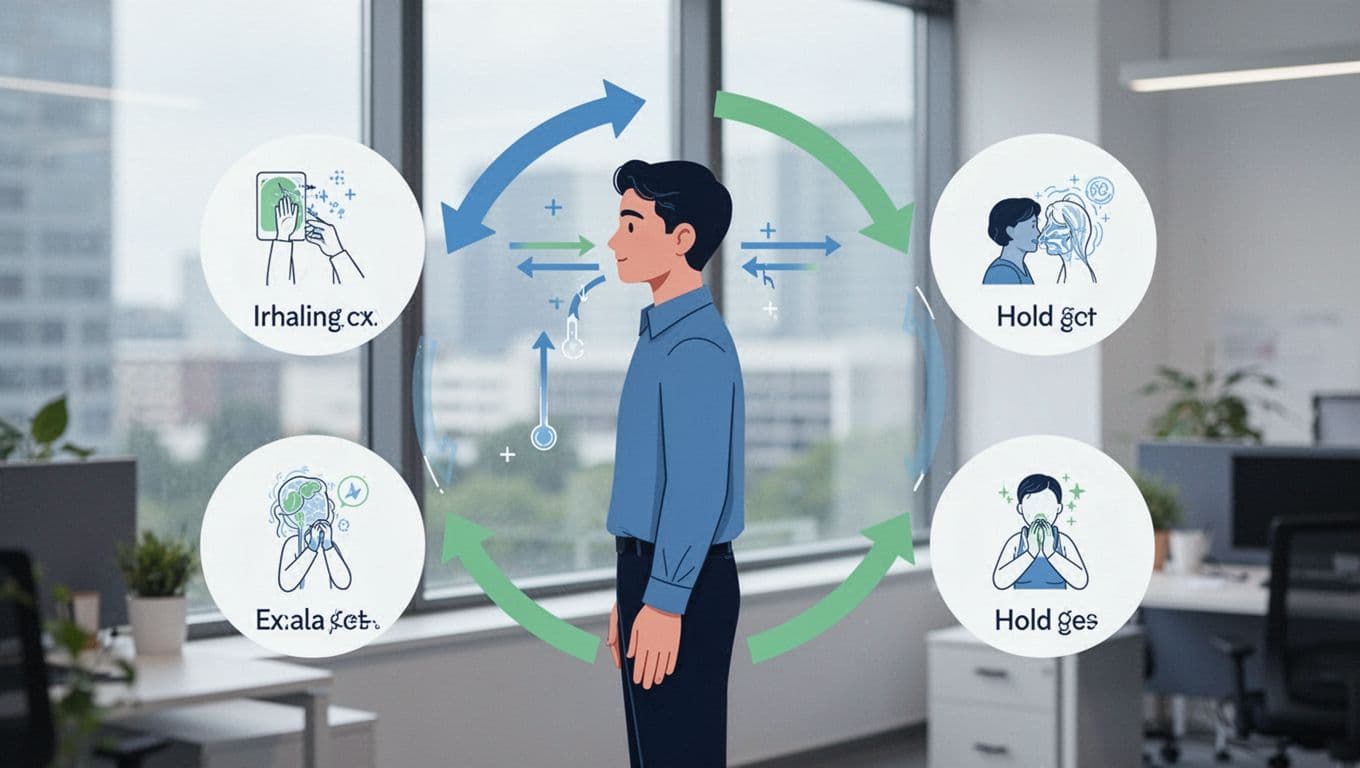 A simple visual of the box breathing rhythm used to steady nerves, created with AI.
Box breathing is popular in high-pressure settings because it's structured and easy to remember. It gives the mind a "rail" to follow when anxiety tries to take over.
Try this:
- Inhale for 4 counts
- Hold for 4 counts
- Exhale for 4 counts
- Hold for 4 counts
Repeat for 3 to 5 rounds.
It's especially useful right before a presentation, during a difficult negotiation, or when someone feels their voice tightening.
A plain safety note helps trust: if anyone feels dizzy or uncomfortable, they should stop and breathe normally. Comfort beats perfection every time.
How to add breathwork to the workday without making it feel like another task
 A team taking a brief breathing pause together before starting a meeting, created with AI.
If breathwork feels like homework, people won't do it. The goal is to tuck it into moments that already exist, so it feels like a relief, not a responsibility.
Start with low-friction placements:
- Three minutes at the start of a meeting (especially tense recurring meetings)
- A quick pre-presentation calm in the green room or on Zoom
- A 10-minute midday reset for teams doing deep work
- Optional sessions during retreats as a reset between topics
Leaders worry about time. That's fair. Yet the hidden cost of burnout is already on the calendar, in rework, conflict, and slower decisions. Three minutes is often cheaper than one misunderstood message.
Skepticism is also normal. So keep it practical: "We're doing this to reduce tension and improve focus." No spiritual language required. As an extra credibility cue, it can help to point to how breathwork is showing up across workplaces. This overview offers examples: companies using breathwork to address burnout.
Make it normal, not forced, small cues beat big programs
Roll out breathwork like you'd roll out a new meeting norm. Small, consistent, and easy to copy.
A simple pilot plan:
- Pick one team and one moment (for example, the last 3 minutes of standup).
- Give managers a short script: "Let's take 60 seconds to slow our breath, then we'll close."
- Tie it to transitions that already happen, like calendar blocks, meeting endings, or post-incident reviews.
Tools with zero training tend to win adoption because they don't ask for a new identity. People don't have to "be meditators." They just breathe.
Build a shared habit, streaks and friendly momentum can help
Burnout prevention is less about one perfect workshop and more about repeatable recovery. A small reset, done often, trains people to return to calm faster.
Keep it light:
- An optional "pause at 2:00 pm" reminder for anyone who wants it
- Friendly streaks, where people track consistency for themselves
- A team norm of celebrating participation, not performance
Privacy matters here. Participation should never feel like a productivity probe. The safest programs treat breathwork like hydration: encouraged, available, and never policed.
Choosing a breathwork solution employees will actually use
Apps and platforms fail when they demand too much attention. Employees already have enough tabs open, mentally and literally.
A useful solution should feel like a companion in stressful moments. That means it works fast, on a phone, with guidance that doesn't require prep. It also means leaders can see engagement at a high level without peeking into anyone's personal data.
One example is Pausa, a guided breathwork app built for real life, created after its founder experienced panic attacks and went looking for simple techniques that actually helped. Pausa focuses on short breathing moments that can reduce perceived stress and support better sleep habits over time. It's available on iOS and Android, and you can confirm supported devices for Pausa Business before rollout.
Pausa also includes AI-powered mood tracking that recommends breathing techniques based on how someone feels (stress, focus, energy, calm), a 10-day journey for beginners, and streaks that help teams build steady habits. For organizations, it offers fully anonymized reporting so leaders can track adoption without creating a surveillance vibe.
Look for personalization, privacy, and quick starts, not long training
When evaluating options, prioritize the basics that drive real usage:
- Quick starts: sessions that help from day one, not after onboarding.
- Personal recommendations: guidance that matches stress, focus, or low energy.
- Short audio sessions: clear cues people can follow with eyes closed.
- Anonymized reporting: engagement insights without exposing individuals.
Many wellness tools get ignored because they feel generic. Adoption features matter as much as content. If you want a deeper explanation of why breathwork changes stress responses, this summary is helpful: the science behind stress-reducing breathwork.
A simple way to try guided breathwork with your team
If you want a low-lift test, run a two-week pilot with guided sessions and one clear daily moment. Invite people to try it when stress hits, not only at a scheduled time.
To explore a guided option employees can use right away, share the Pausa guided breathwork app for employees. Pausa for Business can be licensed for teams, and it's built around quick breathing moments that help people feel less alone in the day, without asking them to become meditation experts.
Conclusion
Burnout prevention needs daily recovery, not a once-a-year reset. Breathwork is a fast, low-cost way to help teams settle stress and think clearly. Over time, small consistent practices beat one-off workshops.
Pick one technique, choose one moment in the day, and pilot it for two weeks. Then watch for quieter meetings, fewer tense exchanges, and steadier focus. In the long run, burnout loses power when people learn they can pause, breathe, and continue.