Burnout has stopped being a rare problem. It's the background noise in many workplaces. In 2026, over 75% of US workers report burnout or high stress in major surveys, and some research puts "some burnout" even higher. At the same time, many companies offer support, but only about 20% to 30% of employees use wellbeing programs regularly. That gap is where good intentions go to die.
An employee wellbeing program is a connected set of benefits, policies, and daily habits that help employees stay healthy, steady, and able to do good work.
This guide covers what to include, how to roll it out without wasting budget, and how to measure results in plain English.
What a strong employee wellbeing program looks like (it's more than perks)
 Teams respond best when wellbeing feels social, normal, and part of the workday, created with AI.
A strong program doesn't try to "fix" people. It removes common friction, makes support easy to reach, and sets expectations that protect energy. Think of it like maintaining a building: you don't wait for the roof to collapse, you inspect, repair, and keep things working.
This is also why one-off perks rarely change anything. A yoga class at lunch won't help if meetings block lunch. A meditation app won't help if employees fear being judged for using it. The goal is a simple system that employees can trust.
Many companies struggle because their offering looks good on a benefits slide, but not in real life. When only 20% to 30% use programs regularly, the issue often isn't the idea of wellbeing. It's access, time, clarity, and culture.
If you want examples of what employers are doing in practice, see these employee well-being program examples from top workplaces. Use them as inspiration, then tailor them to your people.
The 4 pillars to cover: mind, body, money, and work life
A holistic wellbeing program stays simple, but complete. Most employee needs fit into four pillars:
- Mind: Counseling access, coaching, peer support, stress skills, manager training for hard conversations.
- Body: Movement options, preventive screenings, sleep support, chronic condition support, healthy food basics.
- Money: Budgeting tools, emergency-savings help, student loan guidance, retirement education, fair pay practices.
- Work life: Flexible scheduling, workload habits, focus time, clear role expectations, time off that people can take.
Mental health belongs in the "core," not the "nice-to-have." In 2026, employers are increasing mental health spending, and for good reason: stress is high, and burnout is pushing people toward the exit.
If your program only helps people after they're struggling, it's a rescue boat. A great program builds guardrails so fewer people fall in.
High-impact building blocks employees actually use
Employees use what's easy, private, and supported by managers. Start with a small "menu" that fits your budget and your culture, then improve it based on usage.
Common high-use building blocks include:
- Manager training on workload, recognition, and early burnout signs.
- An EAP that people can find fast, with clear steps and low wait times.
- Mental health days or personal time that's simple to request.
- Wellness coaching (especially for stress, sleep, and habit building).
- Movement options (stipends, walking groups, short guided stretch breaks).
- Preventive care nudges, like reminders for annual visits and screenings.
- Simple education, like short live sessions and one-page guides.
Some workplaces also add a physical "wellness space," even if it's small. A quiet room, a few comfortable chairs, and a no-meeting rule can lower stress more than another app.
For mental health culture ideas that don't feel preachy, this set of workplace mental health tips is a useful starting point. The best tip is often the simplest: make it normal to ask for help.
How to design a program that fits your company and earns trust
 Listening first helps you spend money where it matters, created with AI.
A wellbeing program works best when it feels like it was built "with us," not "for them." Trust is the accelerator. Without it, people won't use the tools, especially for mental health and money stress.
The good news is you don't need a giant HR team. A small or mid-size company can design a strong program with a clear, step-by-step approach.
Start with listening, then set goals you can measure
First, do a quick needs check. Keep it light, and respect people's time.
Use a mix of:
- A short anonymous survey (10 questions is plenty)
- Two or three focus groups across roles or locations
- Benefits data you already have (EAP utilization, claims categories if available)
- Trends in absences and turnover by team or job type
Next, turn what you learn into two to three goals you can track. Examples:
- Reduce reported burnout in quarterly pulse checks
- Improve retention in a high-turnover team
- Cut unplanned sick days
Goals keep the program focused. They also help you say "no" to shiny tools that don't match real needs.
If you want a straightforward implementation outline, this guide on how to implement employee wellness programs lays out practical steps you can adapt to your company.
Make it inclusive for shift workers, remote teams, and different life stages
A program that works only for office staff isn't a wellbeing program. It's a perk package for one group.
In 2026, choice and flexibility are a top trend because they close the usage gap. People can't join what they can't access.
Design for real constraints:
- Time: Offer paid time for appointments, or schedule options across shifts.
- Location: Provide virtual and in-person support, not one or the other.
- Language: Translate key resources, at least the "how to get help" page.
- Disability access: Make sure digital tools meet accessibility standards.
- Caregiving: Add flexible hours, backup care resources, or benefits that reduce scheduling stress.
Also, watch fairness. If one role can't step away for a therapy appointment, that's not an individual problem. It's a system problem.
Protect privacy and use AI carefully so employees feel safe
Privacy is the price of entry for wellbeing. If employees think you can see who's anxious, who's in therapy, or who's struggling with debt, they will stay silent.
Be clear about three things:
- What data is collected (and what is not)
- Who can see it (ideally nobody at the individual level)
- How it's used (aggregated trends, not performance decisions)
AI can help by personalizing recommendations or spotting patterns in anonymous feedback. Still, humans need to stay in the loop. Set vendor rules that limit data use, require security standards, and block "creepy" personalization. Most importantly, don't punish opt-outs. Participation should be a choice.
Rolling it out without breaking the budget, and getting real participation
 Small spaces and simple routines can reduce stress more than big announcements, created with AI.
Most programs fail at launch, not design. The rollout becomes a pile of emails, and employees tune it out. Then leaders assume "people don't care," which is usually wrong. People care, they just don't have time to decode the benefits maze.
Because regular usage often sits around 20% to 30%, your launch plan should focus on two things: clarity and friction removal.
Launch plan that makes wellbeing feel normal, not like homework
Start small. Make the first version easy to explain in a single minute.
A practical 30 to 90 day rollout looks like this:
- A short message from leadership that sets the tone (support, privacy, permission)
- Manager talking points for team meetings (one page, not a script)
- One place to find resources (a simple hub page, QR code, or intranet tile)
- Onboarding integration so new hires learn it on day one
- A focused campaign with two or three offers, then expand based on what people use
Keep the first wave tight. When you offer 15 tools at once, employees pick none. Attention is a limited resource.
For more rollout best practices you can borrow, this list of workplace wellness program best practices offers helpful reminders, especially for smaller organizations.
Boost engagement with small friction fixes and manager support
 Participation rises when managers model healthy habits and teams support each other, created with AI.
Participation drops for predictable reasons: no time, too many steps, confusing options, stigma, and a fear that "being human" will hurt careers.
Friction fixes beat pep talks. For example:
- Offer paid time for therapy, coaching, or preventive visits.
- Make scheduling two clicks, not a scavenger hunt.
- Use short "micro-challenges" that don't shame anyone (sleep week, hydration week).
- Let teams join together, but keep health data private.
- Train managers to notice workload pileups and to model breaks.
Culture signals matter as much as benefits. When leaders brag about working late, people copy it. When leaders protect focus time and take PTO, permission spreads.
How to measure ROI and prove the program is working
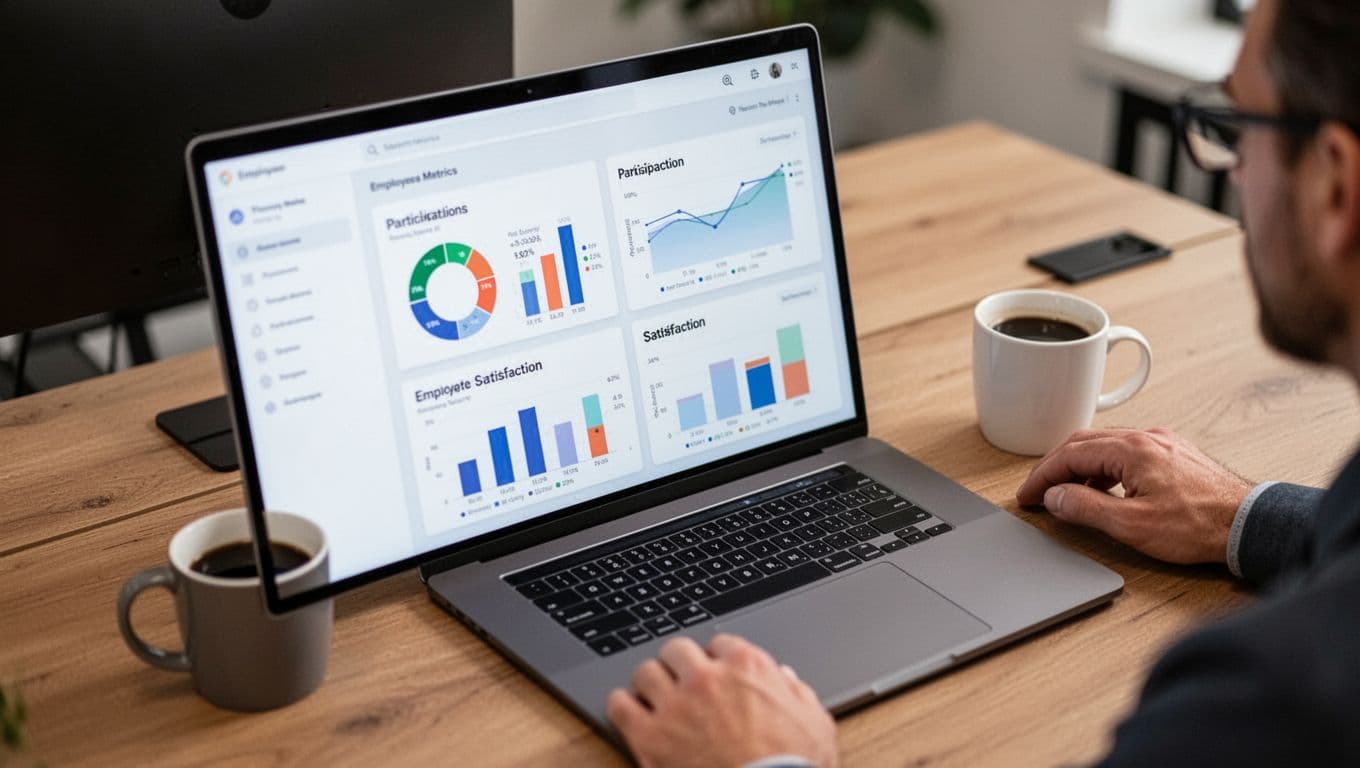 Simple dashboards help you tell a clear story to leaders without drowning in data, created with AI.
Measuring wellbeing can feel awkward. You're dealing with humans, not machines. Still, you can track progress without turning the program into surveillance.
Start with a simple story: usage, outcomes, and business impact. Then review it quarterly, so you can adjust before the year ends.
Real-world research points to clear wins when programs fit employee needs. Some organizations see about 1.5 fewer sick days per employee per year and up to 11% lower turnover. Preventive care investments can also return about 3.6 times the cost, depending on the design and the population.
Here's a simple way to think about what to track:
| Scorecard area | What to track | How often |
|---|---|---|
| Usage | Sign-ups, repeat usage, attendance, EAP access rates | Monthly, then quarterly |
| People outcomes | Burnout pulse, stress rating, engagement signals | Quarterly |
| Business outcomes | Turnover, absences, safety incidents, productivity proxy metrics | Quarterly |
| Cost | Program spend, benefit trends (when available) | Quarterly, plus annual review |
The takeaway: you don't need perfect data. You need consistent tracking and honest interpretation.
For a more structured measurement approach, this workplace well-being measurement framework and checklist can help you choose KPIs that leaders trust.
The simplest scorecard: usage, outcomes, and employee feedback
Numbers alone don't explain why a program works. Pair metrics with short feedback loops:
- Add one open-text question to your quarterly pulse survey.
- Ask managers what barriers they hear most.
- Watch which roles use the program least, then fix access.
Also, look for "quiet wins." If fewer employees report constant stress, you may see fewer conflicts, fewer mistakes, and better customer patience. Those show up in operations long before they show up in claims.
Common mistakes that ruin results, and what to do instead
Most failures are fixable.
Too many tools leads to confusion, so pick fewer offers and make them easy to find.
Unclear ownership kills momentum, so assign one accountable leader and a small cross-team group.
Office-only access drives resentment, so design for shift workers and frontline roles from day one.
One-time launches fade fast, so run quarterly refreshes with a clear theme.
No manager training keeps stigma alive, so train managers early and keep it practical.
No measurement invites budget cuts, so commit to quarterly reviews and one annual deep dive.
A wellbeing program doesn't fail because people don't care. It fails because the path to use it is too hard.
Conclusion
Random perks won't fix burnout, but a connected employee wellbeing program can. When companies make support easy, private, and manager-backed, employees are more likely to use it, and organizations can see fewer sick days and lower turnover. Start this month with a short needs survey, pick two to three measurable goals, launch a small pilot, and review results quarterly. Progress beats perfection, especially when your people can feel the difference week to week.

