If your team feels tired, distracted, or one more re-org away from quitting, you're not imagining it. Burnout shows up as missed deadlines, rising conflict, and "quiet" turnover that hits your best managers first. Then the CFO asks the obvious question: why are healthcare costs and sick days still climbing if you already offer benefits?
In 2026, employee wellbeing programs sit right in the middle of that problem. Buyers are treating wellbeing like a business system, not a feel-good perk. Recent US-focused reporting shows the momentum: 60% of employers increased wellness spending in 2026, and 76% boosted mental health support. At the same time, supported workers are three times more likely to be engaged, which is the outcome leaders actually care about when productivity slips.
This guide is built for HR leaders, benefits leaders, and People Ops teams evaluating vendors. You'll get a clear picture of what to include, what to ask in demos, how to prove ROI, and how to avoid the most common failure, low participation.
What a modern employee wellbeing program includes in 2026 (and what it is not)
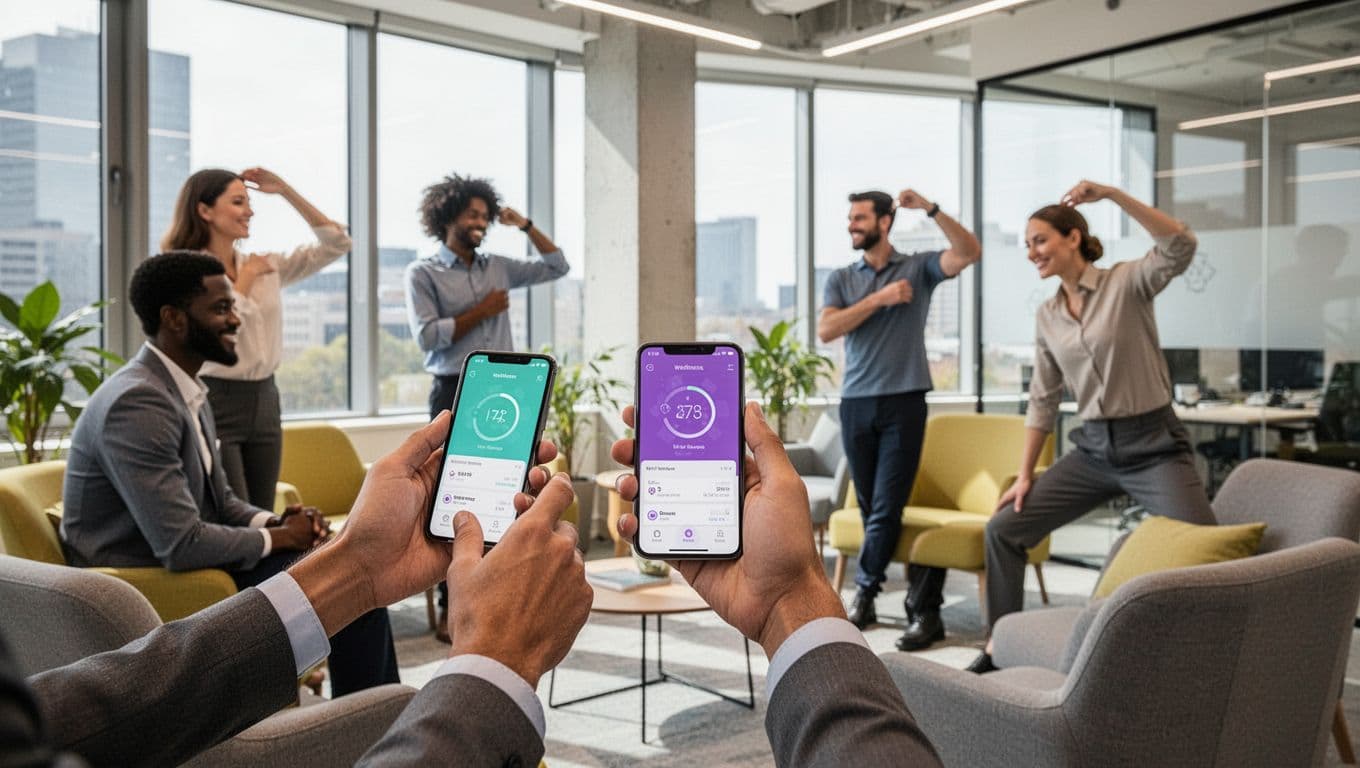 Employees using everyday wellbeing supports at work, created with AI.
A modern wellbeing program is a connected set of supports that helps employees stay healthy, handle stress, and manage life demands. It should be easy to access, consistent, and measurable. In other words, it's less like a "wellness week" and more like the plumbing in a building. People only notice it when it fails.
What it's not: a scattered set of perks that live in different portals, promoted once during open enrollment, then forgotten. Many companies still have a gym discount, a meditation app, and a hotline no one remembers. That can look busy on a slide, yet it doesn't change outcomes.
The 2026 shift is toward integrated, year-round programs with real reporting and a strong mental and behavioral health center. You can see this trend in market commentary on employee wellness trends for 2026, especially the move toward programs that connect daily habits with clinical support when needed.
The core pillars buyers should cover: mental health, physical health, financial wellbeing, and work-life support
A solid program covers four pillars because employee problems rarely stay in one lane. Financial stress becomes anxiety. Caregiving pressure reduces sleep. Poor sleep raises injury risk.
Mental health and behavioral support should include short-term counseling, therapy access pathways, coaching, and crisis escalation. Also ask about manager training, because managers often spot issues first.
Physical health can include movement and fitness options, nutrition guidance, preventive screenings, and chronic condition support. Even simple habit programs can help when they actually get used.
Financial wellbeing covers budgeting help, debt counseling, student loan guidance, retirement education, and access to a financial coach. It also connects to benefits education so employees don't miss what you already pay for.
Work-life support includes caregiver resources, flexible work guidance, parenting support, legal support, and practical navigation. If your workforce is hourly, access timing and mobile-first design matter even more than "cool" features.
If you want a menu of program ideas to pressure-test your coverage, scan workplace wellness program examples and note which ones your population would actually use, not which ones look good in a brochure.
Integrated programs beat scattered perks, here is what "integrated" should mean
"Integrated" is one of those words vendors love. Buyers should define it before the demo.
Look for clear signals:
- Single sign-on (SSO) with your identity provider
- One app or portal, with consistent navigation
- Coordinated referrals (coaching to therapy, financial coaching to EAP, etc.)
- Shared reporting across services, not separate dashboards
- Consistent communications, with segmentation by role and location
- Benefit navigation that helps people choose the right resource fast
Scattered perks often fail for a simple reason: employees don't know where to go. When support is hard to find, people wait until problems get expensive. Integration lowers friction, which raises participation, which is what turns a "program" into results.
The business case leaders will ask for: ROI, retention, and fewer sick days
Most HR teams don't lose budget because leaders hate wellbeing. They lose budget because leaders can't see the math. Your job is to connect wellbeing to financial outcomes without overselling it.
Here are outcome ranges commonly used in 2026 business cases, with an important caveat: results depend on adoption and fit. Strong programs can drive up to 11% lower turnover and about 1.5 fewer sick days per employee per year. Engagement can move too, with supported employees reported as three times more likely to be engaged. That's the good news.
The other news: many employers still struggle to measure impact well, even as more leaders demand it. Recent reporting notes that 70% of employers use ROI data to shape wellbeing plans in 2026, which raises expectations for clear baselines and clean reporting.
A helpful way to frame this for a CFO is simple: turnover and absenteeism are "leaky buckets." A wellbeing program won't fix everything, but it can reduce the leak rate if people use it.
For more context on why some programs don't translate into better outcomes, this Harvard Business Review analysis of program pitfalls is worth sharing internally, especially if leadership is skeptical.
A simple ROI model you can build in one meeting
You don't need a complex spreadsheet to get to a decision-ready range. Build a three-scenario model (conservative, expected, best-case) with a few inputs your team already tracks.
- Turnover baseline: your annual turnover rate, plus the roles that hurt most when they churn.
- Cost per replacement: include recruiting, onboarding time, training, and manager time.
- Target turnover reduction: start modest, then test sensitivity (for example, 2%, 5%, 8% relative improvement).
- Absenteeism baseline: average sick days per employee per year.
- Cost per day: wages plus productivity drag, or use a conservative blended rate.
- Productivity assumptions: keep this light. If you include it, use a small percent and explain it clearly.
- Program cost: vendor fees, incentives, internal time, and any add-ons.
Then present it as ranges, not promises. A CFO can debate assumptions, but they can't debate a transparent model.
A wellbeing ROI case becomes credible when it's conservative, testable, and tied to metrics your finance team already trusts.
What to measure in the first 90 days, first 6 months, and first year
Measurement works best when you stage it. Leading indicators come first, because retention and claims take time.
First 90 days (leading indicators): activation rate, monthly active usage, repeat visits, satisfaction, and time-to-first-appointment for mental health support. Also track channel performance (email, SMS, manager referrals).
First 6 months (mid indicators): manager confidence to talk about resources, self-reported stress scores (if collected), benefits navigation usage, and utilization patterns by site or job family.
First year (lagging indicators): turnover in target populations, sick days, engagement scores, and healthcare trend signals where available.
The fix for "we can't measure impact" is boring but powerful: lock in baselines before launch, align on targets, and require a quarterly results review in the contract.
How to choose the right wellbeing vendor, a buyer checklist that prevents regret
Vendor selection is where good intentions go to die. Demos look polished. Case studies look perfect. Then you sign, launch, and realize adoption depends on work you didn't budget for.
Start by being honest about your environment:
- Do you have one HRIS or several?
- Are most employees desk-based or mobile?
- Do you need multilingual support?
- Is your biggest pain stress, turnover, safety incidents, or engagement?
A general procurement framework helps, especially if you're doing an RFP across multiple vendors. This vendor selection process checklist is a useful reference for structuring criteria, scoring, and stakeholder alignment.
Questions to ask in demos and RFPs (so you do not buy shelfware)
Ask questions that force specificity. "We drive engagement" means nothing without proof.
Good questions to use:
- How do you drive participation after launch month, and what's included vs. paid add-on?
- What's your average monthly active use across clients like us (industry, size, mix of hourly)?
- What engagement tactics are standard (nudges, campaigns, manager kits, incentives support)?
- How do you support managers without turning them into therapists?
- How do referrals work across services (coaching to therapy, therapy to crisis support)?
- What outcomes have you measured, and what method did you use (pre-post, matched groups)?
- What does your implementation timeline look like, and what do you need from us each week?
- Can we talk to two references in a similar workforce profile?
If you want a longer list to pull from, these RFP questions for wellness vendors can help you build a sharper demo script.
Data privacy, clinical quality, and risk checks buyers should not skip
Wellbeing programs live or die on trust. Employees won't use mental health tools if they fear their manager will find out. That's why privacy is not a legal footnote, it's an adoption driver.
Ask for plain-language answers to:
- What data is shared with the employer, and at what aggregation level?
- How do you prevent re-identification in small teams or locations?
- What security standards do you meet, and can you provide recent audit documentation?
- Who provides clinical oversight for mental health services?
- What happens in a crisis situation, and how is escalation handled?
- How do you handle state-by-state practice rules for therapy access?
Also pressure-test clinical quality. Coaching can help many people, but it's not a replacement for therapy. Vendors should explain the boundaries clearly.
Pricing and packaging, how to compare quotes fairly
Wellbeing pricing is easy to compare only if you normalize what's included. Most vendors use a per-employee-per-month (PEPM) model, sometimes with tiers. Others add utilization-based fees for coaching sessions or therapy visits.
Here's a simple way to compare common models:
| Pricing model | What it usually includes | Watch-outs for buyers |
|---|---|---|
| PEPM flat fee | Platform access, content, basic reporting, standard campaigns | Add-on fees for SSO, custom comms, advanced analytics |
| Tiered packages | Base tier plus upgrades (coaching, condition programs, expanded support) | Low tier may look cheap but misses what drives outcomes |
| Utilization-based add-ons | Pay per session, per member engaged, or per program | Costs can spike if adoption rises (ironically, success costs more) |
After you gather quotes, build an apples-to-apples scorecard: implementation, ongoing engagement support, analytics depth, clinical services access, and contract flexibility. Then ask vendors to price the same scope.
Implementation plan that drives adoption, not just launch day noise
Many programs launch like a fireworks show, then go dark. Adoption drops because employees forget, and managers don't reinforce it.
A practical rollout plan should include:
- A short leadership message that explains "why now" in human terms
- Manager enablement (talk tracks, referral guidance, boundaries)
- Simple enrollment, ideally SSO and mobile-first
- A 90-day communications calendar with campaigns tied to real stress points (tax season, back-to-school, peak workload)
- A champions network or site leads for hourly locations
- Feedback loops, so you can fix friction fast
Make adoption part of the contract. If a vendor can't commit to an engagement plan, you're buying software, not outcomes.
Common reasons wellbeing programs fail, and how to avoid them before you sign
Most failures aren't caused by "bad employees" who don't care. Programs fail because the buying team didn't design for real work patterns.
Low participation is the headline problem. Lack of time is right behind it. Tool sprawl finishes the job.
Research on participation barriers highlights why people opt out, even when services are available. This academic summary on why employees don't participate in well-being programs is a good reminder that access, relevance, and trust matter as much as perks.
Mistake: buying too many point solutions, fix: start with one clear goal and a tight bundle
Point solutions pile up fast. A meditation app here, a coaching tool there, a financial webinar series somewhere else. Employees end up with five logins and no path.
Instead, pick one clear goal tied to a business pain, then bundle supports around it. Examples that work well:
- Reduce burnout risk in a high-pressure team
- Improve retention in high-turnover roles
- Support new managers so they don't burn out first
- Reduce injuries by improving sleep and recovery habits
Choose a vendor that can expand over time without forcing a system change. You want one front door, even if you add rooms later.
Mistake: no baseline and no success metrics, fix: define success before launch
If you don't define success, someone else will. Usually finance, usually late, usually with a budget cut.
Baseline what you can before launch:
- Turnover overall and in priority job families
- Sick days and unplanned absences
- Engagement or pulse survey stress items
- EAP or benefits navigation usage (where available)
- Claims trends if you have access, even at a high level
Then set realistic targets and commit to quarterly reporting. If you can't get claims data, don't stall. Use adoption and leading indicators early, then connect to retention and absenteeism as lagging outcomes.
Conclusion
Employee wellbeing programs work best in 2026 when they're integrated, easy to use, and anchored in mental health support. Still, outcomes don't come from features, they come from adoption plus measurement. The buying path is straightforward: define the business problem, shortlist vendors with a tight checklist, run a 90-day pilot with baselines, then scale what moves the numbers. If your next step is budget approval, build a simple internal deck that ties wellbeing to retention and sick days, then schedule vendor demos that prove engagement, not just promises.

