A message pops up, and your chest tightens before you even read it. At night, your thoughts run laps while your body begs for sleep. At work, your shoulders stay locked up like they're holding the whole day together.
Anxiety and stress can feel isolating, even when you're surrounded by people. It can seem like everyone else got the "how to cope" manual, and you didn't. If you're feeling that way, you're not broken, you're human.
This post shares practical ways to feel less alone while managing anxiety and stress, with small steps that fit real life. It's not a diagnosis. If symptoms feel intense, keep coming back, or make daily life harder, consider talking with a licensed mental health professional.
Name the lonely feeling, and take the shame out of it

Anxiety can feel like being alone in a noisy room, created with AI.
When anxiety gets loud, many people pull back. You might worry you'll be "too much." You might fear being a burden. Or you may think, "No one will get it, so why try?" That retreat can feel protective, but it often feeds the loneliness.
A helpful reframe: anxiety is your body's alarm system. It's meant to warn you about danger. The problem is that the alarm can get stuck on high, even when you're safe. When that happens, your mind searches for reasons, and shame tries to fill in the blanks.
Common signs don't look dramatic, they look ordinary and exhausting. You may notice jaw, neck, shoulder, or chest tension. Sleep can get light and broken. Small things can irritate you. Thoughts can race, then loop, then loop again.
Feeling alone is often part of the anxiety pattern. It's a symptom, not a personal failure. If you want a grounded overview of symptoms and self-help ideas, the NHS anxiety self-help guide lays them out in clear language.
A quick self-check that builds self-awareness (not a label)
Try this 1 to 2 minute check-in. Think about the last two weeks, and answer with "never," "sometimes," "often," or "almost always":
- How often did your body feel tense (jaw, shoulders, neck, or chest)?
- How often did you feel on edge, like something bad was about to happen?
- How often was it hard to relax, even when you had time?
- How often did worry make it hard to focus or sleep?
This isn't a medical test. It's a mirror. If your answers feel alarming, or if daily tasks keep getting harder, reaching out to a clinician is a strong next step.
What to say to yourself when your mind turns on you
Shame grows in silence. So give your mind something simple and believable to hold.
"This is anxiety, not danger."
"My body is loud right now, and it will settle."
"I don't have to fix everything, I can take one small step."
"I can ask for support without earning it first."
If a line feels fake, soften it. Aim for steady, not perfect.
When anxiety tells you you're alone, treat that message like a smoke alarm, not a verdict.
Build a small support system you can actually use on a hard day
Support sounds big, like a group chat and weekly plans. In real life, it works better when it's small and ready.
Pick 2 to 3 options you can use on a rough day:
- one person (or two) who feels steady,
- one routine that calms your body,
- one professional resource when you need more help.
Boundaries make this safer for everyone. Decide what you want before you reach out. Do you want advice, or do you want company? Do you want a five-minute check-in, or a longer talk? People often want to help, but they need a clear request.
How to ask for help without feeling like a burden
Here are copy-and-paste messages you can use. Choose someone calm, consistent, and not judgmental.
| Situation | Message you can send |
|---|---|
| You need presence, not fixes | "I'm feeling anxious. Can you sit with me for 10 minutes? I don't need advice, just company." |
| You want a quick anchor | "Could you voice note me for a minute while I do a breathing break? It helps me stay grounded." |
| You prefer privacy | "I'm having a hard moment. You don't need details, but can you text me something normal or kind?" |
If the first person can't show up, it doesn't mean you asked wrong. It means they're not available. Try again with someone else.
When professional support is the best next step
Therapy and medical support aren't only for crisis. They're also for prevention, skill-building, and relief. Consider getting help if you notice:
- panic symptoms (racing heart, short breath, feeling unreal)
- trouble functioning at work, school, or home
- sleep falling apart for weeks
- using alcohol or substances to cope
- frequent dread, shutdown, or constant scanning for danger
Bring specifics to a first appointment. Mention sleep, muscle tension, work focus, or what triggers spirals. If you want a broader menu of relaxation tools to discuss with a provider, HelpGuide's stress relief techniques can give you options to try and compare.
Use "micro-connection" to feel less alone in the moment
The hardest times often hit fast. A spike of stress can arrive in the grocery line, after a meeting, or right when your head hits the pillow. That's when "micro-connection" helps: a tiny body reset, plus a small reach-out, even if it's just to a tool that guides you.
This matters because you don't need long meditation to feel supported. Many people do better with short, simple breathing that meets them where they are. Research reviews also describe breathing practices as practical tools for stress and anxiety reduction, especially when they're easy to follow and repeat (see this NIH overview of breathing practices).
A 3-minute reset you can do anywhere (breath plus body)
Use this after a tough call, before sleep, or after doomscrolling.
- Find the tight spot. Scan jaw, shoulders, chest, belly. Name one place that feels clenched.
- Drop your shoulders once. Not perfect, just lower than before.
- Breathe out longer than in. Inhale gently through your nose for a count of 3, exhale for a count of 5. Do that for 6 rounds.
- Ground with your senses. Name 3 things you see, 2 you feel, 1 you hear.
Go gentle. If you feel dizzy, return to normal breathing and sit down.
Let guided breathing feel like someone is with you
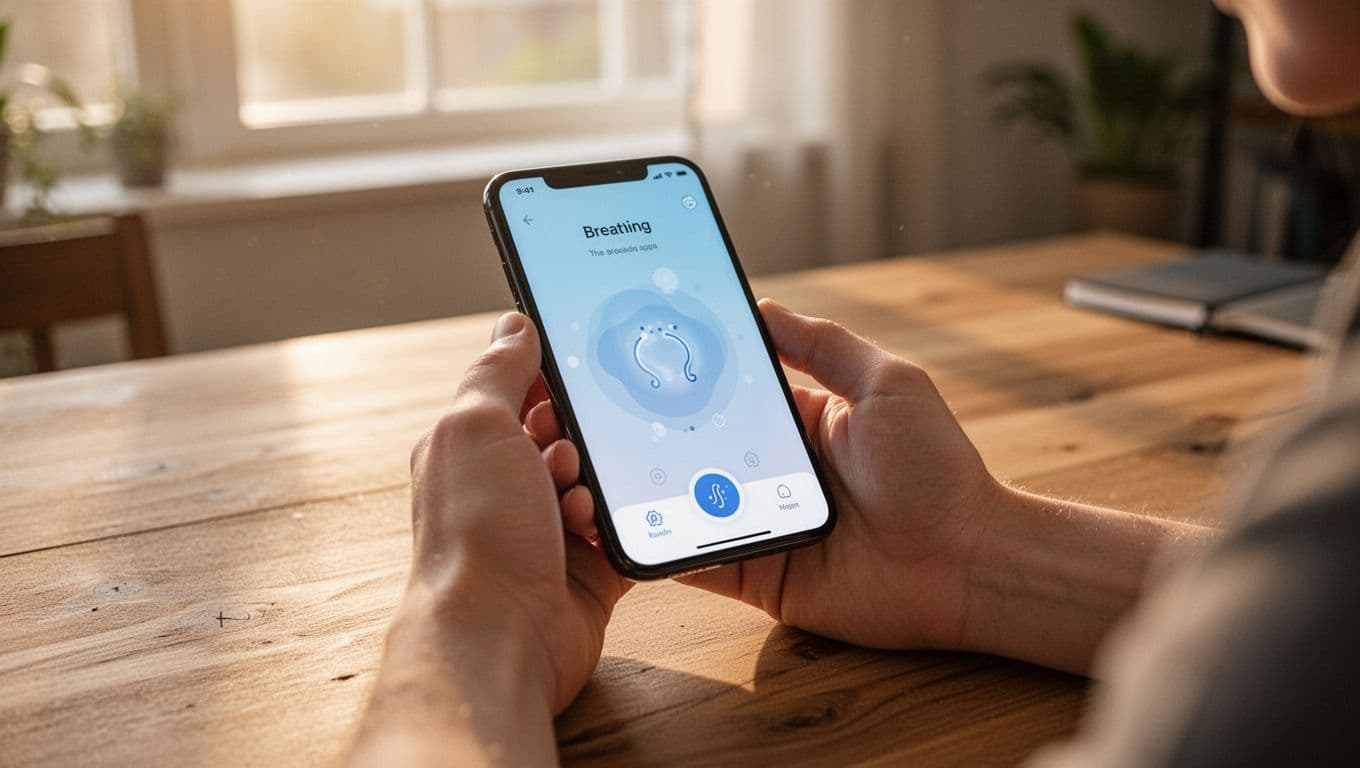
Sometimes companionship looks like a calm voice guiding your next breath, created with AI.
When you're anxious, decision-making shrinks. That's why guided breathing can feel like support, not homework. You press play, follow along, and borrow someone else's steadiness for a few minutes.
That's the idea behind Pausa: it was born after panic attacks, and it focuses on simple, science-backed guided breathing instead of long meditations. It's built for real life, the moment your heart speeds up or your mind won't stop. Many people use it to calm stress, sleep better, and break the scroll when their phone starts to pull them under. Pausa is available on iOS and Android, so it's there when you need a quick "I'm not doing this alone" feeling.
Make it easier at work and at home, so anxiety doesn't isolate you

Photo by Yan Krukau
Stress often becomes lonelier when your environment stays tense. So change the setting in small ways. At home, set a predictable check-in, even if it's five minutes after dinner. In relationships, try a "no fixing" rule for one conversation a day. One person talks, the other reflects back, then you switch.
Shared habits lower the temperature for everyone: a short walk after work, a phone-free meal, or a calmer bedtime routine with dim lights and quieter voices. If conflict flares, agree on a pause word. When someone says it, both of you stop and breathe for 30 seconds, then restart.
Simple relationship habits that lower stress for everyone
You don't need a big talk to feel less alone. You need repeatable moments. A daily "how's your body?" check-in can help more than "how was your day?" Listening without solving builds trust. Even folding laundry together can be connection when your nervous system feels frayed.
If your workplace is part of the stress, ask for support that actually gets used

Small resets at work can prevent stress from following you home, created with AI.
Workplace stress isn't abstract. It can wreck focus, increase mistakes, and make people quit. Still, many wellness tools get ignored because they feel like extra work.
If you're a manager or HR partner, consider options that fit into the day with almost no training. Pausa Business gives each teammate access to guided breathing from day one, plus features like mood tracking, streaks, and optional workshops. It also keeps reporting anonymized, so people can use it without feeling watched. For employees, it means you can take a two-minute pause after a hard meeting and feel supported, not singled out.
Conclusion
Feeling alone with anxiety can feel like being locked in a room with your own thoughts. The door usually opens with small, real steps: name what's happening, share it with one safe person, and use a short reset when stress spikes. If things feel intense or persistent, professional help can lighten the load sooner than you think.
Try one micro-connection today: send a simple text, book an appointment, or take a three-minute guided breathing break. You don't have to carry this by yourself.

