

Stress at work isn't a vibe problem. It's an error rate problem. It's rework, missed details, short tempers, and quiet quitting. Then it becomes churn. Expensive churn.
A lot of "wellness" programs fail for predictable reasons. They ask for too much effort. They feel generic. People don't trust where their data goes. And employees can smell performative care from a mile away.
Modern employee wellness programs look different. They're personal, low-friction, and built into the workday. They don't require a new identity, a yoga mat, or a meditation streak that dies on day three. Sometimes the most effective move is also the smallest, like 3 to 5 minutes of guided breathing that helps someone reset fast, even if they've never meditated once.
Start with what your employees actually need, not what vendors are selling
 Four coworkers in a typical workday moment, one choosing a short pause instead of pushing through, created with AI.
Most wellness plans start with a catalog. Perks first, people second. That's backwards.
Start with signals. Where does energy drop? When do mistakes spike? Which teams are always "fine" until they aren't? Listening isn't soft, it's how you avoid spending money on a program no one touches.
Keep the listening lightweight. Use short pulse surveys. Add an anonymous check-in once a month. Run two small focus groups, one with managers, one without managers. Also, make participation safe. That means you say it out loud: wellness use never affects performance reviews. Not indirectly either.
Trust is the gate. Without it, adoption dies.
If you want a quick read on what employees are asking for in 2026, skim this roundup of workplace wellness trends for 2026. The pattern is consistent: people want flexibility, credibility, and support that fits real life.
Wellness data should show trends, not expose people. If a tool can't offer anonymized reporting, treat it as a risk, not a feature.
A quick wellness needs audit you can run in one week
You don't need a six-month committee. You need a clean pilot.
Run this five-step audit in one week:
- Ask five questions, fast: stress, sleep, focus, finances, connection.
- Map the top two pain points by team type (frontline, hybrid, remote).
- Pick one low-lift habit and one benefit to test.
- Choose success metrics before you launch.
- Announce the pilot with boundaries: optional, private, no stigma.
Keep it simple on purpose. Complexity feels like work, and employees already have jobs.
Just as important, set expectations with leaders. You're not "fixing" anyone. You're reducing friction and improving recovery. That's it.
What to measure so wellness does not become a feel good project
If you can't measure it, it becomes theater. If you measure the wrong thing, it becomes pressure.
Track a small set of operational signals. Here's a practical baseline:
| What to track | Why it matters | What "good" looks like |
|---|---|---|
| Adoption rate | Shows initial trust and relevance | 30%+ in a pilot is a strong start |
| Weekly active use | Filters out one-time curiosity | Steady use beats spikes |
| Self-reported stress trend | Captures felt impact without clinical claims | Movement in the right direction |
| Sick days trend | A rough proxy for strain and recovery | Directional improvement |
| Turnover signals | Exit interviews, regretted attrition | Fewer burnout-linked exits |
| Manager check-in quality | Better conversations prevent late-stage blowups | More frequent, shorter check-ins |
| eNPS movement | Culture indicator, not a wellness score | Small gains over quarters |
The point isn't perfect data. The point is trendlines. You're looking for fewer red flags and more stability.
For more benchmarks on what employers are investing in right now, EPIC's survey of benefits leaders is a solid reference, see the 2026 workplace wellness trends report.
High impact modern employee wellness program ideas you can launch fast
Speed matters because momentum matters. If your program takes months to set up, it already lost.
In 2026, the highest adoption ideas share the same DNA: low effort, high relevance, and access that doesn't depend on a manager remembering.
Here are modern employee wellness program ideas that launch quickly without feeling like a corporate hobby:
- Meeting-friendly recovery rules: a 3-minute reset after intense meetings, built into the calendar culture.
- Micro-learning for mental skills: short daily lessons on stress, sleep, and focus, not hour-long webinars.
- Flexible wellness stipends: one policy, many choices, fewer equity gaps for remote and shift workers.
- Financial wellbeing basics: benefits education, budgeting help, and debt resources, offered without judgment.
- Connection rituals that don't feel forced: small team habits that reduce isolation and rework.
- Manager enablement: practical training for early burnout signals and better check-ins.
Notice what's missing: big promises. Also missing: mandatory participation. Modern programs respect autonomy because adults don't like being managed into "self-care."
If you want another outside view on what's getting funded and why, Wellable's annual report is useful for pattern-spotting, see the 2026 employee well-being industry trends.
Micro-breaks that work, guided breathing, and screen time boundaries
 One employee choosing a short breathing reset in a normal work setting, created with AI.
Micro-breaks aren't fluff. They're a control knob for the nervous system.
Design them like you design systems: pick the trigger, keep it short, remove choices. The best triggers are already in the workday:
- After meetings (especially conflict-heavy ones)
- Before deep work blocks
- After tough customer calls
- Right after you ship something high-stakes
Three to five minutes is enough to change how someone feels in their body. That's why guided breathing keeps winning. It's fast, it's simple, and it works from day one without meditation experience.
This is also where modern tools matter. Better programs don't just "offer breathing." They guide it. They personalize it. They reduce the friction that kills consistency. For example, Pausa's approach includes mood check-ins that recommend a pattern for stress, focus, energy, or calm, short guided sessions, streaks that make habits stick, and even screen time locks that interrupt doomscrolling with something better.
If you want employees to try guided breathing with zero fuss, point them to the app here: Pausa (English download).
Protect five minutes and you protect output. Not forever, just long enough to reset.
Flexible fitness and recovery stipends instead of one size fits all perks
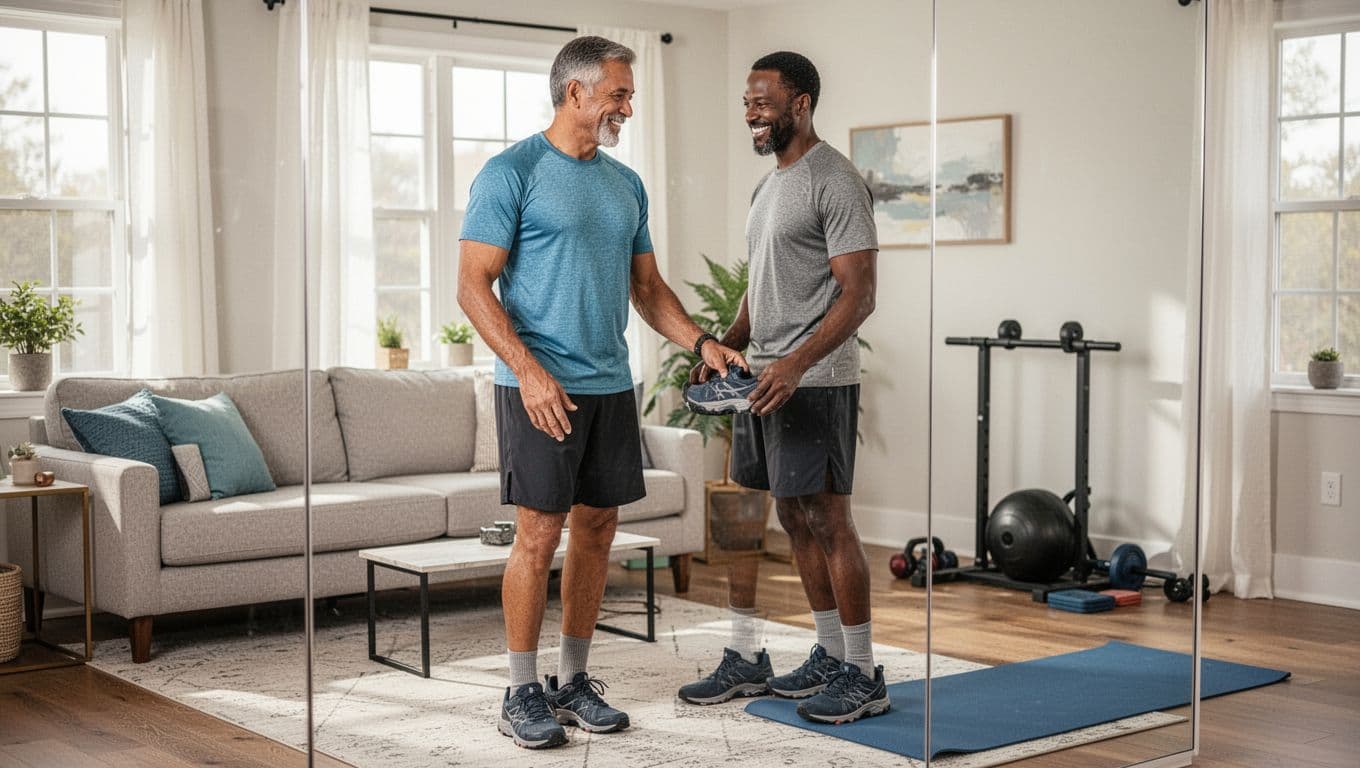 An everyday example of how a stipend supports real behavior change, created with AI.
The company gym discount is the classic wellness perk that looks good and gets ignored.
Stipends work better because they respect preference and life stage. Some people want yoga. Others want walking shoes. A lot of people want recovery, like massage or physical therapy support (where appropriate and within your benefit rules). Remote employees need options that don't require commuting to a partner gym.
Keep guardrails tight, not restrictive. Set eligible categories. Keep receipt rules simple. Send quarterly reminders so it doesn't become "a benefit no one remembers." If your stipend needs a 12-page PDF, you already lost.
This also improves inclusion. Shift workers and caregivers can spend it on what fits their schedule. That's a real upgrade from perks built for nine-to-five office life.
Build a full spectrum program, mind, body, money, and community
Modern wellness isn't a single program. It's coverage across the whole person, without forcing anyone to use all of it.
Think like an operating system. You want a few core supports that fit different roles and stressors. Frontline teams need fast resets and recovery. Hybrid teams need boundaries and connection. Remote teams need structure without micromanagement.
Also, life-stage support is moving into the mainstream. Menopause support, ergonomics, caregiving resources, and an aging workforce aren't "special topics" anymore. They're retention topics.
The trick is offering a menu without creating a maze. Pick a few options in each domain. Make access obvious. Then reinforce it through managers and routine.
For a broader snapshot of what large employers are emphasizing this year, WebMD Health Services summarizes key patterns in its 2026 workplace well-being trends.
Mental health support people will use (without a long learning curve)
The best mental health support has one shared trait: it's usable on a bad day.
That can include mental health days, coaching access, and manager training to spot early burnout signals. It should also include daily tools that don't require training, like short breathing sessions or a brief guided journey that builds confidence one day at a time.
This is where "zero training" matters. If employees need a workshop to use the tool, most won't. Meanwhile, leaders can reduce stigma in the simplest way possible: model the behavior. Take the short break. Name it as recovery. Move on.
Financial wellbeing to cut a hidden driver of burnout
Money stress shows up as sleep loss, distraction, and short fuses. It doesn't stay at home.
Offer basics that reduce confusion: benefits education, budgeting workshops, and access to reputable debt and savings resources. Keep the tone neutral. Don't moralize. Make it easy for employees to learn without exposing personal details to HR.
Even a short "how to use your benefits" session can remove a lot of silent stress. People can't use what they don't understand.
Connection and belonging programs that do not feel forced
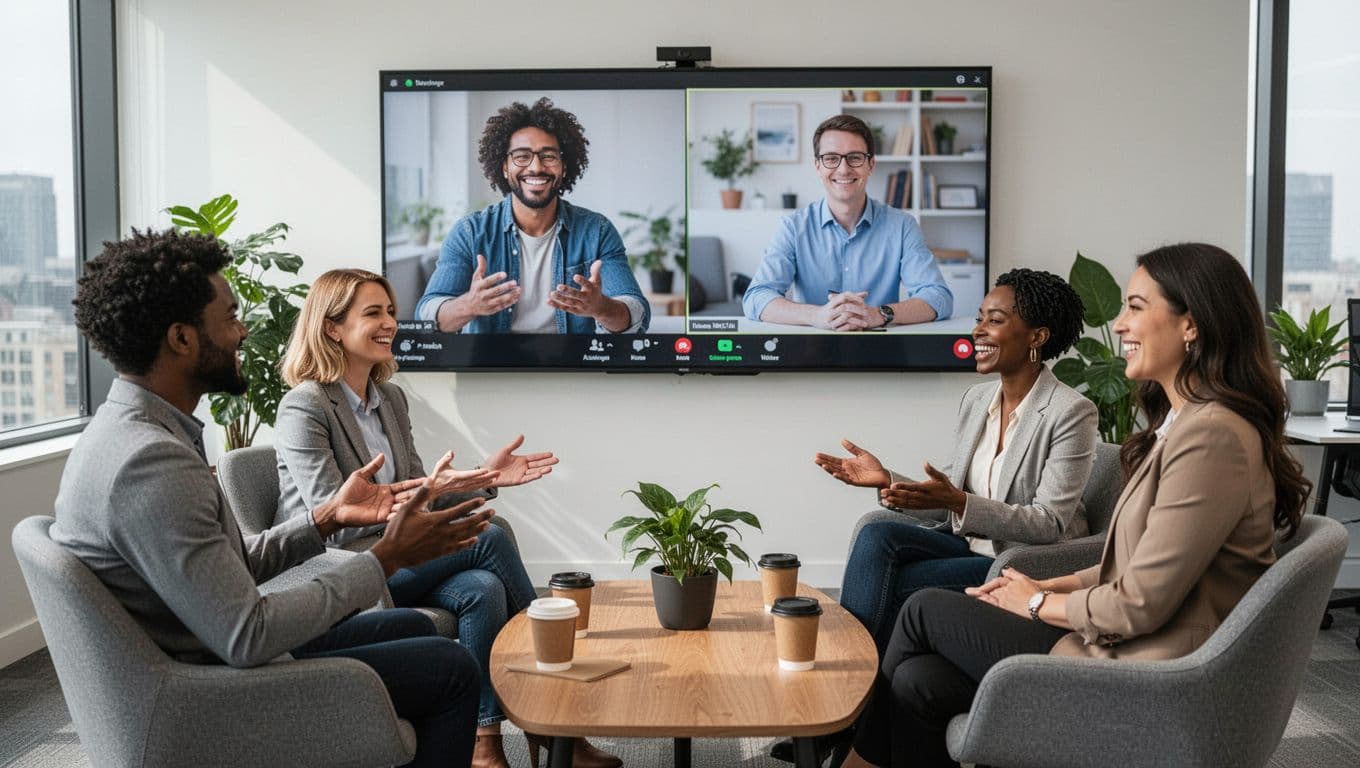 Connection practices work best when they fit how teams already meet, created with AI.
Belonging doesn't come from a forced happy hour. It comes from reliable micro-signals: I'm not alone, I'm not guessing, I'm not invisible.
Simple structures help:
- Buddy systems for new hires, with a clear purpose
- Peer circles that focus on one shared challenge (new managers, caregivers, remote workers)
- Meeting-free focus blocks that protect deep work
- Team rituals that take five minutes, like a Monday plan and Friday wins
Small pauses create culture. Not overnight. Over time. Consistency beats intensity.
How to roll out wellness without creating another task for employees
Rollouts fail when they feel like homework. Or worse, surveillance.
The playbook is boring, and that's why it works: leadership buy-in, manager enablement, clean messaging, and fewer tools. Also, protect time. If you tell people to take breaks but schedule them wall-to-wall, you're not running wellness. You're running hypocrisy.
Start small and visible. A short journey format is a good on-ramp because it builds routine without asking for belief. Ten days works well. It's long enough to learn, short enough to finish.
Once the pilot works, scale it. Expand by team type, not all at once.
If you want more thinking along these lines, the Pausa Business blog on workplace wellness keeps the focus on practical stress relief instead of corporate theater.
A 30 day rollout plan with a pilot, champions, and simple messaging
Week 1: Set baseline, pick two success metrics, and communicate boundaries (optional, private).
Week 2: Launch two habits, for example micro-break breathing plus a stipend or mental health day policy.
Week 3: Reinforce through managers, light reminders, and protected calendar time.
Week 4: Measure, then share anonymized results and one clear next step.
For multi-location teams, use the same habit triggers but vary the delivery. Frontline teams might use shift-change resets. Remote teams might anchor to meeting transitions. Keep the intent consistent and let the form adapt.
For trend context and examples of benefits ecosystems that support this approach, Wellhub's overview of corporate wellness trends for 2026 is a useful scan.
Common mistakes that quietly kill adoption
- Making it mandatory: Make it opt-in, then protect time so opting in is realistic.
- Using too many apps: Pick one core tool per need, then cut the rest.
- Complex onboarding: If setup takes more than two minutes, simplify it.
- Vague goals: Define one behavior change and one outcome trend.
- No manager support: Train managers to model breaks and reduce stigma.
- Not protecting time: Put micro-breaks on calendars, otherwise they vanish.
- Sharing individual-level data: Only share anonymized trends, never personal usage.
These are boring fixes. They're also the difference between 5% adoption and 50%.
Conclusion
Modern employee wellness program ideas aren't about perks. They're about lowering friction, protecting recovery, and making support easy to use on a hard day. Pick the top pain point, launch 2 to 3 ideas, protect five minutes in the day, then measure adoption and stress trendlines.
If you want a simple starting point for mental wellness support, Pausa Business gives every employee guided breathing on iOS and Android, with anonymized insights for leaders. Pricing can start around $2 per employee per month, so you can pilot small and expand based on what people actually use.