

Back-to-back meetings. A tight chest that shows up out of nowhere. A phone that won't stop buzzing, even while someone's trying to listen and respond like a leader.
In that moment, people don't need a lecture. They need a small, reliable way to steady their body so they can think again. That's why many CEOs end up searching for an anxiety coping app, and lately, some land on the phrase "NeuralCalm app."
Here's the issue: as of March 2026, "NeuralCalm" doesn't show up as a real anxiety app in public app listings. The name most people run into is NeuralCam, which is a camera app, not a coping tool. This post clears up that mix-up, then gives a practical way to pick a real solution your team will actually use.
What "NeuralCalm" seems to mean online, and why the name can mislead you
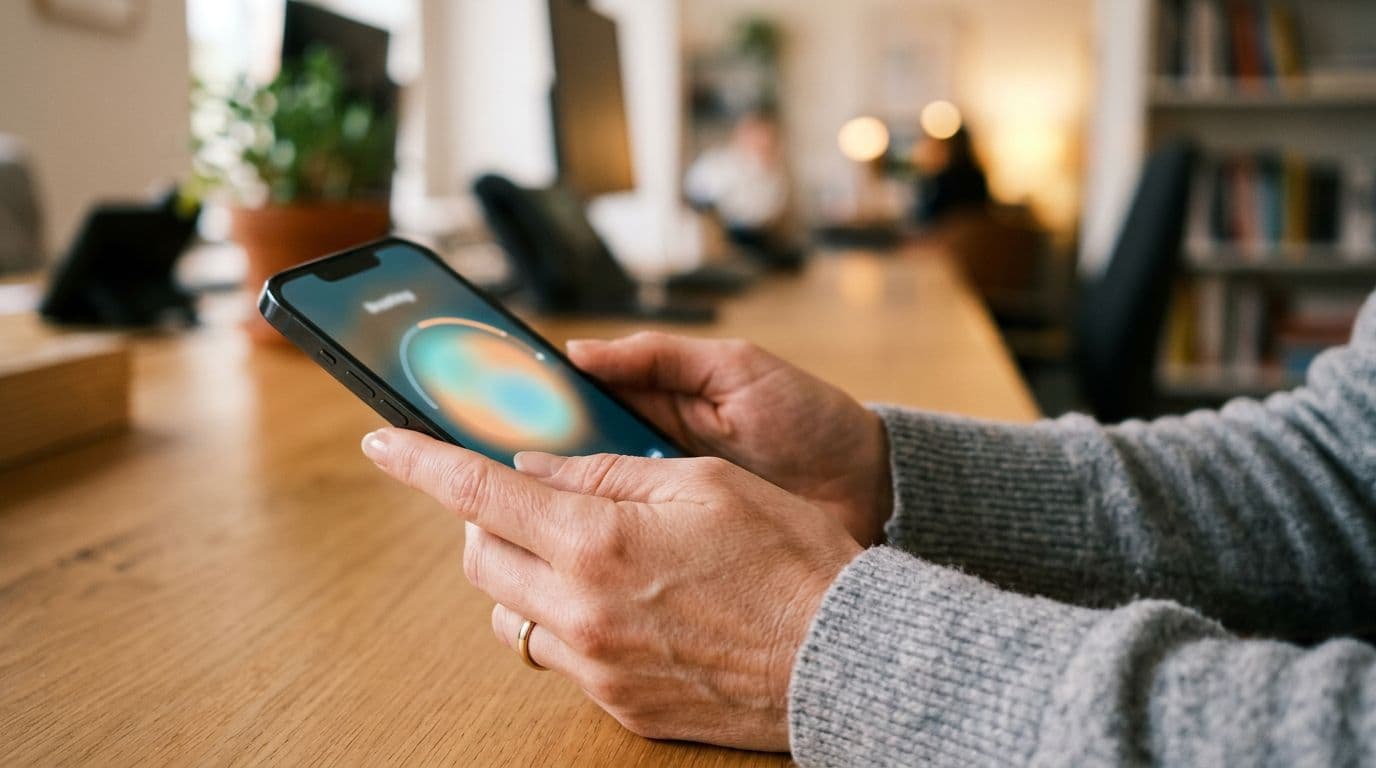
 An office moment many employees recognize, stress hits fast, and support needs to be simple (created with AI).
When people type "NeuralCalm app," they're usually looking for something specific: quick calm, less panic, better sleep, and fewer spirals during the day. The problem is that search results can point to similarly named products that have nothing to do with anxiety.
Right now, public results tend to point to "NeuroCalm" as a supplement product, and also to a Spotify audio album with a similar theme. Neither is a workplace-ready anxiety coping app, and neither helps you roll out support across a team.
Meanwhile, "NeuralCam" appears clearly in app listings, and the name looks close enough to cause mistakes. For a busy leader, that's not just an annoying detour. It can stall a wellbeing initiative, burn trust with HR, and waste the small window when people are ready to try something new.
NeuralCam is a camera tool, not a mental health solution
NeuralCam is built for photography and video. Think sharper night photos, portrait effects, and better-looking webcam output for calls. It's an imaging product, not a nervous-system support tool.
If you want to confirm what it is, the most direct source is the listing itself, see the NeuralCam Aperture App Store page. The category and feature set are about capturing images, not coping with anxiety.
Also, the platform reality matters. NeuralCam is iOS-focused, which already limits it as a company-wide wellbeing option. Even if it were mental health related (it isn't), you would still have coverage gaps across Android users.
The takeaway is simple: if the goal is anxiety support, you need a different app category entirely.
A quick "app identity check" for busy leaders
When names collide, do a 60-second identity check before you book a demo or push a pilot. Look for signs that the product is actually built for anxiety coping.
A quick scan that works:
- Core tools: guided breathing, panic support, CBT-style skills, or stress check-ins
- Safety basics: clear clinical disclaimers, crisis guidance, and "not a diagnosis" language
- Privacy clarity: a readable privacy policy, data retention notes, and security basics
- Workplace fit: team rollout, license management, and aggregated reporting (not individual surveillance)
Brand look-alikes are common, and review pages can help you spot what an app really does. For example, third-party pages like NeuralCam user reviews and safety details make it obvious you're dealing with a camera app, not an anxiety coping app.
If an app can't explain how it helps in 2 minutes, employees won't open it in a high-stress moment.
What a good anxiety coping app should do for employees during the workday
 A quick reset at a desk, the kind that fits between meetings (created with AI).
Executives don't invest in wellbeing tools for fun. You're protecting focus, retention, and decision quality. Anxiety shows up as missed details, shorter tempers, slower recovery after conflict, and more sick days that never get labeled as "mental health."
A good anxiety coping app won't "solve" anxiety. It can, however, support coping in the minutes that matter, when the body is loud and the calendar doesn't care.
That means the best tools fit into work as it is, not as we wish it were. Short sessions matter because employees don't have 30 free minutes and a quiet room. They have 90 seconds before they present, or 3 minutes after a tense Slack thread.
Fast relief beats big promises when someone feels anxious at work
"Fast" should mean 30 seconds to 5 minutes, with guidance that starts immediately. No account maze. No long onboarding. No need to understand meditation terms.
Breathing-first support works here because it's biology. When breathing slows and steadies, the nervous system often follows. People don't need to believe in anything. They just need a pattern and a voice that keeps them from rushing.
These are the moments that decide whether an app becomes part of the culture:
- Right before a presentation, when hands shake and thoughts race
- Right after conflict, when the body stays braced for a second round
- During inbox overload, when everything feels urgent and nothing is clear
- Before sleep, when the mind keeps replaying the day
Anxiety support that fits those moments earns trust quickly.
Adoption is the real KPI, not feature count
Most wellness tools get ignored because they feel like homework. If the app asks for too much effort, people won't use it when stress spikes.
Adoption improves when the experience feels like a pause, not a project: simple UX, short sessions, and reminders that don't nag. Gentle habit mechanics can help too, like streaks or small progress markers, as long as they don't add pressure.
If you want an example of how stress management can be framed in plain, usable language at work, this internal piece on How to Answer "How Do You Manage Stress?" in Interviews reflects the same principle: structure beats willpower when pressure hits.
A practical shortlist of anxiety app types, and when each one fits
The app market is crowded, and "best app" lists rarely match your employee mix. Instead of chasing one perfect tool, match the category to the need.
Here's a simple map to guide a first pass:
| App type | What it's best for | Where it can fall short |
|---|---|---|
| Meditation libraries | Building a longer-term calm habit | Often too long for mid-day spikes |
| CBT-style skill coaching | Thought patterns, worry, reframing | Can feel heavy in the moment |
| Panic-focused tools | Acute episodes and fear spirals | Narrow scope for daily stress |
| Breathing-first apps | Fast regulation in small windows | Needs good guidance, not just timers |
| Workplace platforms | Rollout, reporting, consistency | Must protect privacy to earn trust |
The key is choice without chaos. Offer one main path, then support alternatives for employees who need clinical care or prefer talk-based tools.
Breathing-first apps for people who don't meditate
Breathing is a strong entry point because nobody has to "learn how to meditate" to benefit. People can do it in a chair, with the camera on, and nobody needs to know.
Common techniques employees may already recognize include:
- Box breathing, a steady in-hold-out-hold pattern that can calm and focus
- Resonant breathing, a slow, even rhythm many people find settling
- Wim Hof-style breathing, more intense and energizing, better outside high-anxiety moments
The important detail is framing. These are guided patterns, not performance tests. The app should meet someone where they are, not push them into a hard session at the wrong time.
When mood tracking and personalization matter
Personalization matters when teams have mixed needs. One employee needs downshift and calm. Another needs focus before a client call. Someone else needs help winding down at night.
Mood check-ins can help, as long as they stay simple: a quick "how do you feel?" prompt, then a recommended exercise that matches the state. That keeps the experience from turning into scrolling.
For workplaces, privacy expectations are higher. Leaders should look for aggregated insights, anonymized reporting, and clear boundaries that prevent individual monitoring. Employees won't trust a tool that feels like surveillance.
If you're tracking broader trends, not just vendor features, this overview on mental health apps in 2026 captures how the market is shifting toward more human support and better-fit experiences.
Why Pausa is a strong "NeuralCalm-style" alternative for teams that need simple calm
 A calm, low-friction moment, quick guidance matters more than a busy interface (created with AI).
If someone searched "NeuralCalm app," they're asking for calm that works fast. Pausa fits that intent because it focuses on guided breathwork to reduce stress and anxiety, support better sleep, and reduce screen time, not increase it.
Pausa was created after real panic attacks, and the product philosophy shows. It doesn't assume employees want long meditation sessions. It assumes they need short, practical support in the middle of a normal day.
Mid-article, here are the direct download links:
For organizations, Pausa Business adds the pieces leaders need: enterprise access to the app for each employee, corporate stress-management programs, breathing workshops, and an admin panel to manage licenses and engagement.
What employees actually do inside Pausa when stress spikes
The best moment to judge an anxiety coping app is when someone's already stressed. That's when friction shows up.
Inside Pausa, employees can use:
- Guided breathing sessions designed to feel helpful from day one
- A mood tracker that recommends a breathing pattern based on how someone feels
- A short beginner journey that builds confidence without overwhelm
- Habit support, including streaks, that encourages consistency without guilt
There's also a quiet benefit leaders often miss: companionship. When anxiety hits, people tend to feel isolated, even in a crowded office. A calm guide in your ear can make the moment feel less lonely, and that changes how fast people recover.
How Pausa Business fits into a workplace wellbeing plan
 A shared pause can reset the tone of a team without turning wellbeing into a performance (created with AI).
Rollout should feel boring in the best way. If it's complicated, it won't scale.
A simple three-step flow is enough:
- The company sets up Pausa Business and assigns access.
- Colleagues download the app on iOS or Android.
- People start using short sessions between real work moments.
From a leadership view, the practical wins are clear: adoption without heavy training, anonymized data, and centralized management through the admin panel. Still, keep it grounded. Pair an app with an EAP, health benefits, or clinical pathways for employees who need deeper care. Apps support coping, but they don't replace therapy or medical advice when symptoms are severe.
Conclusion
"NeuralCalm" sounds like an anxiety coping app, but it doesn't appear as one today. Meanwhile, NeuralCam is a camera app, so the name similarity can waste time when teams need help now.
Choose tools that work in short, high-stress moments, protect privacy, and get used without friction. If you want a simple place to start, pilot a breathing-first option with a small group, then scale through Pausa Business if adoption holds. The goal isn't a perfect app, it's real relief employees can reach in under five minutes, plus professional support when they need more.