

It's 9:12 a.m. Your calendar is already a wall. Slack pings stack up. A meeting runs long, so the next one starts late. By lunch, your jaw is tight, your shoulders are high, and you've answered messages you don't even remember reading.
That pressure doesn't stay at work. It follows people home. It shows up as restless sleep, short tempers, and a brain that won't power down.
That's why I was grateful to be invited to the Apple Podcasts episode "Start with a Breath: Rethinking Mindfulness in a Busy World", where I talk about product design choices, what it's like to build through uncertainty, and why we created Pausa after panic attacks. Listen here: https://podcasts.apple.com/us/podcast/start-with-a-breath-rethinking-mindfulness-in-a-busy-world/id1828243186?i=1000750304967.
This post shares the CEO-level takeaways: how simple design drives adoption, why breathing tools fit real schedules, and what to look for if your wellness program keeps getting ignored.
Where to listen, and what you will hear in this episode
 An all-too-familiar workday moment, created with AI.
The episode is short enough to finish on a commute, but packed with practical points for leaders who care about focus, retention, and burnout. It covers three themes that matter if you're building products or leading teams under constant pressure:
First, it explains what Pausa is at its core: a guided breathing app designed to help people manage stress and anxiety in minutes, not hours. That matters because most employees don't need another long habit to maintain. They need relief in the middle of the day, when things get loud.
Next, the conversation touches on the reality of building while you're unsure. Not the headline version of entrepreneurship, but the day-to-day version: choosing what to ship, what to remove, and what not to chase. That same decision pressure shows up inside companies, too. Leaders feel it when budgets tighten, priorities shift, or change fatigue hits.
Finally, it discusses how AI can help simplify messy problems. Not by replacing human judgment, but by helping teams get from noise to clarity faster. For decision makers, that's the point. Better clarity means better choices, and better choices reduce stress across the org.
For broader context on how people choose mental wellness tools today (and why simplicity matters), it helps to see how mainstream reviewers frame the space, for example Verywell Mind's overview of mental health apps, which reflects the growing demand for support that fits real life.
The three moments worth bookmarking
If you only have time to bookmark three parts, anchor your listening around these themes:
- What Pausa is and who it helps: A plain-language explanation of a breathing-first approach for people who don't identify as "meditation types."
- What it feels like to create while you're unsure: The honest middle, where you're building without perfect certainty, but still choosing simplicity on purpose.
- How AI can simplify problem-solving: A practical view of using AI to move from scattered inputs to cleaner decisions, without losing the human side.
The thread that ties these together is simple: design for the moment people are actually in, not the one they wish they had.
Why we built Pausa, and why breathing beat long routines
 A quiet reset, created with AI.
Pausa didn't start as a business plan. It started as a problem that felt physical.
After panic attacks, everything got smaller. Breathing felt hard. Thoughts sped up. The body felt like it was sounding an alarm with no off switch. In those moments, long routines weren't realistic. Deep research sessions weren't either. The need was immediate: something simple, something that could work fast, something you could do anywhere.
That search kept pointing to a truth that's easy to overlook because it's so obvious: not everyone meditates, but everyone breathes.
Breathing also has a useful advantage for product design. You don't need special equipment. You don't need a quiet room. You don't need a new identity. You just need a few minutes and guidance that doesn't make you feel behind.
Pausa focuses on guided, science-backed breathing methods, including resonant breathing, box breathing, and the Wim Hof method. The goal isn't to "become a different person." It's to help people step out of stress, reduce mental noise, sleep better, and feel less alone in it. That last part matters more than most teams admit. When anxiety shows up, isolation often comes with it.
If you want to try the simplest version of the experience, start here: https://pausaapp.com/en. If Spanish is better for you or your team, use https://pausaapp.com.
To understand how common breathwork tools have become (and how people compare options), you can skim roundups like this breathwork apps list. The bigger point isn't "which app wins." It's that the market is crowded, so adoption only happens when the product feels effortless.
Design principle: meet people in the moment, not in an ideal life
A lot of wellness products assume a calm user with spare time. Real users show up mid-storm.
So the design lens is simple: short sessions, guided by audio, low friction. No long setup. No pressure to understand meditation. No complicated settings that create choice fatigue.
That looks like everyday use cases your leaders will recognize:
After a tense meeting, someone takes a three-minute pause before re-entering Slack.
Before sending a risky email, they breathe instead of firing from emotion.
When the chest feels tight at night, they follow a pattern that helps the body settle.
Pausa also adapts to how someone feels in that moment. Instead of making users hunt through a library, the app can recommend a pattern based on stress, anxiety, focus, energy, or calm. The goal is practical: fewer decisions, faster relief, and a gentle feeling of companionship in the hard minutes.
Design principle: most wellness tools get ignored, so we designed for adoption
Workplace stress isn't abstract. It shows up as mistakes, slower thinking, conflict, and churn. Yet many wellness programs fail for a basic reason: employees don't use them.
So we treated adoption like a product requirement, not a marketing wish.
That's where features like gentle screen-time locks come in. They interrupt doomscrolling without shame. They create a small break and offer a better next action. Mood tracking also matters, not as surveillance, but as a simple nudge: "Here's what might help right now."
In other words, the product doesn't demand motivation. It assumes motivation will be inconsistent, then designs around that reality.
What product design lessons a CEO can steal from this story
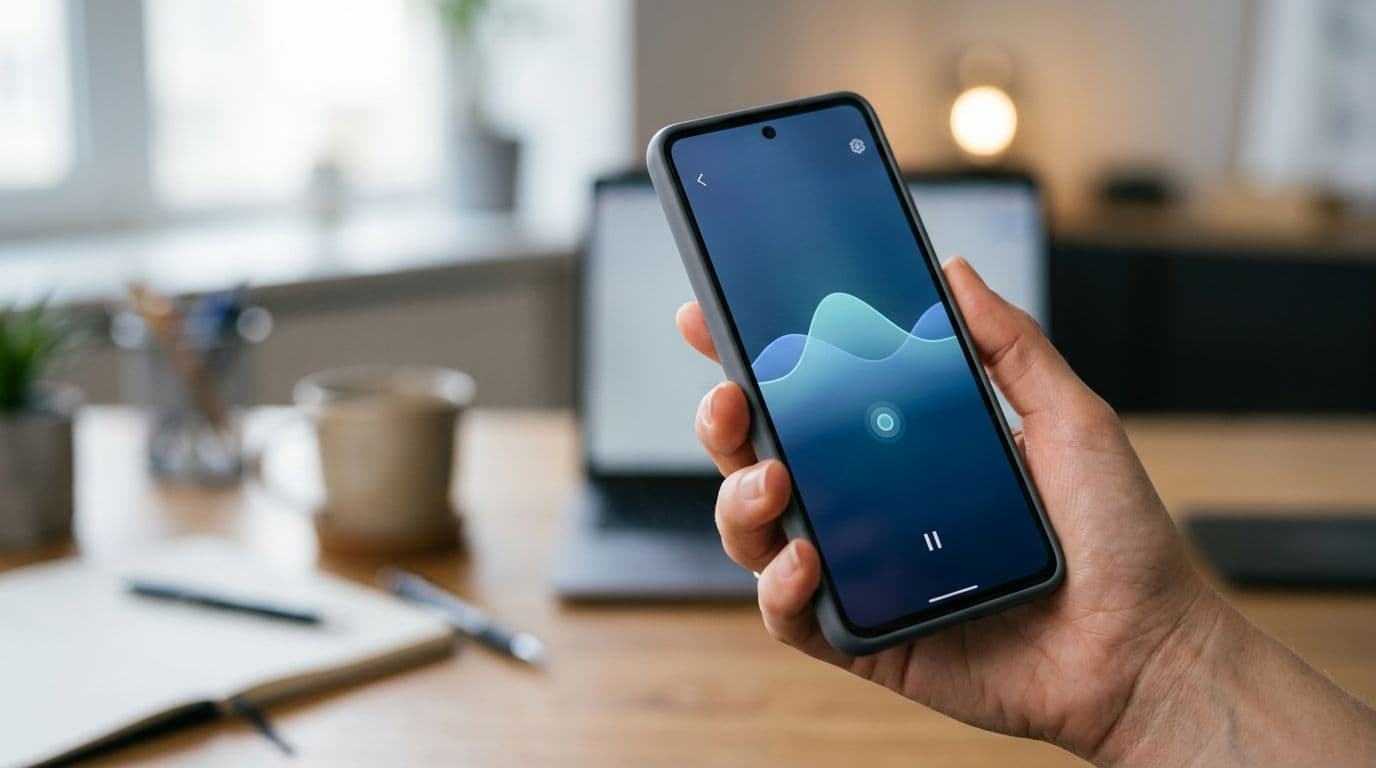 A breathing session that stays simple, created with AI.
The episode isn't only about breathing. It's also a compact lesson on building products that people actually adopt. If you lead a company, these lessons transfer to benefits rollouts, internal tools, and even how you communicate change.
Here are a few takeaways that hold up under real-world pressure:
Remove friction before adding features. If employees need a tutorial, usage drops. If it feels obvious, usage rises.
Make the first session useful. People decide fast. "Day-one value" beats a perfect roadmap.
Build trust with simplicity. When the product is calm, people believe it can help them become calm.
Measure engagement without breaking privacy. Leaders need outcomes, but employees need safety.
Design habits that can survive busy weeks. Streaks and short journeys work because they're light, not because they're loud.
This quick comparison captures the point:
| Design choice | What employees feel | What leaders get |
|---|---|---|
| Long, complex routines | "I'll do it later." | Low adoption |
| Short, guided pauses | "I can do this now." | Consistent usage |
The CEO lesson is blunt: if it's hard to start, it won't scale.
Build "day-one value" so people feel better fast
Day-one value means the first experience pays off immediately. Not in theory, but in the body.
Breathing is ideal for that because the feedback loop is short. A few minutes can shift how someone feels, which makes them more likely to return. That's also why Pausa includes an easy entry point for self-awareness, the free Stress and Anxiety Quiz: https://app.pausaapp.com/quiz.
The quiz helps users reflect on how they've been feeling recently, then points them toward relevant breathing sessions. It's not a diagnosis. It's a mirror. If someone is struggling or worried, professional support matters, and the tool should never replace care.
If you're evaluating solutions for your team, look for that same principle: can someone open it on a hard day and feel supported within minutes?
Make privacy a feature, not a footnote
People won't use mental wellness tools if they feel watched. That's true even in high-trust cultures, because stress makes people cautious.
So privacy has to be designed in, then communicated in plain language. Not "we take privacy seriously," but "your manager won't see your individual sessions." Teams need outcomes, not surveillance.
Pausa Business focuses on fully anonymized data, so leaders can understand engagement and trend-level impact without turning wellbeing into performance theater. When privacy is clear, adoption stops feeling risky.
For perspective on how widely people look for alternatives that feel more personal and less intimidating, you can see how the market frames choice and comfort in posts like meditation app alternatives. The core theme stays the same: people want support without judgment.
If you lead a team, here is how Pausa Business can help
 A team taking a shared pause, created with AI.
By March 2026, more US companies are treating mental health support as a standard benefit, not a perk. Still, the best intention fails if the tool sits unused.
Pausa Business is built as a B2B2C model that stays simple:
The company buys access.
Colleagues download the app on iOS or Android.
They start guided breathing from day one.
That structure matters because it reduces rollout friction. It also helps you avoid the usual failure mode where only a small, already-motivated group participates.
If you want the full overview for decision makers, start here: Pausa Business workplace breathing app.
From the documentation, the outcomes are the ones leaders actually care about: reduced perceived stress, improved focus during intense workdays, and real adoption with zero training. In addition, central license management keeps it operationally light, which is a quiet win for HR and ops teams.
A simple rollout that does not create more work for managers
Most managers don't need another program to "champion." They need something that runs without heroic effort.
A practical rollout can look like this:
-
You set up the organization and invite the team.
-
People install the app, then try a short session when they need it.
-
Leadership reviews anonymized engagement and wellness reporting, then adjusts support based on trends.
The admin-side idea is simple: central control for licenses and reporting, without creeping into personal data. That balance is what keeps trust intact.
If you're comparing options, it can also help to look at how other breathing apps describe their focus and simplicity, like Breath Ball's breathing exercise approach. The useful question for a CEO isn't "who has more features?" It's "what will my team still use in week three?"
Conclusion
Your org doesn't need a louder wellness program. It needs a calmer one, built for real days. If you want the full story, listen to "Start with a Breath: Rethinking Mindfulness in a Busy World" on Apple Podcasts, then take one small action today: try a short breathing session, or bring the option to your team.
When you're ready to support employees at scale, explore Pausa Business at https://business.pausaapp.com/. A pause is small, but the change compounds.