

It's 11:47 p.m. Your laptop is shut, but your brain is still open. You replay a tense call, scroll one more thread, then notice your jaw is clenched like a vise. In five hours, you'll be expected to be sharp in a room full of people who need decisions.
This is how work stress and insomnia team up: not as a dramatic breakdown, but as a quiet leak. Less sleep means more errors, slower judgment, and thinner patience. Over time, it also shows up as churn because tired people don't stay where they feel constantly on edge.
In early 2026 workforce reporting, a meaningful share of workers say they're struggling or burned out, which should worry any leader who cares about performance and retention. The USA Today|SurveyMonkey Workforce Survey 2026 is a reminder that "fine" at work can still mean depleted.
The good news: you don't need perfect routines to sleep better. You need a few smart moves that reduce stress load, protect sleep opportunity, and calm the body fast when the day won't cooperate.
Spot the pattern, how work stress turns into insomnia

Work stress doesn't just live in your calendar. It lives in your nervous system.
Here's the loop in plain language:
Stress tells your body, "Stay alert." Alert makes it hard to fall asleep. Poor sleep raises stress the next day. Then the cycle tightens like a knot.
A lot of workplace triggers pull that knot tighter, especially in leadership roles:
Late meetings across time zones. Job insecurity, whether real or "just in case." Heavy workload paired with vague priorities. Constant notifications that keep the brain scanning for threats. Even "good" stress like fundraising or a launch can keep your body in fight-or-flight long after the work ends.
Research rarely isolates a single neat 2026 statistic that says work stress alone causes insomnia. Life is messier than that. Still, the links between burnout, long screen time, financial pressure, odd shifts, and sleep disruption are well-established in workplace life, and they show up in what people report about their nights.
The most common "I'm tired but wired" signs in leaders and teams
The pattern often looks the same across org charts. You might see it in yourself, or in the people you rely on most:
- Long sleep latency: you lie down tired, but you don't fall asleep for 30 to 60 minutes.
- 3 a.m. wake-ups: you wake and your mind starts drafting tomorrow.
- Work in bed: "Just checking Slack" becomes a nightly ritual.
- Dread before sleep: bedtime feels like a performance you keep failing.
- Late caffeine or alcohol: you use one to push through, the other to shut off.
- Weekend catch-up: you sleep late to recover, then Sunday night becomes restless.
- Irritability and decision fatigue: small issues feel oddly sharp.
A simple prompt for 1:1s or pulse checks that doesn't pry: "In the last two weeks, do you feel more tired-but-wired at night, or more rested?" It's specific, it's not clinical, and it invites a real answer.
Red flags that mean it's time to get professional help
Some sleep trouble is situational. Other times, it's a signal to escalate.
Encourage professional support when someone reports:
- Insomnia most nights for several weeks.
- Loud snoring, gasping, or choking sounds during sleep (possible sleep apnea).
- Panic symptoms, persistent depression, or thoughts of self-harm.
- Dangerous sleepiness in safety-sensitive roles (driving, operating equipment, clinical work).
Self-check tools can help people notice patterns, but they're not a medical diagnosis. If you offer assessments at work, frame them as self-awareness, not labeling. The goal is support, not a score.
Fix what you can today, a simple plan for better sleep this week
If you're busy, you need a plan that works even when the week doesn't.
The most recommended structured treatment for chronic insomnia is CBT-I (cognitive behavioral therapy for insomnia). You don't need to become a sleep expert to use its core ideas. Think of them as levers: stimulus control, consistent wake time, realistic sleep windows, calmer thinking at night, and downshifting the body.
Treat sleep like a system. Protect the inputs (light, timing, stress), and the output improves.
Here's a simple "this week" approach. Use it like an experiment, not a personality test.
First, pick a consistent wake time (even if sleep was rough). Next, stop trying to "win" sleep by staying in bed longer. Finally, build a short wind-down you can repeat, even after a late meeting.
One quick way to structure the week:
| Time of day | What to do | Why it helps |
|---|---|---|
| Morning (first 30 minutes) | Go outside for daylight, even briefly | Anchors your body clock |
| Midday | Add a short walk or light workout | Lowers stress load, boosts sleep drive |
| Late afternoon | Set a caffeine cutoff you can keep | Reduces nighttime alertness |
| Evening | Create a hard work shutoff time | Helps your brain stop "on call" mode |
| Night | If awake too long, get up briefly | Breaks the bed = awake association |
The takeaway: the week doesn't need to be calm. The pattern needs to be consistent.
Night routine that actually fits a busy schedule (15 minutes, not an hour)
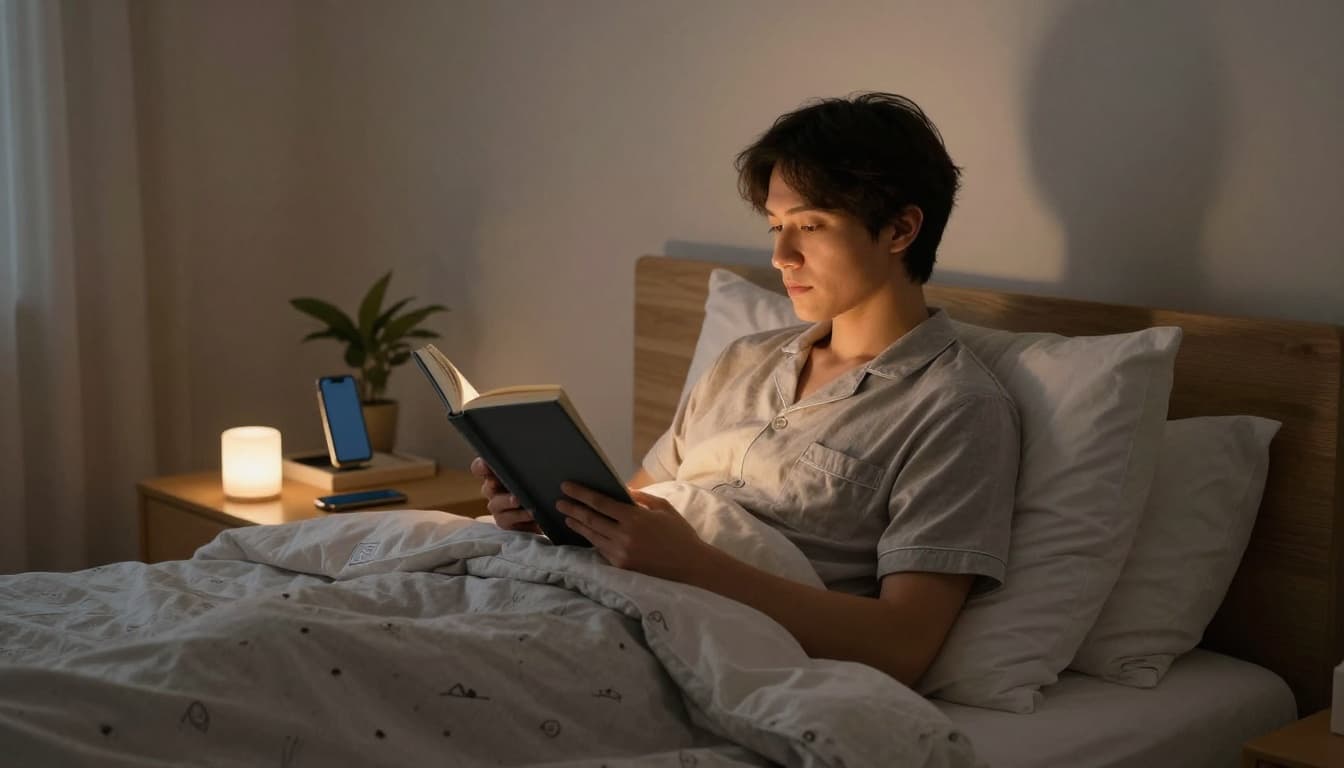
Most execs don't fail at sleep because they lack discipline. They fail because the routine asked for too much.
Try this minimal 15-minute shutdown:
Start with a hard stop for work messages. Even 20 minutes earlier helps. Then dim lights and shift to "quiet inputs." Put your phone out of reach (another room is best). If that's not realistic, place it face down on a dresser, not on the pillow.
Keep the bed honest: bed is for sleep and sex, not email and adrenaline. If you can't fall asleep after about 20 minutes, get up and do something calm in low light (paper book, simple stretch, boring TV with low brightness). When you feel sleepy again, return to bed. This is stimulus control, and it trains the brain to stop pairing the bed with effort.
Also, protect a consistent wake time. It's the anchor that makes the next night easier, even after a bad one.
Daytime moves that make sleep easier at night
Sleep starts long before bedtime.
In the morning, get real light on your eyes. Office light doesn't count the same way outdoor daylight does. Later, build short movement breaks into the day, especially if work is screen-heavy. A sedentary day often leaves the body stressed but under-tired, which can fuel that wired feeling at night.
Keep caffeine useful. If you need it, use it earlier. Many leaders do better with a firm cutoff in the early afternoon. Also, add a short decompression after high-stakes meetings. Two minutes of breathing in your chair beats carrying that meeting into dinner.
Finally, reduce late-day conflict when possible. Hard conversations are part of leadership, yet stacking them at 6 p.m. can push your nervous system into the night. When timing is flexible, choose earlier.
Use breathing to shut off the stress response fast, without needing to "meditate"

When sleep won't come, most people try to think their way out. That often backfires. The body needs a clearer signal: you're safe now.
Guided breathing is one of the lowest-friction insomnia and work stress solutions because it meets you where you are. No candles. No perfect silence. Just a few minutes that tilt your nervous system out of stress mode.
Sleep organizations regularly highlight how stress and mental health disrupt sleep for many Americans. The AASM survey on stress and sleep disruption captures what leaders see in real life: stress doesn't clock out at 5 p.m.
For a practical option, Pausa is built for people who don't meditate but do need relief. It uses short, guided sessions and science-backed breathing styles (like resonant breathing and box breathing). It also nudges less scrolling by adding gentle "break the scroll" locks that redirect you into a pause. Just as important, it doesn't make you feel alone, it feels like calm companionship when your head won't stop.
If your team needs language for handling pressure without sounding robotic, this piece on practical answers to "how do you manage work stress" in interviews pairs well with breathing because it turns stress into a skill, not a secret.
Three "micro-pauses" you can do around work, before bed, after a hard meeting
These are short on purpose. Do them sitting, feet on the floor. Stop if you feel dizzy, and breathe normally.
-
Before a meeting (box breathing, 1 to 2 minutes)
Inhale 4 counts, hold 4, exhale 4, hold 4. Repeat 4 rounds.
This is a reset button before you walk into pressure. -
After a tense call (long exhale, 2 to 3 minutes)
Inhale 4 counts through the nose, exhale 6 to 8 counts. Repeat 10 to 15 breaths.
Longer exhales help the body downshift. -
In bed (gentle slow breathing, 3 to 5 minutes)
Inhale 3 counts, exhale 6 counts. Keep the breath light.
If thoughts race, return attention to the exhale, not the story.
How Pausa makes it easier to stick with it (even when you're exhausted)
Willpower runs out. Design can help.
Pausa keeps the barrier low: guided audio, short sessions, and quick choices. You can check in with how you feel, then get a breathing pattern that fits that moment. Over time, features like streaks and a short multi-day journey build the habit without turning it into another chore.
It also respects a modern problem: many people reach for the phone when they need relief, then get trapped by scrolling. Pausa pushes the opposite direction, less screen time, more intentional pauses. It's available on iOS and Android, so it can follow your team across devices and travel days.
Company-level solutions that reduce insomnia at the source, not just the symptoms

If you want fewer sleep problems, don't only teach recovery. Reduce the triggers.
The workplace version of insomnia isn't always about pillows or supplements. It's about uncertainty, constant urgency, and the feeling of being "on call" even when nobody said you are. Financial stress and job insecurity also matter. For example, reporting on the link between money worries and sleep highlights how pressure off the balance sheet still lands in the bedroom, see research coverage on financial worries and insomnia.
Track outcomes like engagement, perceived stress, sick days, retention, and self-reported sleep quality. If you never measure it, sleep turns into a vague perk instead of a performance input.
For a scalable approach, Pausa Business is a B2B2C option: the company buys access, colleagues download the app, then they start guided breathing from day one. Adoption matters because most wellness tools get ignored. Pausa is designed around short sessions, zero training, and real use between meetings. It also offers fully anonymized reporting and an admin panel for license management. Pricing is positioned simply, starting around $2 per employee per month (as presented by Pausa).
Low-cost changes that protect sleep, even during busy quarters
You don't need a full re-org to lower after-hours stress. A few norms can change the texture of the week.
Set a meeting curfew on most nights. Limit late-Friday deadlines that force weekend recovery. Make on-call rules explicit, including what counts as urgent. Shift time zone work toward async-first habits, so people aren't punished for being offline. Clarify priorities in writing, because fuzzy priorities breed midnight rumination.
For shift workers, protect sleep opportunity by grouping night shifts when possible, managing light exposure (bright light at the start of the shift, lower light before sleep), and allowing planned naps where safety permits.
A strong signal to employees: "No-notification expectations are real here." That means leaders model it, not just HR.
A simple rollout plan, 30 days to reduce stress without adding another program no one uses
Week 1: run a baseline pulse. Keep it short. You can also offer an optional self-awareness questionnaire like the Pausa stress and anxiety quiz, with clear language that it's not a diagnosis.
Week 2: launch a team habit, five minutes daily, same time, same cue. Keep it opt-in, and frame it as recovery for output quality, not wellness theater.
Week 3: give managers two prompts to use after tough moments: "Do you need a two-minute reset?" and "What's the one thing we can de-risk today?" Pair that with guided breathing so the team has a shared tool.
Week 4: review anonymized trends and iterate. If usage is low, reduce friction, don't add lectures. If stress peaks show up after certain meetings, change those meetings.
If you want more structure, Pausa Business can add breathing workshops, but the core message should stay simple: small pauses, real change.
Conclusion
Insomnia and work stress don't need a perfect life to improve. They need a better system: CBT-I principles to rebuild sleep cues, work norms that stop manufacturing urgency, and fast calming tools like guided breathing when the day runs hot. For leaders, the next step is straightforward: pick one policy that protects after-hours time, then support a five-minute daily pause at work. For individuals, try a short breathing session tonight, then keep tomorrow's wake time steady. Better sleep isn't a luxury perk, it's how good decisions stay good.