You can run a company on low sleep. For a while. Then the math turns ugly.
Executives stay "on" all day, then lie down and keep working anyway. Not on a laptop, in their head. The body is in bed. The nervous system is still in the boardroom.
Better sleep habits for executives means something plain: repeatable behaviors with low friction that protect judgment. Not perfect sleep. Not a saintly routine. A system you can run during travel, late dinners, and high-stress weeks.
The stakes aren't abstract. A lot of U.S. adults still report sleeping under 7 hours. Short sleep is tied to worse attention and more errors, and chronic short sleep is linked to serious long-term health risk. If you want a research-grounded overview of what "sleep hygiene" actually means (and what tends to work), start with this open review: sleep hygiene foundations and strategies.
This article is the executive version. Small changes. High return. Built to survive reality.
Start with the executive sleep problem: stress, unpredictability, and a system stuck on high alert
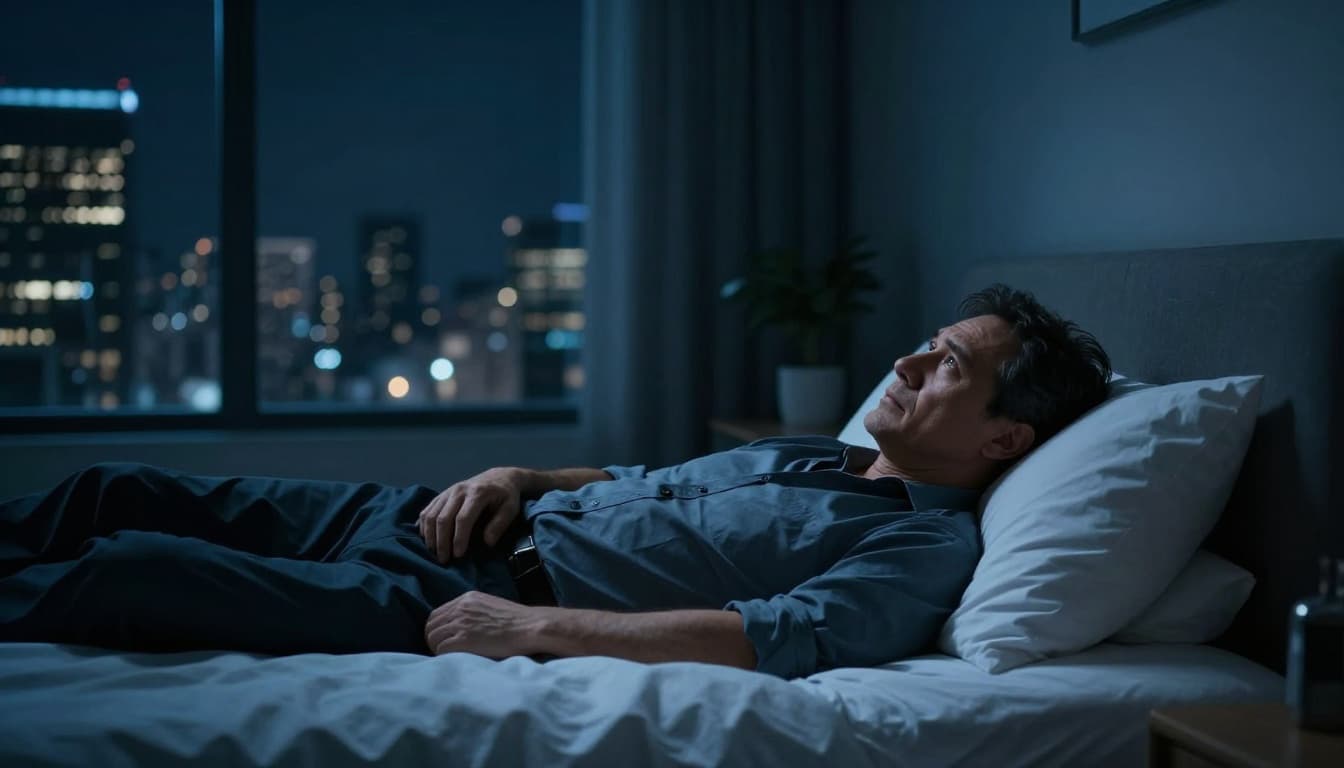 An executive awake at night with the mind still running, created with AI.
Most leaders don't "fail" at sleep. They get outcompeted by inputs.
Late-night work. Notifications. Decision residue. Travel. Alcohol at dinners. One more email in bed because it feels efficient. Then the brain learns a bad rule: bed equals problem-solving.
Stress also has a physical signature. When your day runs hot, your body stays in threat mode longer. Heart rate sits higher. Breathing gets shallow. Muscles don't fully let go. That state makes sleep onset harder, even if you're exhausted.
One more trap: chasing perfect sleep. Perfection adds pressure, pressure adds arousal, arousal blocks sleep. The goal is steady improvement and faster recovery. Think "operating system update," not "new identity."
A useful frame is performance, not purity. Sleep isn't a reward. It's the base layer that keeps decision-making clean.
The 3 biggest sleep traps leaders fall into (and what to do instead)
Trap 1: Working or checking email in bed.
Replacement (under 5 minutes): pick a "landing zone" outside the bedroom. Stand there, jot the one next action for tomorrow, then stop. If you must send something, do it sitting up, lights on, feet on the floor. Train your brain that bed equals downshift.
Trap 2: Using alcohol as a shortcut to unwind.
It can make you drowsy, then fragment sleep later. Replacement (2 minutes): warm water or herbal tea, plus a slower exhale pattern (more on that below). You're not chasing a buzz, you're signaling safety.
Trap 3: Irregular schedule with weekend catch-up.
Social jet lag is still jet lag. Replacement (30 seconds): set a "wake-time guardrail." Keep wake time within a tight band most days. If you need extra sleep, go to bed earlier, don't swing the morning wildly.
A January 2026 occupational study reinforces what leaders already feel: sleep quality tracks with real next-day performance. See nightly sleep and daily task performance.
Know when it is a sleep issue versus a health issue
This is not medical advice. It's an executive playbook.
Still, don't "optimize" around a problem that needs a clinician. Talk to a professional if you notice:
- Loud snoring, choking, or breathing pauses (possible sleep apnea)
- Severe daytime sleepiness or dozing off unintentionally
- Insomnia that lasts weeks, not days
- Worsening depression or anxiety symptoms
- Dependence on alcohol or sedatives to sleep
Use self-checks as awareness tools, not diagnoses. If something feels off, get support. The best leaders don't white-knuckle health.
If your sleep is broken by breathing problems or heavy daytime sleepiness, stop guessing and get evaluated. That's not weakness, it's risk management.
Build a sleep system that survives late meetings and early flights
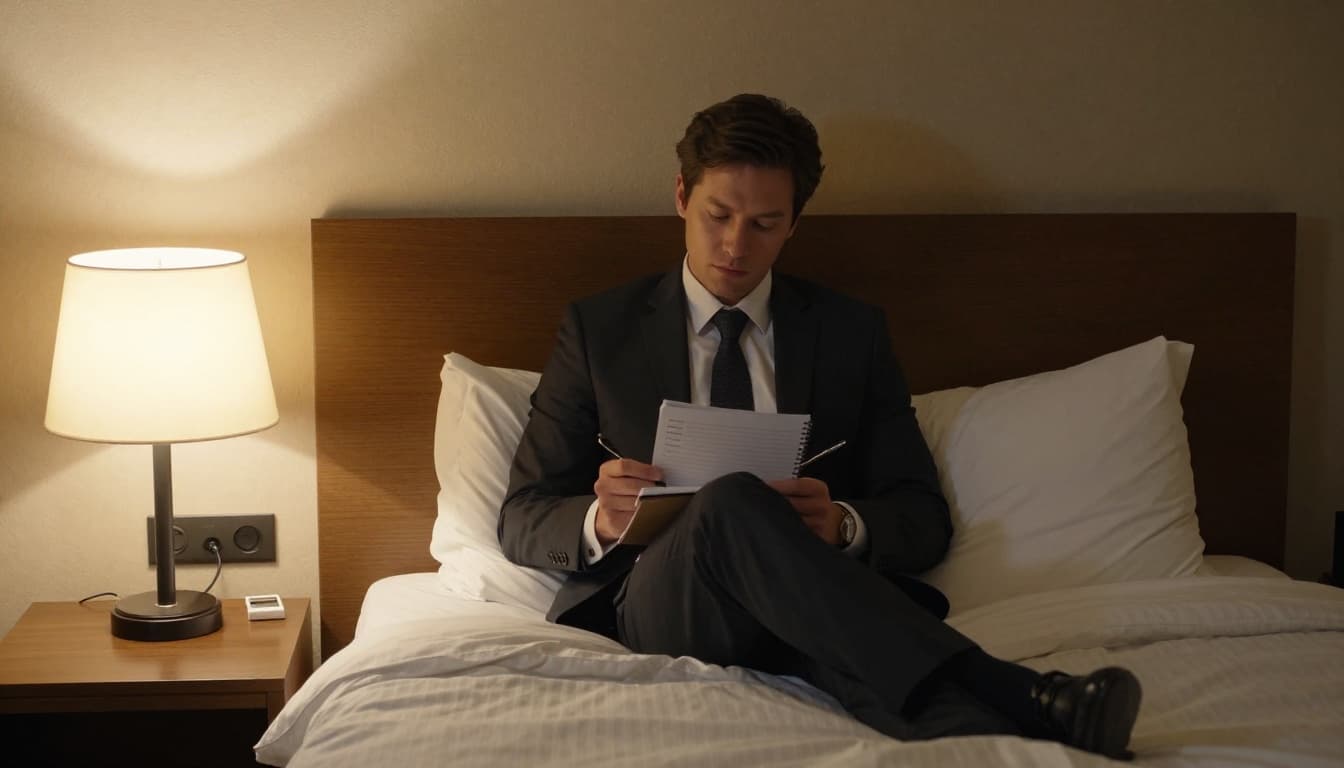 Wind-down in a hotel room, built to work even during travel weeks, created with AI.
The target most clinicians cite is 7 to 9 hours for adults. Yet for executives, the bigger win is consistency. Your brain likes a predictable clock. It resists chaos because chaos feels like danger.
So build a system around two anchors:
- a consistent wake time
- a short wind-down
Keep it simple enough that you can hand it to an assistant, put it in a calendar, and run it without motivation.
If you want a research-backed, behavior-first overview of what helps, scan this 2026 review: lifestyle and behavioral enhancements of sleep. The theme is boring, which is good: light, timing, routine, and arousal control.
The two anchors: protect your wake time, then earn your bedtime
Wake time is the steering wheel. Bedtime is the trailing indicator.
Pick a wake time you can hold at least 5 days a week, within a 30 to 60 minute window. Then let bedtime move based on real sleepiness, not "should."
A minimum viable schedule for ugly weeks:
- Keep wake time steady.
- If you had a late dinner or late call, accept a shorter night once.
- The next night, go to bed 15 to 30 minutes earlier, not two hours earlier.
- Avoid long morning sleep-ins that wreck the next two nights.
About naps: treat them like caffeine, dose matters. A 10 to 20 minute nap early afternoon can help. A late or long nap often steals sleep pressure from the night. If nights are already shaky, skip the nap and protect bedtime.
A 45-minute wind-down that does not feel like another task
Wind-down fails when it looks like homework. Make it a template, not a ritual.
Here's a clean 45-minute structure with swap-in options:
- Minute 45 to 30: dim lights, lower the room's "daytime" signal.
- Minute 30 to 20: warm shower or light stretching (nothing intense).
- Minute 20 to 10: paper book, not work content.
- Minute 10 to 5: write tomorrow's top 3 priorities, then stop.
- Minute 5 to 0: breathing reset or quiet audio guidance.
Screens matter because they keep the brain in intake mode. Aim for a 60-minute screen stop when possible. When it's not possible, use a fallback: night mode, brightness down, and a hard "close the loop" rule (finish the one thing, then put the device away).
If you're managing sleep with a wearable, treat the data as a compass, not a verdict. The point is behavior change, not nightly scores. If you're curious where wearables and personalization are heading, this 2026 protocol shows the direction: personalized wearable-based sleep intervention.
Use breathwork to switch off faster: the simplest way to downshift after high-stakes days
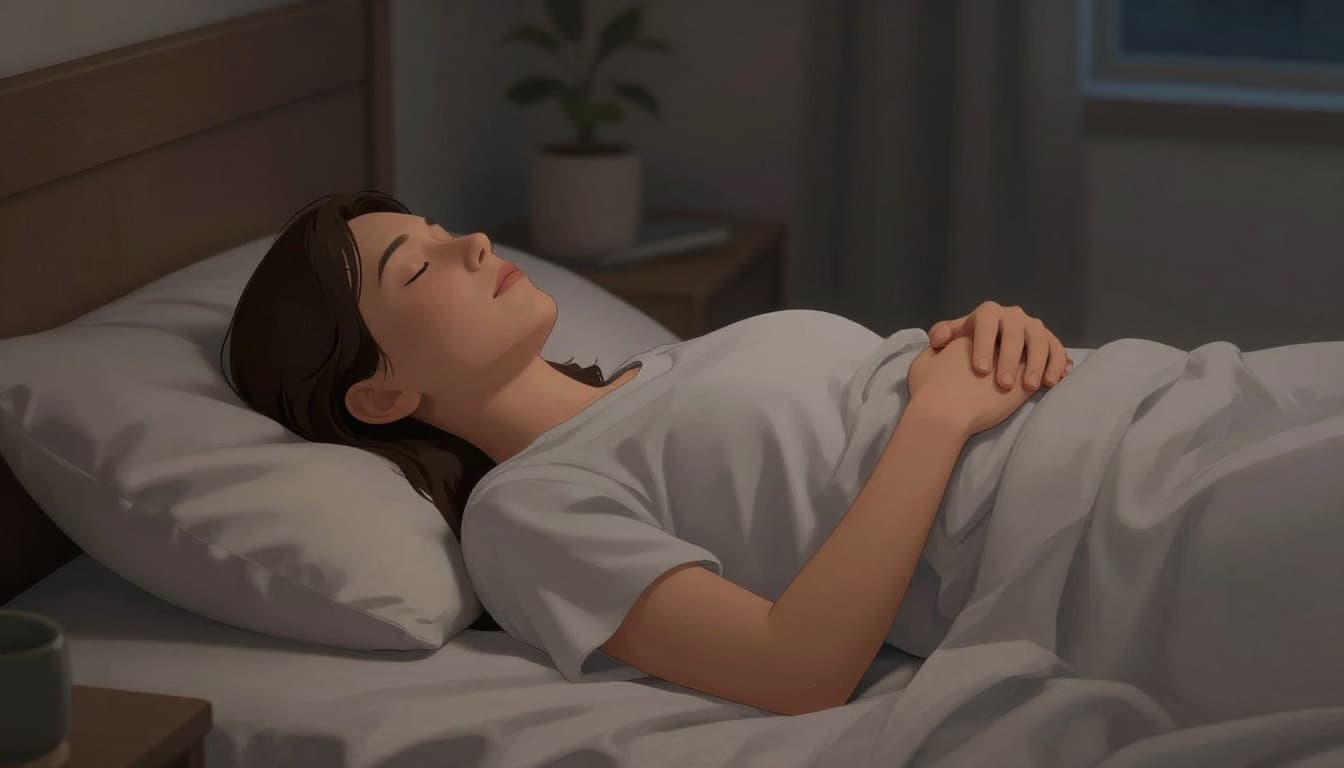 A simple breathing practice in bed to reduce mental noise, created with AI.
Not everyone meditates. Everyone breathes. That's the advantage.
Breathwork isn't mystical. It's a control knob for arousal. The right pattern can nudge your body out of fight-or-flight and toward sleep readiness. You're not "clearing your mind." You're shifting the signal underneath the thoughts.
Three executive-friendly tools:
- Exhale-led breathing for wind-down (longer exhales calm the system).
- Box breathing for racing thoughts (structure beats spiraling).
- Physiological sigh for stress spikes (two inhales, long exhale, then normal breathing).
If your team experiments with intense methods like Wim Hof breathing, be careful with context and safety. This breakdown helps you choose the right dose: Wim Hof guided breathing for teams.
A 5-minute breathing reset you can do in bed (no meditation experience needed)
Try 4-7-8 breathing. Keep it gentle. Don't force big inhales.
- Exhale softly through your mouth.
- Inhale through your nose for a count of 4.
- Hold for 7.
- Exhale slowly for 8.
- Repeat for 4 rounds.
If the holds feel uncomfortable, shorten them. Make it 4-4-6, or even 3-3-5. The point is the long exhale, not heroic breath retention.
For nights when thoughts sprint, switch to box breathing:
- Inhale 4, hold 4, exhale 4, hold 4.
- Do 5 cycles.
- If counting keeps you awake, stop counting and just match the shape.
Breathing is the smallest intervention with the fastest feedback. Five minutes changes how your body feels. Then sleep has a chance.
Make it easy with guided audio, so you do not have to think
When you're overtired, you don't want another decision. You want a track to follow.
That's why guided breathing works. It gives you cues when your brain is loud. It can feel like quiet companionship at 1:47 a.m., not another app asking for attention.
Pausa was built after real panic attacks, by people who wanted something simpler than long meditation. Short, audio-led sessions. No ceremony. No performance. It also pushes against endless scrolling by encouraging intentional pauses instead of more screen time.
Use it in your wind-down, or when you wake up at 3 a.m. and your mind tries to reopen the day. Start here: guided breathing with Pausa.
Lead by example: how better executive sleep habits reduce burnout across the whole company
 Calmer leadership norms spread through teams, created with AI.
Executive sleep isn't only personal. It's cultural.
Leaders set the pace through tiny signals. The midnight email. The 7 a.m. meeting after a late flight. The praise for "always on." People copy what gets rewarded, even when it hurts them.
Better norms don't lower standards. They reduce preventable mistakes. Sleep-deprived teams don't move faster, they just create more rework.
If you want a blunt framing that high performers tend to recognize, read Stop Paying the Sleep Tax. The thesis is simple: you pay either way, now or later.
Small policy shifts that protect sleep without slowing execution
A few moves that work because they're specific:
- Delay-send non-urgent emails, so people don't feel hunted at night.
- Protect time zones, no "early call for them, late call for you" as default.
- End meetings 5 minutes early, so stress doesn't stack with no reset.
- Avoid 7 a.m. meetings after travel, unless it's a true emergency.
- Write "crisis rules" versus "normal rules," so urgency stays rare.
A script that lands without drama:
"We're not performing exhaustion here. If it's not urgent, it waits. I'd rather have a rested decision tomorrow than a fast mistake tonight."
That's leadership. Clear. Calm. Non-negotiable.
A simple wellbeing benefit people actually use: guided breathing for the whole organization
Most wellness perks fail because adoption is low. They feel time-heavy or awkward, so employees ignore them.
Pausa Business is designed for use, not applause. The company provides licenses, employees download the iOS or Android app, and they can start short guided breathing sessions immediately. No training required.
What makes it stick is the product logic: quick sessions, mood-based recommendations, streaks that build consistency, and a structured 10-day journey for beginners. It also includes screen-time locks that gently break the scroll loop and redirect attention back to an intentional pause. For leaders, reporting is anonymized and managed through an admin panel, so you can track engagement without turning wellbeing into surveillance.
If you're evaluating options, start here: Pausa Business for organizations.
The business case is plain. Lower stress supports focus. Better focus means fewer mistakes. Fewer mistakes means less late-night cleanup, which feeds better sleep again. A loop you actually want.
Conclusion
Pick two moves this week: one wake-time anchor and one downshift tool (a short wind-down or five minutes of breathing). Then repeat. That's the whole strategy.
Small pauses matter because they change your body fast, and the body pulls the mind with it. Over time, those minutes add up to calmer nights and cleaner decisions.
Treat sleep like a strategic asset, not a reward you "earn" after you break yourself. Try guided breathing personally, then consider Pausa Business if you want the same steadying effect across your team.

