In March 2026, "stress at work" isn't a mood. It's a baseline. Most US surveys land in the same ugly range: roughly half to three-quarters of employees report high stress or burnout, and more than half say they've felt burned out recently. That shows up as mistakes, rework, short tempers, and churn.
You can't policy your way out of a nervous system problem. You also can't roll out a wellness program that needs training, buy-in, and perfect calendars.
That's why box breathing for employees works. It's simple, fast, and private. No incense. No jargon. No performance.
One sentence definition: inhale for four, hold for four, exhale for four, hold for four, then repeat.
Not everyone meditates. Everyone breathes. Small pauses add up.
Box breathing, explained in a way employees will actually use
 An employee practicing box breathing at a desk between tasks, created with AI.
Box breathing is paced breathing with pauses. The "box" is the four equal sides: inhale, hold, exhale, hold. People like it because it gives the mind something to do. Counting becomes a rail. Your thoughts stop free-climbing.
It also works because breathing is a control surface for stress. When pressure hits, the body tends to speed up. Shoulders rise. Breaths get shallow. Your brain treats that as proof that something is wrong, so it pushes harder.
Slow the breath, and you send a different signal.
In plain terms, box breathing nudges your nervous system away from fight-or-flight and toward calm mode. Not magic. Not a cure. Just a reset that changes what your body thinks is happening.
For employees, that matters because work stress usually arrives in bursts, not as one big event. A tense chat. A scary email. A meeting that goes sideways. A calendar packed tight enough to erase lunch.
Box breathing is built for those moments. It's discreet. It doesn't require closing your laptop for 30 minutes. It doesn't need a yoga mat. It's something an employee can do while the Zoom room fills up.
Set expectations clearly:
- It can feel different in under a minute.
- It gets easier with repetition.
- It won't fix a broken workload, but it can stop stress from hijacking the next decision.
If you want the science backbone, the research on paced breathing and stress is solid overall, even if "box breathing" as a named method has a smaller study base. A good starting point is this systematic review on breathing for stress and anxiety, which focuses on how to apply breathing practices in real settings.
Then you turn it into something usable at work, not a lecture.
The simple 4 by 4 steps (and how to adjust if 4 seconds feels hard)
Box breathing works best when it's boring. No heroics. Here's the version an employee can do at a desk without drawing attention.
First, set posture. Feet flat. Sit back. Let shoulders drop. Unclench the jaw.
Now the steps:
- Exhale fully (one slow breath out).
- Inhale 4 seconds (through the nose if you can).
- Hold 4 seconds (soft hold, not a strain).
- Exhale 4 seconds (steady, not forced).
- Hold 4 seconds (again, soft).
- Repeat 3 to 4 rounds.
If four seconds feels hard, don't fight it. Reduce friction:
- Start with 3 seconds for each side.
- If holds feel sharp, skip the holds for a week (inhale 4, exhale 4).
- Breathe through the nose if possible, but don't make it a rule.
- Stop if dizzy. That's your body asking for less intensity.
A leader-friendly script you can paste into Slack or meeting chat:
Quick reset (optional): exhale, then inhale 4, hold 4, exhale 4, hold 4. Do 3 rounds. Cameras off is fine.
Simple. Normal. No performative wellness voice.
What it helps with at work (stress spikes, focus, and better decisions)
Box breathing is not a personality upgrade. It's a circuit breaker. Use it where judgment matters and emotions run hot.
Common work moments where it fits:
Before a presentation: your heart is racing, your mouth is dry, and your brain is predicting disaster. Box breathing slows the surge so you can speak cleanly.
After a tense meeting: adrenaline lingers. You're tempted to fire off a sharp message. Take 60 seconds first. Then write.
Before sending a risky email: if the email feels like a grenade, your breath is already telling you the truth. Reset first, then choose your words.
During context switching: switching tasks all day taxes attention. A short breathing reset helps you arrive at the next task with less mental noise.
End of day decompression: the workday ends, but your body doesn't get the memo. A few rounds create a boundary.
Workplace claims should stay modest. The broader research on breathing at work supports stress reduction and better self-regulation, and this overview of deep breathing exercise at work lays out practical applications without selling fantasies.
The best part is operational: employees can do it without leaving their chair.
Make box breathing a team habit without making it feel like another task
 A small team pausing together before continuing a meeting, created with AI.
Most wellness rollouts fail for a boring reason: they add chores. Another login. Another initiative. Another thing employees must pretend to care about.
So treat box breathing like hygiene, not culture theater.
Keep it tiny. Keep it optional. Keep it frequent enough to matter.
Also, don't pretend stress is a personal flaw. Stress is information. It's a system load signal. When load stays high, people don't become "more resilient." They become brittle.
A practical rollout plan looks like this:
Start with leaders modeling. One minute, then move on. No speeches.
Give employees permission to keep it private. No "share how you feel" circle. No forced cameras.
Avoid tracking individuals. If you ever measure anything, aggregate it. Protect psychological safety first. People won't use a tool that feels like surveillance with a softer font.
This is where many programs get it wrong. They collect too much. They ask managers to "follow up." Employees read that as risk.
If you want adoption, reduce the social cost. Make it normal to pause. Make it normal to recover. Make it normal to continue.
For more practical language around stress that doesn't sound fake, share something like practical answers to "How do you manage stress?" in interviews with your managers. Not because you're prepping interviews, but because the framing is useful: stress management is a process, not a vibe.
Optional habit support can help too. Some teams like "streak" mechanics or shared check-ins. Others hate them. Offer it, don't push it. Accountability only works when it feels chosen.
Where box breathing fits best in the workday (the 3 trigger moments)
Box breathing sticks when it attaches to real triggers, not good intentions. Use three moments with high ROI.
First is start of day. One minute. Before the first inbox scan. It sets a baseline so you don't start the day already reactive. A simple reminder works: a calendar nudge titled "60-second reset."
Next is between meetings. Meetings spike stress because they force rapid switching. After a meeting ends, take 45 to 60 seconds before you jump. Meeting hosts can prompt it with one sentence in chat, then end the call.
Third is after a stressful event. That includes a customer escalation, a conflict, or a "we need to talk" message. Don't process the event while your body is still braced. Do three rounds first. Then decide what you'll do.
One minute routines win because they're believable. Employees don't need permission to meditate. They need permission to not spiral.
How to introduce it as a leader so employees do not roll their eyes
If you introduce box breathing like a wellness campaign, people will tune out. Frame it as performance support, because that's what it is.
Leader script (short, usable):
Quick thing I'm trying: 60 seconds of box breathing before high-stress moments. It helps me stay steady. Optional, cameras off. If it's not for you, skip it.
Then follow these rules.
Do:
- Model it yourself, quietly and consistently.
- Keep it brief, then move on.
- Let people opt out without explanation.
- Normalize "reset first, respond second."
Don't:
- Make it mandatory.
- Ask people to report feelings to the group.
- Tie it to performance reviews.
- Turn it into a personality test.
If it feels like compliance, it will die. If it feels like support, it spreads.
A scalable option for companies: guided box breathing with Pausa and Pausa Business
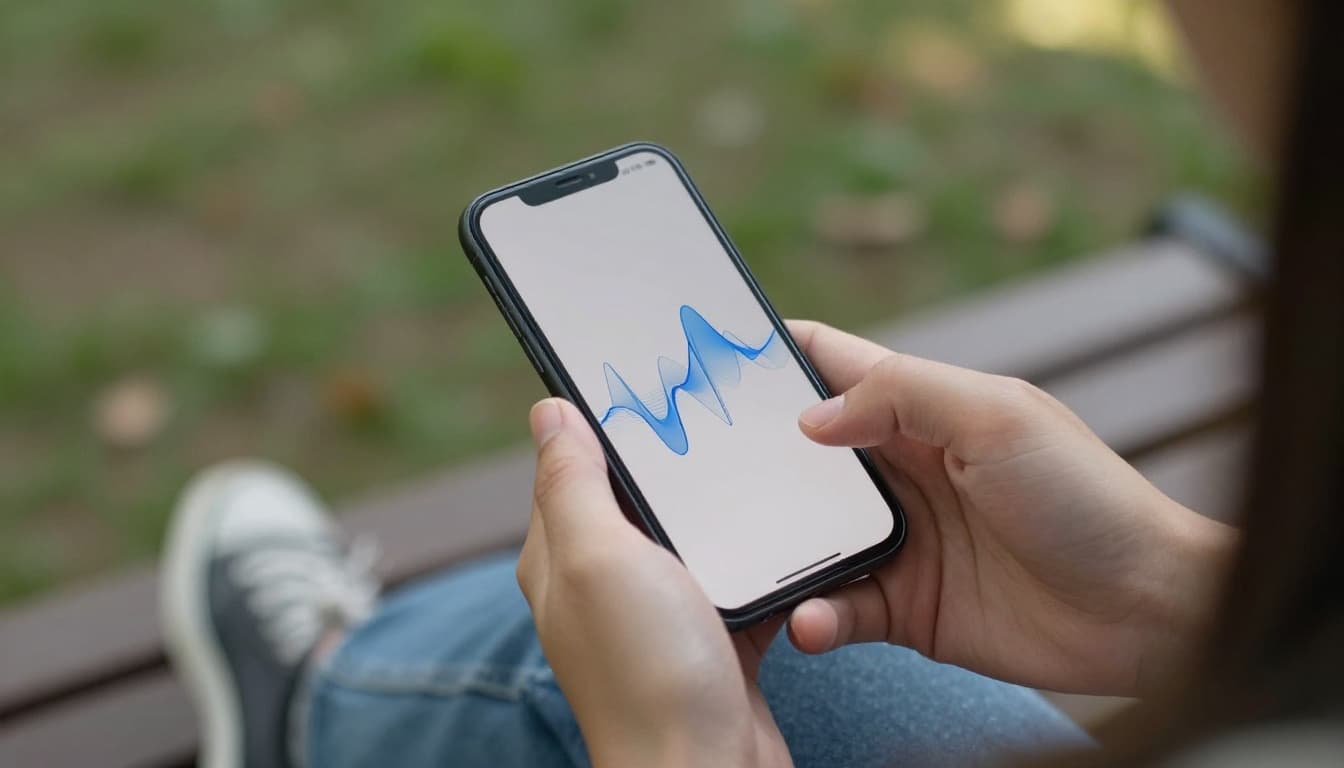 An employee using a phone-guided breathing session on a short break, created with AI.
If you want box breathing to scale, you need consistency without meetings. You need guidance without trainers. You need a tool employees will actually open.
That's the slot Pausa fills.
Pausa is a guided breathwork app built for real workdays. Short sessions. Clear cues. No pressure to "be a meditator." It focuses on breathing patterns that support stress control, focus, energy, and calm. Box breathing is one option, not the whole story.
In the middle of a messy day, employees don't want a philosophy. They want a next step. That's why the app uses AI-powered mood tracking to learn how someone feels and recommend a matching breathing session. Stress, focus, energy, calm. Pick one, breathe, move on.
For teams, Pausa Business adds the company layer: easy setup, employee invites, and fully anonymized reporting. That last part matters. If you measure anything at work, aggregated data is the only sane default.
If you want employees to try it fast, start here: Download Pausa for guided breathing.
Pricing stays simple too, starting at $2 per employee per month. That's the point. Low friction, low ceremony.
What employees get on day one (guided sessions, mood based recommendations, and quick wins)
The employee flow is simple:
Open the app. Choose how you feel. Get a guided breathing session that matches the moment. Then return to work.
Some people want structure, so Pausa includes a 10-day journey that builds confidence one day at a time. Others want momentum, so streaks are there, optional, and lightweight. The goal is habit, not guilt.
There's also a smart "unlock to breathe" concept that nudges users away from endless scrolling and into a short breathing pause instead. Most apps compete for attention. Pausa tries to give attention back.
The product's origin story matters here too. It wasn't designed from a branding workshop. It came out of real panic and anxiety experiences, and the design choice is consistent: keep it simple, keep it usable.
Pausa is available on iOS and Android, so employees don't need special devices or company phones.
What leaders get (adoption, insights without exposing anyone, and a calmer culture)
Leaders don't need another dashboard that tells them what they already feel. They need adoption.
Pausa Business is built for real usage: no training required, quick sessions, and an experience employees can use in private. The outcomes you're aiming for are practical, not poetic: reduced perceived stress, improved focus during intense days, and fewer "I regret that email" moments.
The reporting is anonymized because the goal is support, not surveillance. You can see engagement trends without turning breathing into a compliance metric.
Over time, those small pauses change culture in a concrete way. Less tension. Faster recovery after conflict. Better decisions under load. Not perfect. Just better.
Conclusion
Box breathing works because it respects reality. It's fast. It's discreet. It doesn't require training, equipment, or a new identity.
If you're leading a team, don't start with a company-wide announcement. Start with you. Use it before your next hard meeting. Notice what changes, then keep it.
Next, pilot it with one small team for two weeks. Keep it optional. Keep it short. Protect privacy.
Finally, pick one daily trigger moment and make the pause normal. That's the whole play. Small resets, repeated, beat big wellness promises every time.

