

You're in bed, scrolling, even though you're tired. Your chest feels tight, your mind is running fast, and your breathing turns shallow. In that moment, "just relax" isn't useful advice. You need a tool you can actually do.
Breathwork means changing your breathing on purpose. You follow a pattern, like timed inhales and longer exhales. Meditation means training attention. Often, you notice the breath without trying to change it, then return when the mind wanders.
Both can lower stress. However, they feel different and tend to work on different timelines. Breathwork often shifts your state in minutes. Meditation tends to build steadier benefits over weeks. This guide helps you choose what to do today, and what to practice for the long run, without making medical promises.
How breathwork and meditation work in your body and mind
Breathwork and meditation overlap because both use the breath. Still, their "control strategy" differs.
Breathwork is an active input. You pick a pace, a ratio, or a hold. That pattern changes signals going from the lungs to the brainstem, and then into the autonomic nervous system. In simple terms, you can nudge your stress response down by changing how you breathe, especially by slowing the overall rate and lengthening the exhale.
Meditation is a training loop. You notice a sensation (often breathing), you notice distraction, and you return. That repetition builds attentional control and improves how you relate to thoughts. The body may calm too, but the practice starts with awareness, not control.
A practical way to remember it:
- Breathwork is a dial for your nervous system.
- Meditation is strength training for attention.
Recent research summaries through early 2026 match what many people feel. Structured breathing often produces faster shifts in mood and arousal, while mindfulness practice tends to compound with consistency. For example, controlled studies on structured breathing show measurable improvements in mood and physiological arousal compared with passive control conditions, and sometimes compared with mindfulness instructions in the short term (see structured respiration research on mood). Over time, both approaches can support sleep and focus, but they get you there by different routes.
Breathwork: you change the breath to change your state
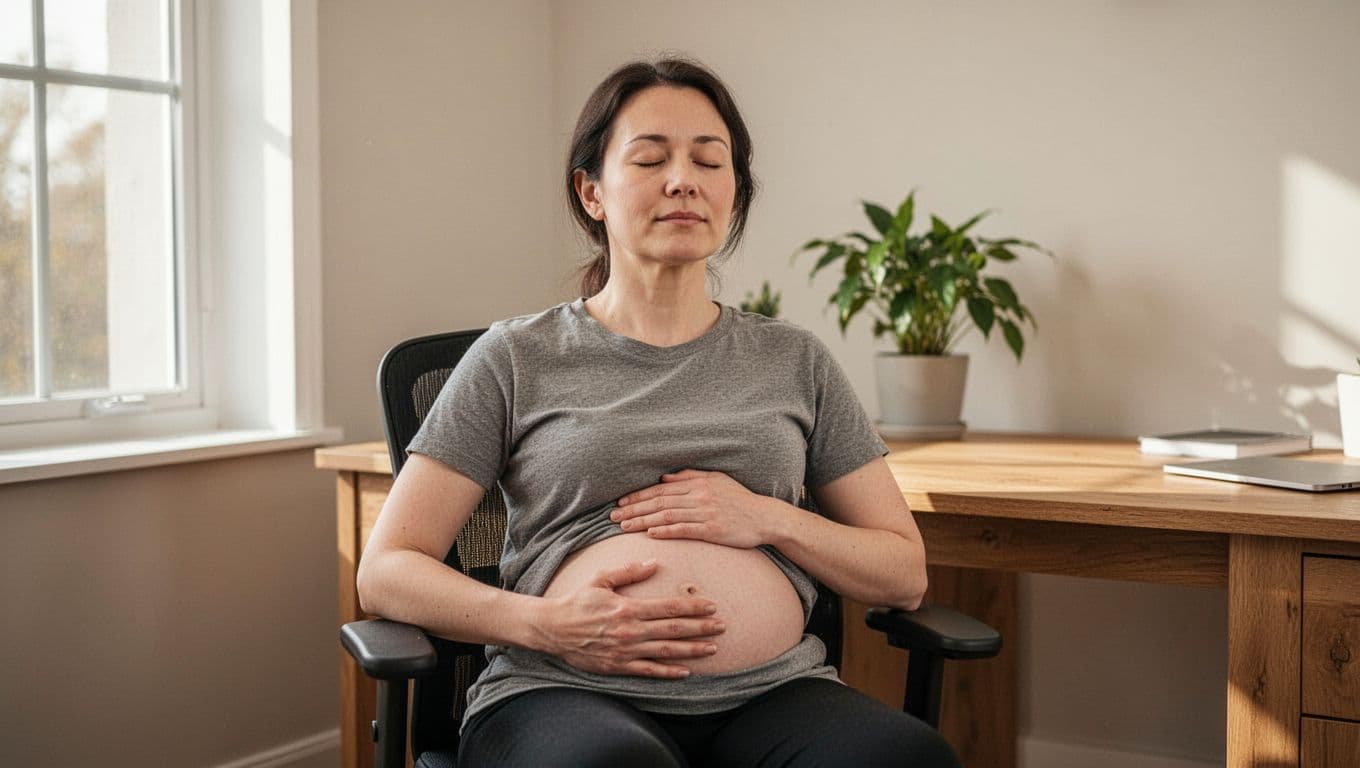 Box breathing in a calm home setting, created with AI.
Most breathwork methods are pattern-based. That structure matters because it gives your brain a clear task when stress spikes.
Three common examples show the range:
- Box breathing: inhale, hold, exhale, hold, each for the same count. People use it before a meeting because it feels orderly and grounding.
- Resonant-style slow breathing: a smooth, slow pace (often around 5 to 6 breaths per minute). This tends to support calm and sleep because it reduces "rush" in the system.
- Wim Hof–style breathing: faster, deeper cycles plus breath holds. Some people use it for energy and a strong state shift, not for bedtime.
Different patterns fit different goals, so a "best" technique depends on context. Many people also respond well to sigh-based breathing with longer exhales, because it quickly reduces the feeling of pressure in the chest.
Pausa was built from that exact need: a simple practice for anxious moments, without requiring long meditation sessions. It started after panic attacks made one thing clear, breathing can be a direct way back to steadier ground. If you feel dizzy, numb, or unwell during breathwork (or you have a medical condition), stop and ask a clinician for guidance.
Meditation: you train attention so thoughts don't run the show
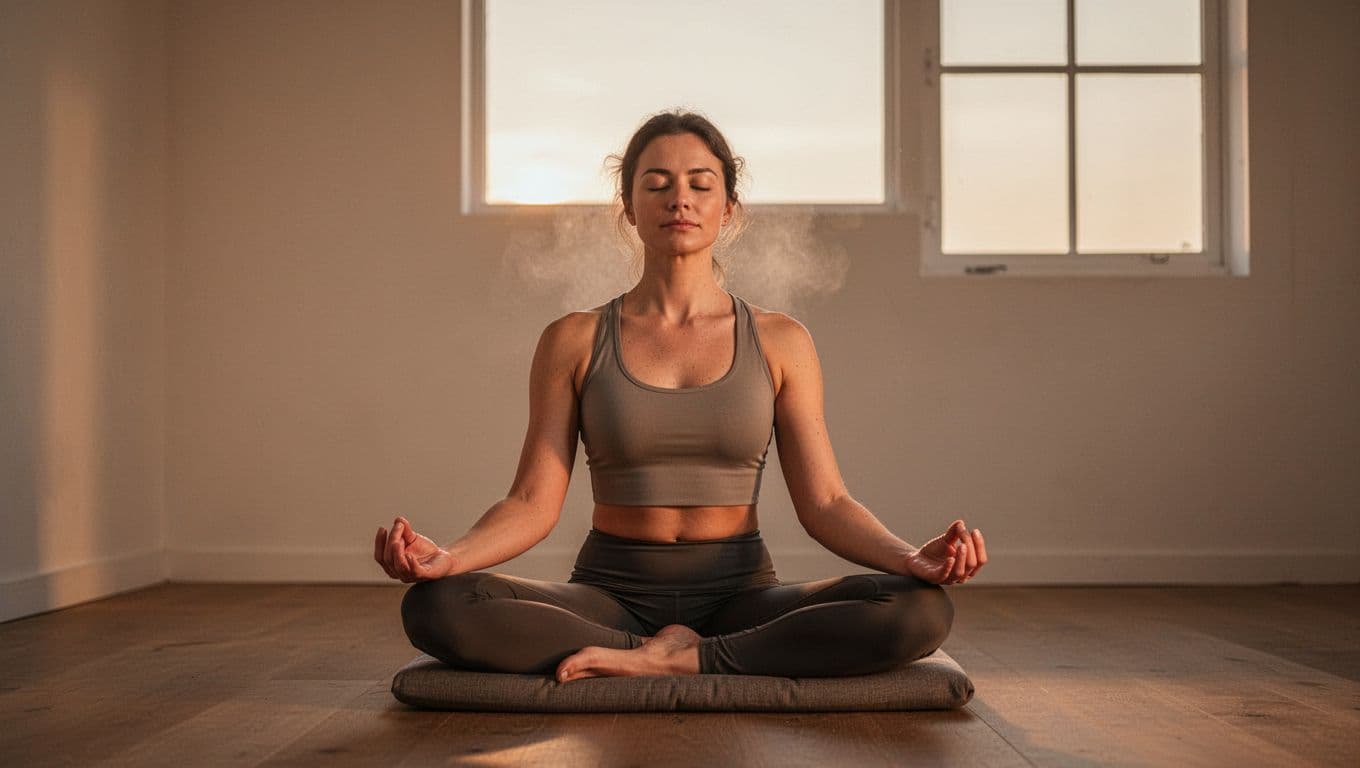 Meditation at dawn with a simple setup, created with AI.
Many meditations use the breath as an anchor, but the goal isn't perfect breathing. The goal is noticing, then returning. Each return is the "rep" that builds the skill.
Beginner-friendly formats include breath awareness, body scans, and loving-kindness. None require a blank mind. In fact, meditation can feel harder at first because you finally notice how busy the mind is. That isn't failure, it's feedback.
Over weeks, meditation often improves emotional regulation. You still get thoughts, but they grip less. That shift can support stress resilience, because you spend less time fused to worst-case stories.
If breathwork changes your state fast, meditation changes your relationship to the state.
Which one should you choose for stress, anxiety, sleep, or focus?
Pick based on timing and what you can do consistently.
If you're about to present in 3 minutes, breathwork tends to win. It gives you something concrete to execute. A timed exhale can lower arousal quickly, which is why many people use breathing drills between tasks.
If you want fewer spirals in general, meditation often wins. It builds the ability to notice early signs of rumination and redirect attention before the stress snowballs.
Here are four real-life scenarios:
- Before a meeting: Box breathing often works because it stabilizes breathing rate and reduces jitter.
- After an argument: Slow breathing can help the body exit fight-or-flight; meditation later can help you replay the event with less heat.
- At 2 a.m.: Slow, quiet nasal breathing tends to help more than intense breathwork; add a short body scan if your mind keeps checking the clock.
- During an anxiety spike: Breathwork can interrupt the loop quickly. Meditation supports the longer-term pattern so spikes happen less often.
In early 2026 research roundups, breathwork keeps showing strong short-term effects on mood and physiological arousal, while both breathwork and mindfulness can improve sleep when practiced consistently. A broad look at randomized trials also suggests breathwork reduces stress and mental health symptoms across many settings (see breathwork meta-analysis of RCTs).
Pausa's design mirrors this decision logic. Sessions stay short, guidance stays simple, and the goal is less screen time, not more. It's "meditation for people who don't meditate," especially on days when attention feels scarce.
If you need quick relief right now, start with breathwork
This mini plan takes about 60 to 90 seconds. It's simple on purpose.
- Sit tall and relax your shoulders.
- Inhale gently through your nose for a comfortable count.
- Exhale slower than you inhaled, then repeat 5 to 8 cycles.
Longer exhales matter because they often reduce the sense of urgency in the body. Counting also helps because it occupies working memory. In other words, it gives anxious thoughts less room.
If you want guided sessions that fit real life, you can download Pausa.
If you want long-term calm, build a small meditation habit
Set a target you can keep on a messy day. Two to five minutes counts. Consistency beats duration.
Try one friction-reducer: same place, same time, same cue. For example, sit on the edge of the bed right after you plug in your phone. Then do one minute of breath awareness. Add time only after it feels normal.
A useful combo is breathwork first, then meditation. When the body feels safer and calmer, attention training becomes easier. That sequence often reduces the "I can't meditate" problem, because you're not trying to concentrate while your system still feels keyed up.
For more short, practical guides, the conscious breathing blog is a good place to explore patterns for stress and sleep.
A simple plan that combines breathwork and meditation without feeling like another chore
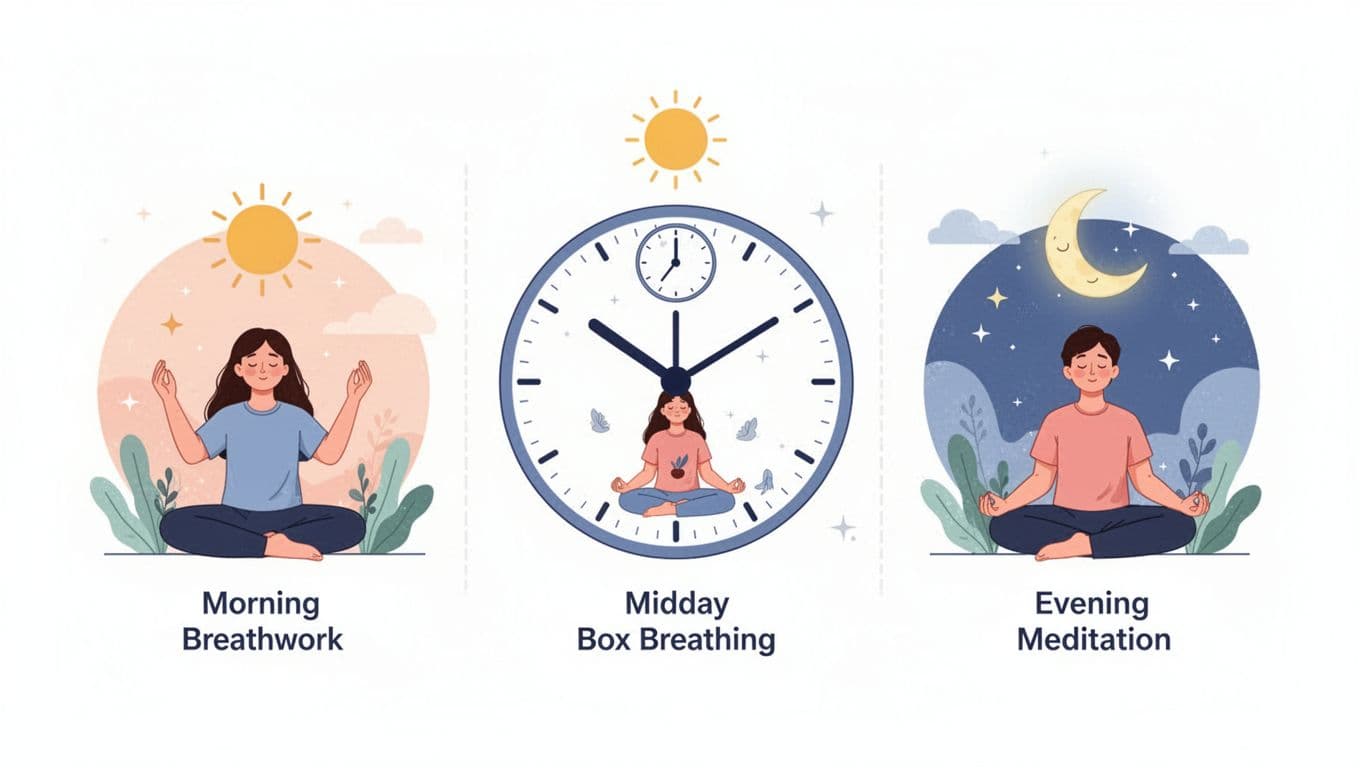 A simple daily rhythm for breathing and meditation, created with AI.
"Small pauses" sounds nice, but it also works mechanically. Short inputs, repeated often, add up.
Use two daily anchors, plus one rescue tool for real-time stress. Here's a flexible 7-day starter plan:
| Day | Morning (2 to 3 min) | Evening (2 to 4 min) | In-the-moment rescue (1 min) |
|---|---|---|---|
| 1 | Slow breathing | Breath awareness | Long exhale counting |
| 2 | Box breathing | Body scan | Box breathing 2 rounds |
| 3 | Slow breathing | Loving-kindness | Long exhale counting |
| 4 | Box breathing | Breath awareness | Slow breathing |
| 5 | Slow breathing | Body scan | Long exhale counting |
| 6 | Box breathing | Breath awareness | Box breathing 2 rounds |
| 7 | Choose your best | Choose your best | Long exhale counting |
Track how you feel with a light check-in, not a perfect log. One word is enough (wired, flat, tense, foggy). Then match the tool to the state. This is the same logic used in mood-guided approaches: feelings guide the next input, instead of forcing a fixed plan.
Self-guided tools can help, but they're not a diagnosis. If you feel overwhelmed often, professional support still matters.
The 5-minute daily routine (morning, midday, and bedtime)
Morning: do 2 minutes of steady, slow breathing. If you wake up anxious, keep the exhale longer.
Midday: use 1 minute of box breathing before stress spikes, for example before a call. Keep it gentle.
Night: do 2 minutes of slow breathing, then 1 minute of breath awareness. If you struggle to stay on track, audio guidance can help you keep the pace without checking the clock.
Conclusion
Breathwork vs meditation isn't a rivalry. Breathwork is active and often fast, because it changes breathing patterns to shift state. Meditation is skill-building and long-term, because it trains attention and emotional regulation. For many people, the best approach is both: use breathwork to settle the body, then meditate to reduce the pull of racing thoughts. You don't need a retreat or a perfect routine. You just need a small pause, then you can continue.