In 2026, a lot of SMB CEOs run their day in browser tabs. One tab for sales, one for support, one for payroll, one for projects, and twenty more for "later." Meanwhile, pings keep coming, and the team runs hot.
The services CEOs keep choosing now have a shared purpose: remove friction. They save time, cut manual work, and reduce the stress that makes decisions feel heavier than they should.
Wellness is part of that story too. Most wellness tools get ignored because they ask for too much. Breathwork is different because it can change how you feel in minutes, with no training and no perfect routine required. If you want a quick snapshot of what small businesses are using this year, this roundup of SaaS platforms for US small businesses in 2026 captures the same theme: fewer steps between "problem" and "fixed."
 An overloaded day, paused on purpose, created with AI.
The top 10 services CEOs are choosing in 2026 (built for SMB speed)
These aren't "nice to have" apps. They're services CEOs use because they reduce chaos fast. For each pick below, you'll see what it does, why it's popular this year, who it helps most, and one buying tip to keep you out of trouble.
1) Pausa for People (and Pausa Business), the fastest way to calm a stressed team
 A quick breathing reset in the middle of the workday, created with AI.
Breathwork is a small habit with a big payoff. A few minutes can shift your body from "wired" to "steady." That matters when your calendar is tight and your judgment has to stay clean.
Pausa for People is built for people who don't meditate but still want real relief. Sessions are short, guided, and designed to work right away for stress, anxiety, better sleep, and less screen time. It also aims to feel like companionship, not another task, so users don't feel alone when anxiety hits.
The product's story stays practical. Pausa started after its founder experienced panic attacks and went looking for simple breathing techniques that actually helped in the moment. That focus shows up in how the app feels: open it, breathe, continue. It's available on iOS and Android. (If you're planning a team rollout, the supported devices for Pausa app page helps you confirm requirements quickly.)
You can get started here: Download Pausa (English).
For employers, Pausa Business turns that same "quick calm" into a company program. The flow is simple: the company buys access, colleagues download the app, then they start reducing stress right away. Leaders get anonymized insights, plus an admin panel to monitor engagement and manage licenses centrally, so adoption doesn't disappear after launch.
Who it helps most: everyone, especially managers, support teams, sales, and any team running back-to-back meetings.
Watch out for: long "wellness trainings." Pick tools that work in 3 minutes, not 30.
A good CEO stack doesn't just add dashboards. It protects your attention and your nervous system.
2) HubSpot, one place to run sales, marketing, and customer follow-up
HubSpot stays popular because it reduces tool sprawl. CEOs like one source of truth for leads, deals, emails, and basic automation. It's easier to see what's moving and what's stuck, without hunting across spreadsheets.
Simple wins add up: track every lead, automate follow-ups, and report on what actually drives revenue. When the pipeline gets shaky, that visibility can lower stress across the whole org.
Who it helps most: sales leadership, marketing, and founders who still sell.
Watch out for: pricing jumps when you add advanced automation. This breakdown of the HubSpot pricing cliff for small teams is a useful reality check. Start with the smallest hub that fixes your bottleneck, then expand.
3) Asana, the work map that stops projects from slipping
Asana works when your team needs clarity more than they need more meetings. It puts owners, deadlines, and next steps in one place. Then progress becomes visible, even when work is messy.
CEOs like it because it creates a shared "map" of priorities. Instead of asking, "Where are we on this?" you can look once and move on.
Who it helps most: operations, product, agencies, and cross-functional teams.
Watch out for: overbuilding. If you design workflows like a maze, people stop using them. Keep it plain, then refine.
4) Zendesk, a calmer customer support inbox that protects your brand
Customer support can feel like a kitchen during dinner rush. Tickets pile up, emotions run high, and one missed message becomes a bad review. Zendesk earns its spot by bringing order fast: ticketing, routing, help centers, and clear response workflows.
For CEOs, the real value is fewer fires. Faster replies protect retention, reduce churn risk, and keep the brand from taking hits in public.
Who it helps most: support, success, and any CEO who still answers escalations.
Watch out for: complex automation too early. Start with macros and categories first. If you're comparing options, this roundup of small business help desk software in 2026 gives helpful context on what "good" looks like.
5) Zapier, the glue that connects your apps and cuts busywork
Zapier is popular because it quietly deletes annoying tasks. When a lead fills a form, it can appear in your CRM, create an onboarding task, alert the right channel, and schedule a follow-up, all without someone copying and pasting.
In 2026, CEOs buy automation for one reason: it reduces mental load. Repetitive steps don't just waste time, they create a steady drip of stress.
Who it helps most: ops, marketing ops, finance ops, and founders doing too much.
Watch out for: automation sprawl. Document your top Zaps so they don't become mystery machines that break at the worst time.
The rest of the 2026 CEO toolkit, focused on revenue, time, and risk
After the basics (calm, clarity, support, automation), CEOs tend to fill gaps in three areas: SaaS spend control, sales coaching, contract speed, and scheduling. These next five tools show up because they pay for themselves when teams are small and every hour counts.
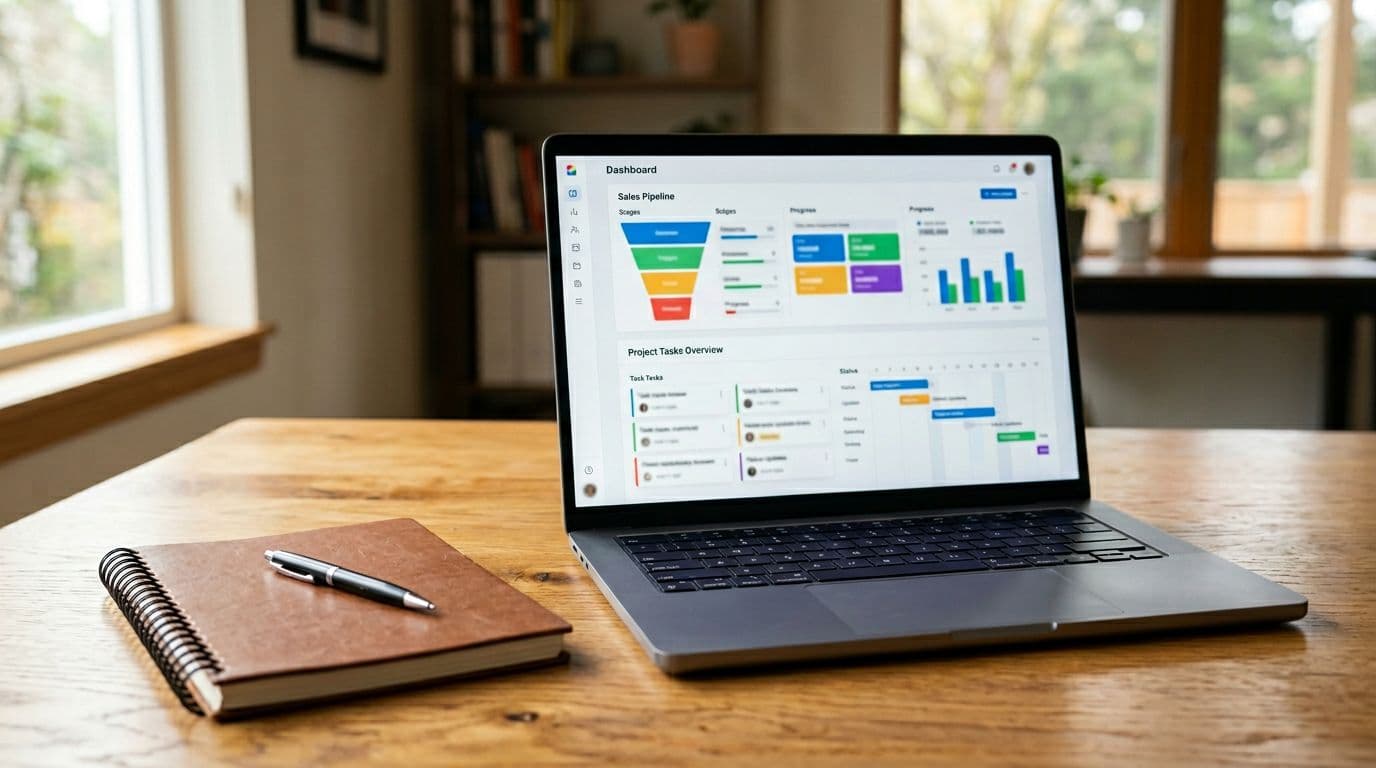 A simple view of work and revenue in one place, created with AI.
6) Zylo, the service that finds wasted SaaS spend before renewals hit
By 2026, most SMBs pay for more tools than they remember buying. Waste hides in quiet places: unused seats, duplicate apps, and renewals that hit while you're busy shipping.
Zylo helps by discovering SaaS, tracking usage, and flagging renewals. That creates a cleaner budget story and fewer surprise costs.
Who it helps most: finance, ops, IT, and any CEO who hates "why is this charge here?"
Watch out for: trying to fix everything at once. Start by assigning owners to the ten highest-cost apps, then set renewal alerts.
7) Trelica, a simpler SaaS management option for quick visibility
Trelica often appeals to teams that want results without a heavy lift. License visibility, usage signals, and renewal tracking can be enough to stop slow leaks.
CEOs like the "quarterly cleanup" habit. It's boring work, but it protects runway and removes budget friction.
Who it helps most: ops and finance in tool-heavy businesses.
Watch out for: a once-a-year audit. Review and right-size licenses quarterly so the savings show up consistently.
8) Gong, AI call coaching that tightens forecasts and lowers sales stress
Forecast stress usually comes from one problem: you don't know what's real until it's too late. Gong reduces that risk by analyzing sales calls and surfacing patterns, objections, and deal signals.
Leaders use it to coach without guessing. Reps improve faster because feedback comes from real conversations, not memory. As a result, surprise pipeline drops happen less often.
Who it helps most: sales teams, revenue leaders, and CEOs who need cleaner forecasts.
Watch out for: privacy confusion. Set expectations early, start with a pilot team, and be clear about what gets recorded and why.
9) PandaDoc, faster proposals and contracts that close deals sooner
Speed matters when cash flow is tight. PandaDoc helps by standardizing proposals, getting signatures quickly, and tracking document status so deals don't stall in inbox limbo.
CEOs like it because it reduces "where is that contract?" moments. It also creates a more consistent buying experience for customers.
Who it helps most: sales, partnerships, finance, and legal-lite SMBs.
Watch out for: over-templating too soon. Standardize your top five document types first so the tool pays you back quickly.
10) Calendly, fewer emails and fewer scheduling headaches
Scheduling sounds small until it takes over your day. Calendly removes the back-and-forth and protects focus time with buffers and rules. That's a mental health feature disguised as a scheduling tool.
CEOs also like it for hiring. Candidates get a smooth experience, and internal loops tighten because meetings happen faster.
Who it helps most: everyone, especially sales and recruiting.
Watch out for: calendar pileups. Create separate booking links for sales, hiring, and internal 1:1s, then add buffers.
How SMB CEOs should choose services without building a messy tool pile
The trap isn't buying tools. The trap is buying tools that don't get used, then paying for them while your team works around them. That's why low-friction adoption matters, especially for wellbeing. If it feels like homework, people skip it.
If you want to reduce tool clutter, it helps to pick one pain to solve first (revenue, time, support load, or burnout). Then set a 30-day success metric and give one person ownership. If you're tempted by "all-in-one," compare it honestly against your current stack. This pitch for all-in-one small business software is a good example of the tradeoff, fewer subscriptions versus fit-for-purpose depth.
The 4-question filter: does it save time, reduce stress, or grow revenue
Ask four questions before you buy:
- What problem does it solve this month? Keep it immediate.
- Who will use it weekly? If nobody owns weekly usage, it will die.
- What will we stop using? Avoid overlap on purpose.
- How will we measure success in 30 days? A number beats a feeling.
Also count total cost honestly, licenses plus setup time plus the cost of switching.
Adoption beats features, so run a small pilot and listen hard
Pilot first, expand second. Pick one team, keep setup minimal, and collect feedback after two weeks. If the pilot feels heavy, the full rollout will fail.
Wellbeing tools need extra care because people avoid anything that feels performative. Adoption improves when it fits into real moments, like a 3-minute pause after a tough meeting, not a 45-minute "session." If you're hiring leaders and want a practical way to talk about stress without sounding scripted, this guide on handling stress questions effectively pairs well with a culture that treats recovery as normal.
Closing thought: build a stack that leaves room to think
The smartest CEOs in 2026 don't collect software. They build a stack that protects attention, reduces strain, and keeps work moving without constant pushing.
Start where stress is highest, because calm improves everything downstream. Then remove one major workflow bottleneck, and measure adoption like it matters. Your team will feel the difference in the next week, not the next quarter.

