

Most of us breathe all day, yet we rarely notice how we're doing it. Then stress hits, your shoulders creep up, your breath gets shallow, and your brain starts spinning. Breathwork is the simple idea of taking control of that process on purpose, for a specific effect.
In this guide, you'll learn what breathwork is, how it affects the nervous system, which techniques are common, and how to practice safely. The focus is practical: short sessions, clear steps, and outcomes you can feel.
Breathwork, explained in plain terms (and what it isn't)
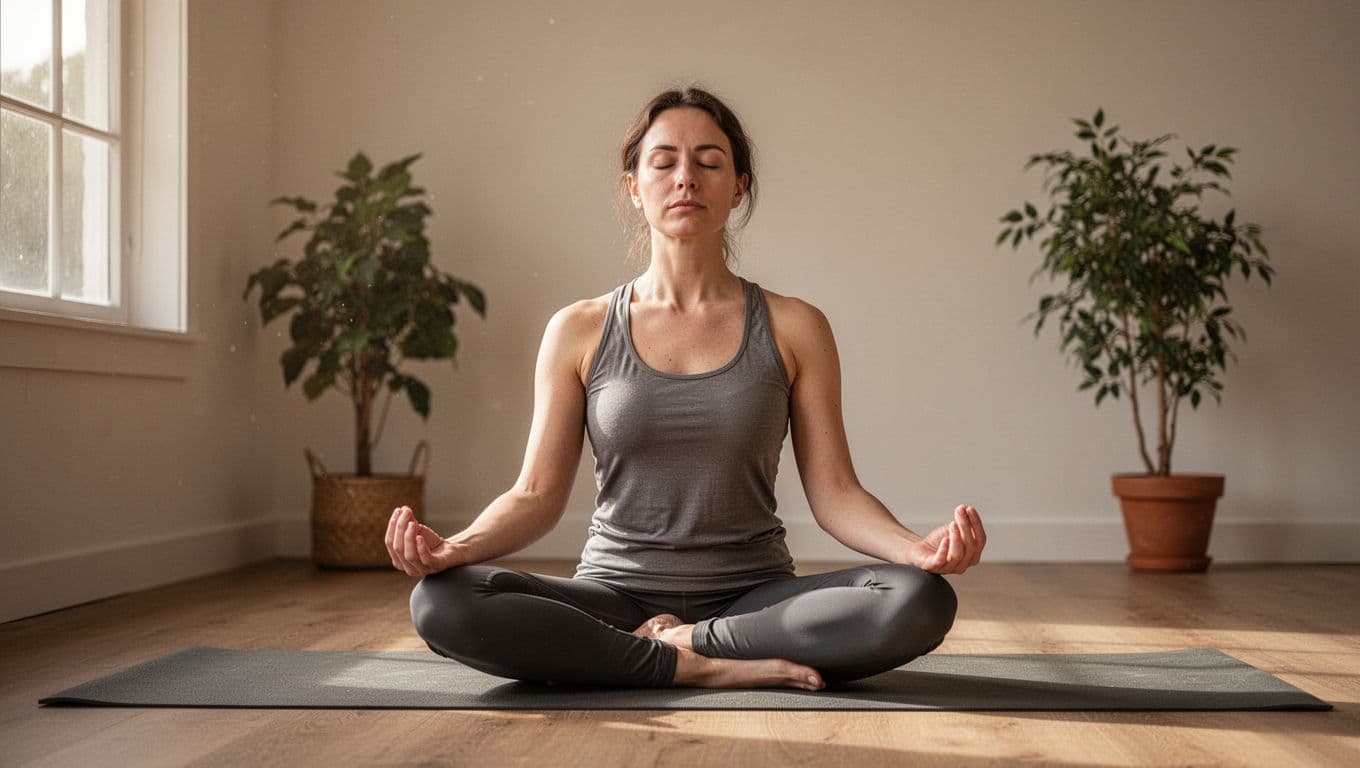 An example of a calm, quiet setup for a short breathwork session, created with AI.
Breathwork is deliberate breathing. You change rate, depth, or timing to shift how your body feels. That can mean slower breathing to reduce arousal, or structured patterns to improve focus.
It helps to separate breathwork from a few look-alikes:
- Breathwork isn't "breathing deep" all the time. Some methods use deep breaths, others don't.
- Breathwork isn't always meditation. You can practice without any spiritual framing.
- Breathwork isn't a cure-all. It's a regulation tool, not a replacement for medical care.
The core mechanism: breathing talks to your nervous system
Your breathing muscles are under automatic control, but you can override them at any moment. That matters because breathing links tightly to autonomic function, including heart rate, blood pressure control, and stress response.
In general, slower, controlled breathing tends to increase parasympathetic activity (the "rest and digest" side). Meanwhile, rapid or forceful breathing can push the system toward sympathetic arousal (the "fight or flight" side). As a result, the pattern you choose can either settle you or energize you.
If your mind feels stuck, start with the body. Breathwork is one of the few direct inputs you can change in seconds.
What research says about breathwork for stress
Clinical research doesn't treat breathwork as magic, it treats it as a behavioral intervention. A large review of randomized trials found that breathwork interventions were associated with lower self-reported stress compared with controls, across different styles and settings. See the paper, Effect of breathwork on stress and mental health: a meta-analysis of randomised-controlled trials, in Scientific Reports.
That doesn't mean every method works the same way for every person. However, it supports a key practical point: if you practice consistently, even short sessions can move the needle.
Common breathwork techniques and what they're used for
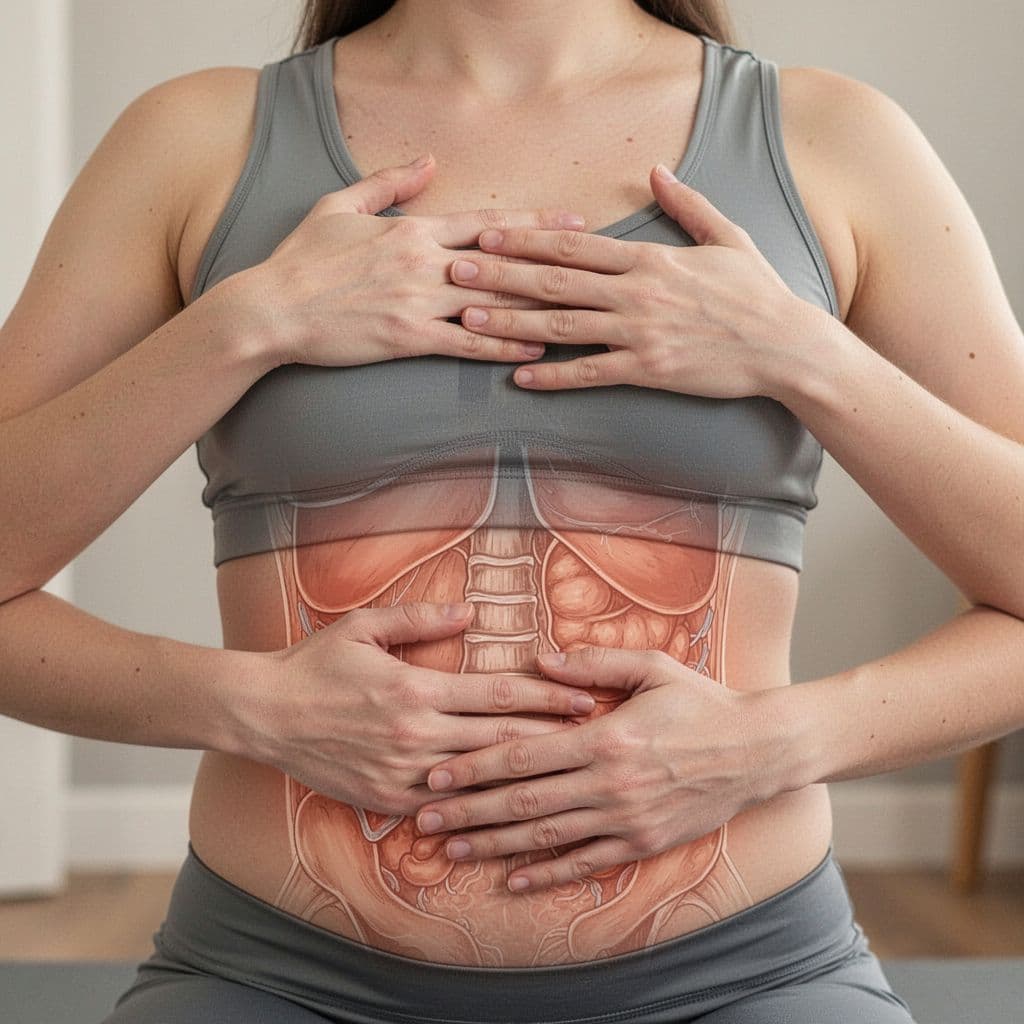 A simple hand placement that helps you feel breath movement, created with AI.
Breathwork methods vary, but most fall into a few families. The goal is to match the pattern to the job you need done.
Here's a quick comparison to make the choices concrete:
| Technique family | What you do | Common use-case | What it feels like |
|---|---|---|---|
| Slow, steady breathing (coherent or resonant) | Even inhale and exhale at a comfortable slow pace | Calm, sleep support, recovery | Smoother and quieter |
| Box breathing | Equal phases (inhale, hold, exhale, hold) | Focus under pressure | "Structured" and controlled |
| Longer exhale breathing | Exhale longer than inhale | Anxiety spikes, downshifting | Relief, less chest tightness |
| Cyclic sighing style | Repeated deep inhale plus slow exhale | Fast calming for many people | A reset, sometimes emotional |
| Stimulating breathwork | Faster or stronger breathing cycles | Energy and alertness | Heat, tingling, activation |
A useful technical detail is tolerance. Some people feel better with slow breathing right away. Others feel uncomfortable at first, especially if anxiety has trained them to fear breath sensations. In that case, start gentler.
Where guided breathwork fits (and why many people stick with it)
Breathwork is simple, but it's also easy to overthink. That's why many people do better with guidance, especially when stress is high. If you're looking for a straightforward way to practice, download Pausa. It's a guided breathwork app built for real life, short sessions, no long meditations, no complicated setup.
Pausa's approach comes from a real problem: it was created after panic attacks, when breathing felt impossible and the need was immediate. The design stays focused on science-backed breathing exercises that help with stress, anxiety, sleep, and even reducing screen time. Instead of pulling you into endless scrolling, it nudges you toward a short pause and a clear next step. Many users also value the sense of companionship, that feeling that you're not doing it alone.
How to start breathwork safely, and get real results

Photo by Thirdman
Breathwork is low-cost and accessible, yet it still deserves basic safety rules. The biggest issue isn't "doing it wrong," it's choosing an intensity that doesn't fit your current state.
Safety first: avoid common mistakes
Start with these guardrails:
- Practice seated or lying down at first, because lightheadedness can happen.
- Avoid intense, fast breathing if you have a history of panic with breath sensations.
- Stop if you feel numbness, severe dizziness, or chest pain.
- Don't do strong breathing practices in water, in the shower, or while driving.
- If you're pregnant or have heart, lung, or seizure conditions, check with a clinician.
Also, keep expectations realistic. Breathwork often changes state quickly, but it works best as a skill you build.
A simple, repeatable way to begin (2 to 5 minutes)
Pick one low-risk pattern and repeat it daily for a week:
- Inhale through the nose for about 4 seconds.
- Exhale slowly for about 6 seconds.
- Keep the shoulders relaxed and the jaw unclenched.
- Continue for 2 to 5 minutes.
This longer-exhale bias often feels calming because it reduces over-breathing and supports downshifting. If counting stresses you out, use a timer and aim for "slow and quiet."
Make it stick by reducing friction
Consistency beats intensity. In practice, breathwork fails for the same reason diets fail, the plan asks too much on a bad day. Instead, make it easy to start:
- Tie it to an existing cue, like closing your laptop or brushing your teeth.
- Keep the session short enough that you don't negotiate with yourself.
- Use guided audio when your brain feels noisy.
- Track streaks if it helps, but don't punish breaks.
If you want ongoing ideas and technique explainers, the conscious breathing blog is a good place to browse by goal, like sleep, stress, or anxiety.
Conclusion: breathwork is controlled breathing with measurable effects
Breathwork is the practice of changing your breath pattern to change your state. It works because breathing is a direct input to autonomic regulation, not because you "believe" in it. Start with slow breathing and longer exhales, practice for a few minutes a day, and keep it safe. Over time, breathwork becomes less like a technique and more like a skill you can use anywhere.