

You can finish a normal workday and still feel mentally wrung out. Not dramatic. Not broken. Just used up.
That state has a name: attention fatigue. It happens when your focus system keeps spending and barely refills. Burnout is related, but it isn't the same thing. Attention fatigue is often the early signal. Burnout is what happens when the signal gets ignored for too long.
That matters in 2026 because the pressure is coming from all sides. Workloads are still high. Screens still own too many hours. And AI, for many people, hasn't removed mental work. It's added reviews, prompts, edits, and more choices. Recent US reporting points to burnout staying stubbornly high, with more than 75% of workers saying they feel stressed or burned out. Small changes won't fix bad systems overnight. Still, they can interrupt the slide. That's the point here: prevention, not performance theater.
What attention fatigue is, and how it can turn into burnout
Attention fatigue is mental tiredness caused by too much directed focus. Not just hard work. The constant forcing of focus.
It builds through task switching, endless choices, alerts, meetings, tabs, and screen time. Your brain keeps filtering noise, holding priorities, and resisting distraction. That effort costs energy. Over time, the cost stacks up. A plain-language overview of attention fatigue describes the pattern well: focus gets weaker, irritability climbs, and even simple work starts to feel sticky.
Burnout is the heavier version of that story. It shows up when stress stays high and recovery stays low for weeks or months. Then the problem is no longer, "I need a night off." It's, "I can't get back to baseline."
Burnout isn't proof that you care a lot. It's proof that the system kept taking.
The difference between a busy day and a burned-out brain
A busy day can feel awful. Still, real rest usually helps. Sleep helps. A weekend helps. A few quiet hours help.
Burnout doesn't play that way. Rest may soften the edges, but the core problem stays. Focus stays thin. Motivation stays low. Patience stays short.
This quick contrast helps:
| Signal | Busy day | Burnout |
|---|---|---|
| Recovery after rest | Usually resets | Often still feels off |
| Focus | Slower than normal | Scattered most days |
| Mood | Stressed, then better | Flat, cynical, snappy |
| Body | Temporary tension | Ongoing fatigue, poor sleep |
That's the split. One state passes. The other lingers.
Why digital overload and AI can make mental fatigue worse
More tools don't always mean less work. Sometimes they just create more handoffs for your brain.
In March 2026, current US reporting still shows heavy workload as the top burnout driver. Long hours follow close behind. Add chat apps, meetings, email, dashboards, and AI copilots, and the mind spends all day shifting gears. Harvard Business Review recently framed this well in its piece on when using AI leads to brain fry. The point isn't that AI is bad. The point is simpler: oversight is work.
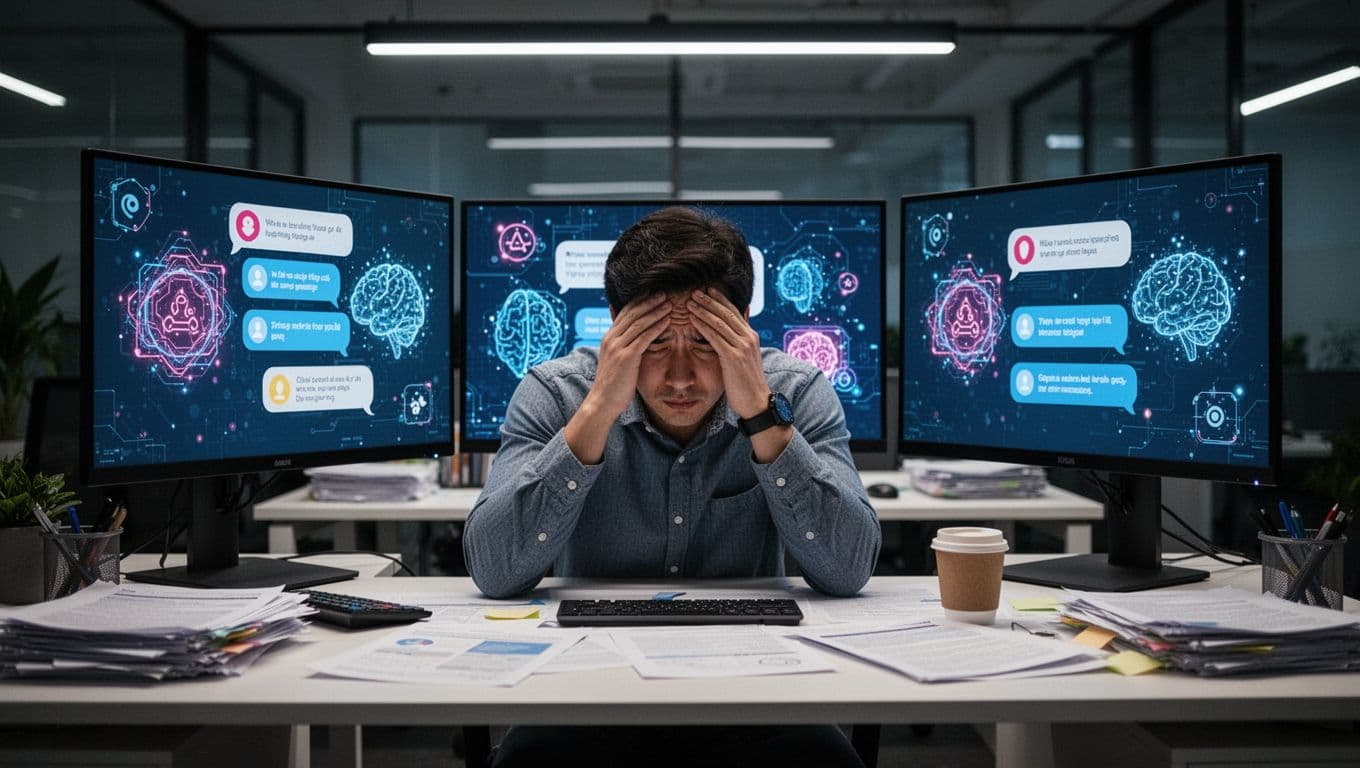
A prompt here, an edit there, a fact check after that. None of it looks huge alone. Together, it becomes "brain fry." Not because people are weak, but because cognitive load has limits.
The warning signs your attention is running on empty
Attention fatigue rarely arrives with a banner. It usually comes in sideways.
First, small slips. Then repeated slips. Then a strange feeling that basic tasks now take too much effort. That's why early signs matter. They let you act before burnout hardens.
The useful frame is this: look for patterns, not one bad day.
Mental signs, like poor focus, more mistakes, and decision fatigue
The mental signs are usually the first to show. You reread the same sentence three times. You open a tab and forget why. You delay an easy task because picking a starting point feels weirdly hard.
Mistakes also rise. Names slip. Deadlines blur. You miss details you normally catch. Then comes decision fatigue. Simple choices, what to answer first, what to cook, whether to reply now or later, start to feel expensive.
This doesn't mean you've lost discipline. It means your attention budget is blown.
A lot of people also mistake this state for laziness. Bad call. Laziness avoids effort. Attention fatigue wants to work but keeps stalling.
Emotional and physical signs, like irritability, numbness, and constant tiredness
Mood often changes before people admit anything is wrong. You get sharper with coworkers. Less patient at home. More detached from work that used to feel manageable.
For some people, the shift isn't irritability. It's numbness. You stop caring, or stop feeling much at all. That's part of quiet burnout: outwardly functional, inwardly drained. It looks normal from the outside, which is why it gets missed.
Physical signs matter too. Headaches. Tight shoulders. Sleep that doesn't restore much. Constant tiredness, even after time off. Current US data in 2026 suggests about 78% of Americans lose sleep because of stress and worry, and at least two-thirds report physical stress symptoms like fatigue and headaches.
When your body stays tired after rest, take it seriously. That's not a character flaw. It's a signal.
What causes attention fatigue in everyday work and life
Most people don't burn out because they forgot to buy a candle or book a massage. They burn out because the load stayed high and the design stayed bad.
That design problem shows up everywhere: unclear priorities, messy systems, too many meetings, too little control, no real stopping point. In other words, burnout is often structural before it becomes personal.
Too many inputs, too many decisions, not enough recovery
Attention wears down through volume and friction. Every ping takes a slice. Every app switch takes a slice. Every half-made decision takes a slice.
Multitasking is part of the trap. It feels efficient because everything is moving. It's not. Frequent context switching forces the brain to re-orient again and again. That is expensive mental labor. Then recovery gets cut short. Lunch becomes email time. Breaks become phone-scroll time. Evenings become "just one more thing."
No wonder people feel empty by 4 p.m.
This is also why attention fatigue can show up outside work. Parenting, caregiving, commuting, managing bills, and keeping a household running all require constant micro-decisions. The brain doesn't care whether the load came from a boss or a life admin list. Load is load.
Why burnout grows faster when boundaries and support are weak
Burnout moves faster when the edges of work disappear. Long hours matter. So does the pressure to answer fast, stay visible, and prove you're still engaged.
Unclear expectations make it worse. If everything is urgent, nothing is clear. If priorities change daily, focus never settles. Add weak support, little recognition, or a manager who only appears when something is wrong, and strain turns chronic. That's why many experts frame burnout prevention in the workplace as an operating-system issue, not just a wellness issue.
Support sounds soft. It isn't. It's load control.
Current 2026 reporting also shows the business cost clearly: high burnout can cut team productivity by 18% to 20%, and stress still costs the US more than $300 billion a year. The human cost lands first. The financial cost follows.
Simple ways to prevent burnout before it gets worse
Big resets are overrated. Most people don't need a fantasy morning routine. They need less friction and more recovery.
Burnout prevention works best when it gets boring. Small moves, repeated. Less drama, more structure.
Daily habits that protect your attention and energy
Start with the obvious drain points. Turn off nonessential notifications. Block time for one task at a time. Put email and chat on scheduled checks if your role allows it. Single-tasking feels slower for five minutes, then faster for three hours.
Real breaks matter too. Not scrolling. Not inbox cleanup. Stand up, walk outside, eat without a screen, stare at something that doesn't ask anything from you. Directed attention needs relief. Nature helps, but even a quiet hallway is better than another tab.
Sleep still runs the show. A clear stop time for work helps more than one heroic late night. So does tracking your energy for a week. Not productivity. Energy. Notice when your brain is best, when it crashes, and what drains it fastest.
Use AI carefully. Give it low-value drafts, summaries, or cleanup work. Don't make it another manager living in your browser. Recent reporting on AI brain fry at work makes the point plainly: too much oversight can erase the time savings.
Team and manager changes that make recovery possible
Personal habits help. Bad systems can still crush them.
Teams need fewer meetings, clearer priorities, and blocks of protected focus time. No-meeting windows work because attention needs runway. Managers need to rank work, not just assign it. "Everything matters" is not leadership. It's a traffic jam.
Tool sprawl also needs a hard look. If five platforms do the job of two, simplify. If work depends on constant response, set response norms. If people are carrying unrealistic workloads, name that directly and cut scope.
Recognition matters more than many leaders think. So do regular check-ins that ask, "What's getting in your way?" not just, "What's done?" The 2026 guide to avoiding burnout at work puts this in practical terms, and it tracks with what workers report now: support lowers strain when it's concrete.
Prevention is not a mood. It's a design choice.
Attention fatigue is an early warning sign. Treat it that way. Notice the pattern, trim one or two drains first, and protect recovery before the deeper slide starts.
You don't need a perfect system. You need a workable one. If the tiredness is lasting, severe, or tied to sleep, mood, or health changes, get support from a doctor or mental health professional. Burnout prevention starts with honesty, then structure, then help when help is needed.