

Overwork rarely starts with one bad boss or one brutal quarter. It starts with signals. Small ones. Daily ones. Who gets praised. Who gets promoted. Who answers at 10:47 p.m. and gets called "reliable."
That's why culture signals matter more than most leaders admit. They shape behavior long before a policy does. In 2026, that matters even more, because burnout is no longer a side issue. Recent U.S. data shows 61% of workers are languishing at work, and younger workers are getting hit earlier, with one in four Americans under 30 already burned out.
This isn't about drama. It's about pattern recognition. If exhaustion feels normal on a team, the culture is teaching it.
Why overwork feels normal in some workplaces
Workplace culture is the hidden operating system. Not the handbook. Not the values slide. The real thing people absorb by watching what happens around them.
A company can say it cares about well-being. That sounds nice. But workers pay attention to something else: what gets rewarded, what gets ignored, and what gets punished. If the loudest signal says "always be on," people will follow that signal.
That's why smart people still end up in bad work patterns. They're not weak. They're adapting.
Culture is not what a company says. It's what people learn will keep them safe.
Recent coverage on workaholic culture driving burnout makes the point clearly: many workers don't overwork because they love it. They do it because the culture trains them to.
The hidden rules people learn fast
New employees learn the rules in days. Sometimes hours.
They notice who replies first in Slack. They notice who gets thanked for "going above and beyond." They notice whether leaders send late-night emails, then praise the people who answer before morning. No one has to say, "Work longer." The message already landed.
Over time, those patterns define success. Fast replies start to look like commitment. Packed calendars look like importance. Exhaustion starts to pass as ambition.
Then the rule hardens: if you want to belong, act busy. If you want to move up, be available. If you want to stay safe, don't be the one who logs off first.
Why policies alone do not protect people
Written benefits help, but only when the culture backs them up.
A company can offer PTO, mental health support, and flexible schedules. Still, if people whisper about who took "too much" time off, those benefits turn into theater. If a manager says, "Take care of yourself," then praises the person who worked through vacation, the real policy is obvious.
This gap shows up everywhere. Flexible work exists on paper, but being visible still wins. Time off is approved, but using it feels risky. Wellness gets promoted, while overload stays untouched.
That's why policy without signal change doesn't work. It's signage, not structure.
The culture signals that drive overwork the most
These signals are common because they look harmless at first. They're not. They build pressure quietly, then make pressure feel ordinary.
Praise for hustle, not healthy output
Many teams still confuse strain with value.
The person who stays late gets applause. The person who takes on three extra projects gets called a star. The one who powers through illness gets labeled dedicated. Meanwhile, the steady worker who sets limits and still delivers strong work gets less attention because sustainable effort is less dramatic.
That's the trap. Hustle is visible. Good pacing often isn't.
So people learn to perform effort, not just produce results. They stay online longer than needed. They volunteer before thinking. They hide fatigue because fatigue now looks like weakness.
A March 2026 piece in Inc's report on workaholic workplaces tied this directly to culture. Overwork wasn't framed as a personal flaw. It was framed as a response to what the workplace celebrates.
Fast replies become a sign of loyalty
Speed has become a moral signal.
Reply in five minutes, you're engaged. Reply tomorrow morning, you're suspect. That logic is rarely said out loud, but it's everywhere in office, hybrid, and remote work.
Email, chat, text, phone, calendar pings, they all create the same pressure. Stay reachable. Stay alert. Stay interruptible. A workday stops being a block of focused time and turns into a constant readiness drill.
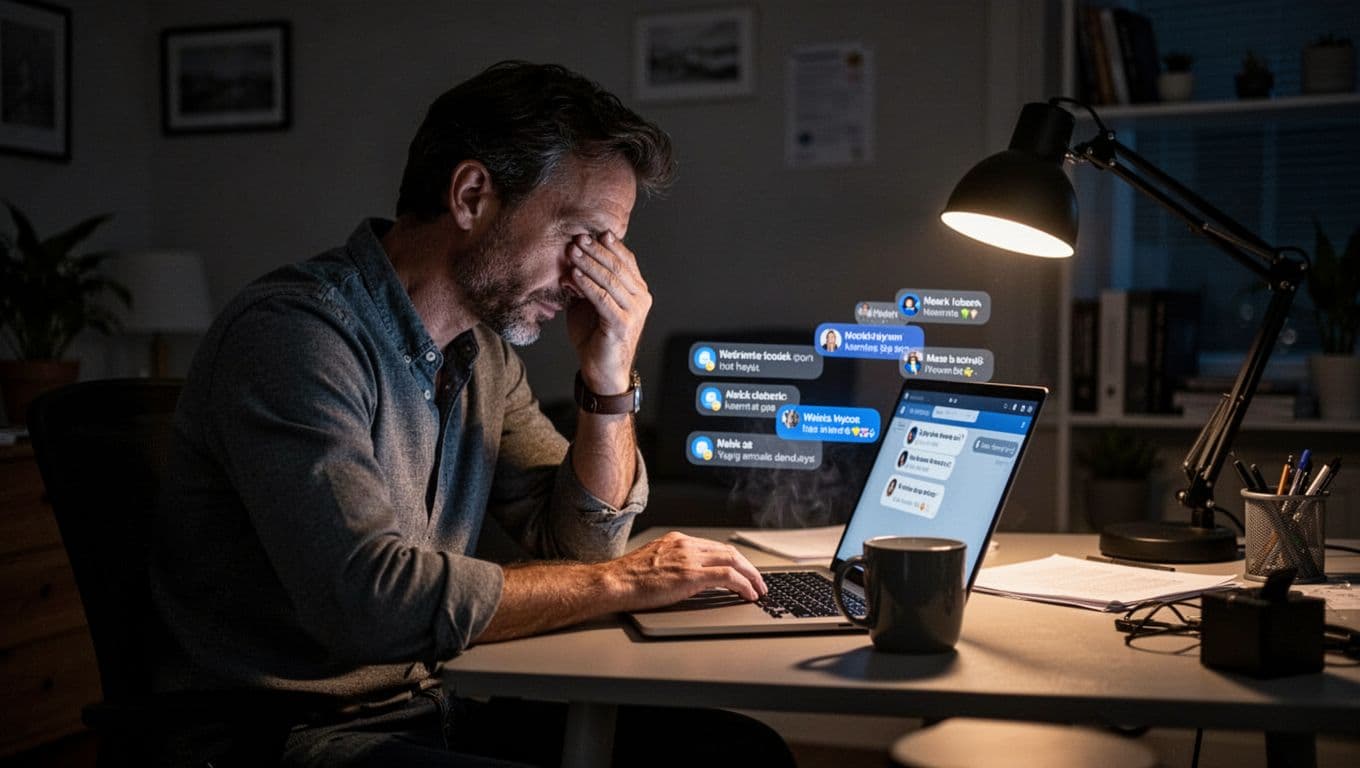
Remote work made this worse for many teams, not because remote work is bad, but because weak norms travel badly. When leaders don't define response windows, workers fill the gap with anxiety. Nights blur into mornings. Lunch becomes catch-up time. Silence starts to feel dangerous.
That's not flexibility. It's a low-grade alarm system.
Lean teams and constant urgency make overload look normal
Some teams aren't "high performing." They're understaffed.
Hiring freezes, tight budgets, and lean operating models often dump extra work onto the same people. Then leaders call it agility. Workers call it another Tuesday.
When everyone is overloaded, the overload stops looking like a warning sign. It looks like the job. Deadlines stack up. Priorities change midweek. New requests arrive before old ones clear. People stop asking whether the workload makes sense because survival mode narrows the view.
This is where overwork culture becomes self-sealing. No one has slack, so no one questions the pace. And because everyone looks stretched, exhaustion feels normal rather than broken.
Recognition, promotions, and job security reward the most visible workers
People don't just chase praise. They chase safety.
In a shaky economy, with layoffs still fresh and AI anxiety hanging over many roles, workers often believe that visible effort protects them. So they stay late, answer instantly, and make sure others can see it.
That belief isn't irrational. It often matches what companies reward. Promotions go to the always-on employee. Recognition goes to the person who says yes first. Job security feels tied to visibility, not judgment.
HR Dive's coverage of culture-driven overwork highlights the same pattern: company culture teaches people how much is enough, then keeps moving the line. Add weak recognition to that, and burnout gets worse. People start doing more just to feel seen.
Approval becomes fuel. Then it becomes debt.
What overwork culture does to people and the business
The damage builds slowly. That's part of why leaders miss it.
Burnout, disengagement, and quiet resentment build over time
Burnout rarely arrives like a collapse scene in a movie. It usually starts smaller. Brain fog. Short patience. Low energy. Work that once felt manageable now feels heavy.
Then detachment sets in. People stop caring in the same way. They do the job, but the spark is gone. Resentment creeps in because the effort never seems to buy relief.

The broader numbers are hard to ignore. In current U.S. data, 44% of workers say they feel burned out at work, while younger workers report some of the highest rates. Peak burnout now hits around age 25 for many under 30. That's not a personal failure. It's a systems problem.
For a broader snapshot, see these 2026 burnout statistics and trends. The pattern is clear: long hours, heavy workloads, and lack of recognition keep showing up together.
Good people leave when the culture keeps taking more
Overwork culture doesn't just hurt morale. It breaks trust.
When workers see that effort is never enough, they stop giving extra. Some quit quietly first. They protect their energy, lower their emotional stake, and do only what the role requires. Others leave outright.
That loss is expensive. Teams lose context, continuity, and credibility. Managers inherit churn, not momentum. The people who remain often absorb even more work, which restarts the cycle.
Burned-out workers are also far more likely to job hunt. That matters because retention isn't mainly about perks. It's about whether work feels sustainable.
How leaders can change the signals and make work sustainable
Fixing overwork culture means changing what people see every day. Not the slogan. The signal.
Reward boundaries, focus, and realistic workloads
Start with praise. What gets recognized gets repeated.
Praise clear priorities, not heroic overload. Thank people for strong work done on time, not for being online at midnight. Set response-time norms so no one has to guess. If an email can wait until tomorrow, say that. If chat isn't for emergencies, prove it.
Also, track workload before adding projects. Many teams assign work like capacity is infinite. It isn't. Leaders need a live view of who owns what, what can pause, and what simply should not start yet.

Sustainable culture is built through repetition. Model time off. Log off visibly. Don't turn urgency into a management style.
Match wellness talk with real support
Wellness language without support makes people cynical. Fast.
If a company says mental health matters, staffing has to reflect that. Managers need training on workload, burnout signs, and return-from-leave support. Planning has to leave room for actual human limits. And when someone is struggling, the response can't be performative concern followed by the same impossible load.
A recent summary on why employers drive overworking points to a simple truth: support lowers burnout risk when it changes daily conditions, not just messaging.
Belonging matters here too. People burn out faster when they feel alone, unseen, or unsafe asking for help. Support is not soft. It's load-bearing.
Conclusion
Overwork is not an accident. It's a pattern taught by daily signals. What gets praised, tolerated, and expected becomes the real culture, no matter what the handbook says.
That means the fix is plain, even if it's not easy. Audit the signals. Notice who gets rewarded. Notice what people fear. Then change the cues that make exhaustion look normal and limits look weak.
A healthy team does not need more hustle theater. It needs better rules, made visible.