

Modern work has a noise problem. Pings land all day. Meetings eat the middle of the day. Screens stay on long after the job should stop. For remote and hybrid teams, the line between "available" and "at work" gets thin fast.
That is why focus habits need more than personal willpower. They need a company system behind them. In simple terms, a digital wellbeing program is a structured way to help people use tech in healthier, more productive ways. Not less tech for the sake of it, but better rules, better defaults, and fewer traps.
When it works, the gains are plain: less burnout, better focus, healthier routines, and stronger retention. Not magic. Just better operating conditions.
What a digital wellbeing program for always-on teams actually includes
A real program is not a meditation app tossed into Slack. It is not a poster about self-care. It is a set of habits, guardrails, and tools that reduce friction around attention.
Healthy tech habits, clear boundaries, and better daily routines
Always-on teams need structure because attention leaks by default. Left alone, the workday turns into a relay race of interruptions. That does not build speed. It builds drag.
The core habits are simple. Teams need focus blocks on the calendar. They need meeting-free windows. They need response-time norms that stop "ASAP" from becoming a full-time mood. After-hours messaging limits matter too, because one late-night message rarely stays one late-night message.
Break reminders help, but policy matters more. Notification settings help, but culture matters more. If managers praise instant replies and stack meetings all day, no app will save focus.
That is the point many companies miss. Tools can support a habit; they cannot replace it. As SHRM's example of digital tools and employee well-being shows, better outcomes come when digital support sits inside real work norms, not beside them.
Focus is not a perk. It is a working condition.
Tools and support that make digital wellbeing easier
The best tools reduce noise. They do not add another layer of it.
That can mean screen-time tracking, blue-light settings, ergonomic guidance, mindfulness apps, or wearable prompts to move. It can also mean a central wellness platform that brings those supports into one place, because scattered tools usually die from neglect.
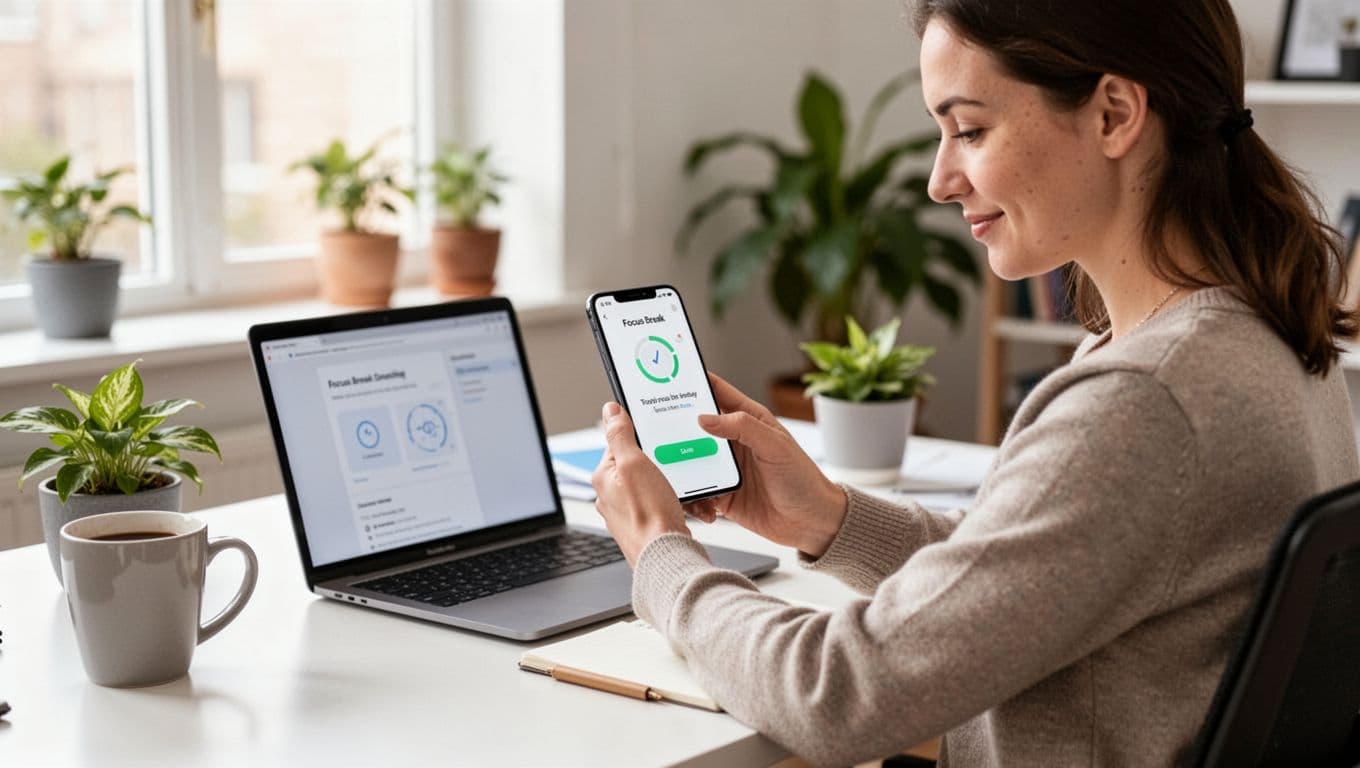
In 2026, the clear trend is personalization. More employers are testing AI-guided support that nudges breaks, sleep habits, or focus windows based on real use patterns. Useful, if handled with care. Creepy, if it feels like surveillance.
So the rule is simple: pick tools that solve one real problem at a time. If the market feels crowded, that is because it is. A current roundup of employee wellness platforms in the USA shows how many vendors now promise one-stop support. Most teams do not need all the features. They need a small set that people will actually open.
The business case, how focus habits help both employees and employers
This is not soft. It is operational.
When attention gets shredded all day, people feel it first. Then the business pays for it. Usually in slow work, sick days, missed handoffs, and turnover that looks random until you inspect the pattern.
What employees gain, from less stress to better focus and sleep
Employees do not need a lecture on screen fatigue. They already feel it. Heavy meeting loads, endless chat alerts, and after-hours spillover leave people mentally "on" long after work ends. The result is stress that lingers, sleep that slips, and concentration that never fully locks in.
Better focus habits change the day at a basic level. Fewer notifications mean fewer mental resets. Clear offline hours lower stress because people know when work stops. Break prompts and meeting limits reduce eye strain and cognitive fatigue. Over time, that creates more stable energy.
Support also has to fit different work styles. A sales team, an engineer, and a people manager do not hit the same friction points. Current 2026 reporting shows more employers are funding mental health support, stress tools, and AI-based personalization for that reason. Workers want help that fits the job they actually do. The 2026 Work-Life-Wellness report from Wellhub points in the same direction, linking wellness support with stronger performance.
What companies gain, from lower burnout to stronger retention
The company payoff is not mystical. It shows up in fewer breakdowns and better output.
Current 2026 reporting ties wellbeing support to fewer sick days, better engagement, and lower turnover risk. Some estimates put turnover reduction at up to 11 percent when support is strong. That does not mean every program prints ROI on command. It means bad focus hygiene costs money, and better systems cut waste.
Participation matters here. Digital platforms often get more traction than random wellness emails or one-off webinars, because they sit closer to daily work. Still, adoption only holds when the program feels useful, not performative.
Burnout rarely arrives as a dramatic event. It builds as unresolved load. Always-on teams need fewer attention taxes, not more slogans.
How to build a digital wellbeing program that people will actually use
Most programs fail for a boring reason: they solve the wrong problem. Or they solve ten problems at once and do none of them well.
A usable rollout starts smaller. Then it gets sharper.
Start with employee needs, not assumptions
Begin with listening. Short surveys work. Listening sessions work. Team-by-team review works. The point is not to collect poetic feedback. The point is to find the friction.
Look at patterns by role, team, and work setup. Remote staff may struggle with boundary loss. Managers may drown in meetings. Customer-facing teams may live inside alerts. Tool fatigue is common across all three.
This quick map helps set priorities:
| Common issue | What it looks like | First move |
|---|---|---|
| Meeting overload | No time for deep work | Set meeting-free blocks |
| Always-on pressure | Late replies become expected | Define response-time norms |
| Tool fatigue | Too many apps and alerts | Cut tools, mute defaults |
That is enough to start. Pick two or three pressure points. Fix those first. A broad program with weak focus usually turns into wallpaper.
Choose a simple program design and make leaders model it
Once the problems are clear, build a small system around them. One or two tools. A few written norms. A few habits people can repeat without a memo taped to their forehead.
For example, a company might set two no-meeting mornings each week, limit after-hours messages, and give teams one shared focus app or break tool. That is not flashy. Good. Flashy dies early.
Leadership behavior matters even more. If senior staff send midnight requests and reward whoever answers first, the policy is dead on arrival. The message employees hear is the real rule, not the written one. Advice on common pitfalls in corporate wellness platforms keeps landing on the same point: one-size-fits-all programs and weak cultural follow-through sink adoption.
Manager training helps. So does onboarding. People need to know what the norms are, why they exist, and how to use them without feeling like they are slacking.
If leaders perform balance but reward overwork, employees notice. Fast.
Measure what matters and improve over time
Measurement does not need to get fancy. Track participation. Ask for employee feedback. Watch burnout indicators, absenteeism trends, engagement scores, and meeting load. If focus time rises and late-night messaging drops, that is movement.
Use the data to adjust, not to spy. Privacy is where trust either holds or breaks. Be clear about what data the company collects, why it collects it, and how it protects it. If people think the program is watching them, they will avoid it.
Most of all, review the program every quarter. Keep what people use. Cut what they ignore. TELUS Health's guide to mistakes derailing wellbeing programs makes the same point from another angle: support works when it stays practical, visible, and tied to daily behavior.
Common mistakes that can hurt a digital wellbeing program
Failure usually looks ordinary. That is why it slips in.
Adding more tech without reducing digital overload
This is the big paradox. A company sees overload, then adds three apps, six alerts, and a weekly challenge. Now the fix becomes another demand.
Digital wellbeing should simplify work. It should reduce switching, not glorify it. If the program creates more tasks than relief, people will ignore it, and they will be right to.
Ignoring trust, privacy, and real-life work culture
Culture beats policy every time. A nice guideline means nothing if managers still expect replies at 9 p.m.
Privacy can wreck a good idea just as fast. If tracking feels invasive, employees pull back. If the company stays vague about data, trust drops. Then even helpful tools start to feel like traps.
Keep the program honest. Keep the data boundaries clear. Match the message with behavior.
Digital wellbeing is not about banning technology. It is about using it in a way that stops attention from bleeding out all day. The strongest programs combine tools, habits, policies, and leadership example. Nothing fancy. Just a clear system that protects focus where work actually happens.
Always-on teams do not need a huge budget to start. They need a few smart rules, a few useful supports, and leaders who act like those rules matter. That is how focus stops being a personal struggle and starts becoming a team standard.