

In 2026, the case is plain. In the US, 61% of workers are languishing at work, and burnout still hits more than half the workforce. That is not a culture note. It is a performance problem.
Leaders know it now. Stress drives sick days, weak focus, and quiet exits. Many companies are putting more money into mental health, preventive care, and financial support because retention got expensive, and burnout got louder.
So, if you're in HR, People Ops, or leading a team, don't overbuild this. A strong wellbeing program is not a perk parade. It's a practical system for helping people work without grinding them down.
Start with a clear business goal, not a list of perks
Most internal wellbeing programs fail for one simple reason: they start with offers, not outcomes. Free meditation app. Yoga class. A webinar nobody asked for. Nice ideas, wrong order.
Start with the business problem you want to reduce. Burnout. Turnover. Absenteeism. Manager overload. Low benefit use. Pick one or two. Tie the program to that. Otherwise, you are decorating the problem.
A wellbeing program should support the company and the people in it. Both matter. Burned-out teams are more likely to call in sick, lose focus, and look for other jobs. If your program can't speak to that, leadership won't back it for long.
A wellbeing program is not a perk menu. It's a support system with a job to do.
Find out what employees actually need
Don't guess. Ask. Then check the answers against real signals.
Use an anonymous survey. Run a few focus groups. Look at exit interview themes. If you have access, review claims trends or EAP patterns. Then ask managers what they keep seeing on the ground. A basic wellness needs assessment can stop you from launching something polished and useless.
Look wider than fitness. People don't leave jobs because there wasn't a step challenge. They leave because they feel fried, stretched thin, or alone. So assess four areas: mental health, physical health, financial stress, and social connection. That's the real map.
One size fits all sounds efficient. It usually means low trust and low use.
Choose goals you can measure from day one
Pick two to four metrics before launch. Not after. After is how teams end up calling sign-ups a win.
This quick framework keeps the first version grounded:
| Metric | What it tells you | Early sign of progress | | | | | | Participation rate | Did people notice and try it? | Steady month-one usage | | Benefit awareness | Do employees know what's available? | Fewer "I didn't know" comments | | Manager confidence | Can managers guide people well? | Better check-in quality | | Absenteeism or turnover trend | Is pressure easing over time? | Small but visible movement |
That mix matters because usage alone can fool you. A lot of people can click a link once. That doesn't mean the program helped. If you need a broader model, this guide on launching and running an employee wellbeing program frames success as an ongoing system, not a one-time campaign.
Define success early; ROI gets easier to prove later.
Build a wellbeing program people will actually use
Good design beats big design. Most teams don't need 20 offers. They need a few useful ones, easy to find, easy to trust, and relevant to real life.
Keep the program simple. Cover the basics across mental health, physical health, financial pressure, and connection at work. If one area dominates the whole plan, the program gets lopsided fast.

Focus on a few high-impact offers first
Start where pain is highest. For many companies, that means mental health support, manager training, flexible wellbeing days, and help using existing benefits. Add financial education if money stress keeps surfacing. Add movement or fitness support if employees ask for it.
This is where many teams get distracted. They try to offer everything at once because it looks generous. It usually creates clutter. People can't tell what's useful, so they ignore all of it.
Phased launch works better. Start with three or four offers. Watch how people use them. Then expand. That approach is cheaper, easier to explain, and easier to fix.
Also, don't bury what you already pay for. Only 53% of employees know how to use employer mental health benefits. That's not a demand problem. That's an access problem.
Make it inclusive for different roles and life stages
Design for the people you have, not the people in your head. Office staff, remote teams, and frontline workers don't live in the same workday. Parents, caregivers, younger workers, and older workers don't carry the same pressure either.
So remove friction where you can. Offer support across shifts, not only during office hours. Make digital resources mobile-friendly. Give frontline teams non-desk access. Keep privacy tight, especially for mental health support. If a benefit costs too much out of pocket, it won't land as support. It will land as theater.
Accessibility matters here too. Language, captions, reading level, device access, and disability needs all shape use. If the program only works for salaried desk workers, it isn't a company program. It's a partial one.
Plan the internal launch so employees trust it and managers support it
A weak rollout can sink a strong program. People ignore what they don't understand. They avoid what feels risky. They tune out what sounds like PR.
So treat the launch like product adoption. Reduce friction. Repeat the message. Keep the path in plain view.
Use simple internal messaging that answers, why this and why now
Start with the truth. Stress is high. Work has been heavy. The company is responding because support affects health, retention, and performance. That's enough. You do not need a grand speech.
Then say what is available, who it is for, how to access it, and what privacy rules apply. Plain language wins. Short lines win. Repetition wins. If employees need a decoder ring, the launch already lost.
Use more than one channel. Email catches some people. Team meetings catch others. The intranet helps later. Manager toolkits help the message stay consistent. If you want a program to spread, build more than one doorway.
If people don't trust privacy, they won't touch the program.

Train managers to spot stress and guide people to support
Managers are the bridge. Or the blockage.
Employees often decide whether support feels safe based on one conversation with a manager. So give managers basic training before the launch. Keep it practical. They should know how to spot overload, run supportive check-ins, refer people to the right resource, and avoid language that adds shame or pressure. These tips for managers to reduce burnout line up with that reality.
Don't ask managers to play therapist. That's not the job. Ask them to notice signals, respond with care, and know the route to real support.
Tech can help, but keep a human layer. A platform can organize benefits. It can't replace trust.
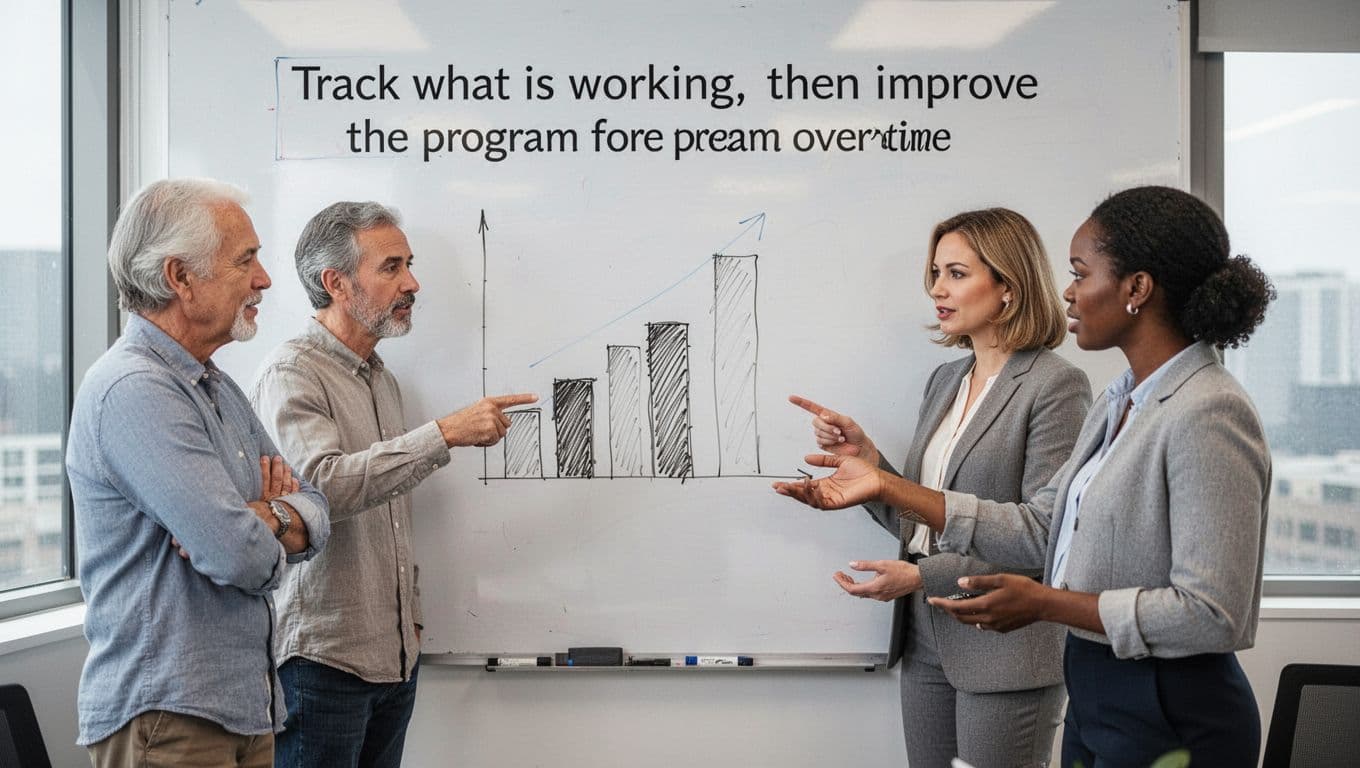
Track what is working, then improve the program over time
The first version is a draft. Treat it that way. Launch, learn, adjust.
If you expect perfection in round one, you'll either stall the launch or defend weak choices for too long. Neither helps employees.
Measure engagement, outcomes, and employee feedback together
You need three views. First, engagement metrics like participation, repeat use, and benefit awareness. Second, outcome signals like stress pulse scores, sick days, turnover patterns, and manager confidence. Third, employee feedback, because numbers without context can lie.
Many programs stall because they only count sign-ups. That is traffic, not impact. A better frame is to measure and communicate value across both human and business outcomes.
Review data monthly at first, then quarterly once the program settles. Look for patterns, not noise.
Use early wins to earn long-term support
Leadership doesn't need magic. It needs proof that the program is doing something real.
Share small wins fast. Maybe one resource gets strong repeat use. Maybe manager feedback improves. Maybe more employees say they understand their benefits. Those are useful signals. Put them in plain language and tie them back to the original goals.
Then be ruthless about edits. Drop what gets no traction. Improve what employees value. Expand slowly where demand is real. That matters even more in 2026, when burnout is still high and health costs keep pushing companies to make smarter bets.
Launching an internal wellbeing program doesn't require a giant budget or a perfect draft. It requires discipline. Start with real needs. Set a few measurable goals. Build a focused offer. Explain it clearly. Train managers. Then watch the signals and keep improving.
That is how a wellbeing program stops being an HR side project and starts acting like part of the company's operating system.
Pick one business goal, one employee listening method, and one first offer. Start there. Then make it real.