

A disconnected remote team is not a character flaw. It's usually a design flaw.
That matters, because too many managers treat isolation like a personal issue. They assume some people are just quiet, distant, or "not into culture." Recent US reporting says otherwise. About 56% of remote workers still struggle to feel connected to colleagues, and other surveys put frequent loneliness at roughly one in five to one in four workers. Among fully remote staff, the numbers often look worse.
Isolation drains more than mood. It weakens trust, slows decisions, shrinks new ideas, and pushes good people out. It also makes normal work feel heavier than it should. This guide is for managers and team leads who want a more connected distributed team, without fake games, mandatory fun, or another bloated meeting series.
Spot the real causes of isolation before you try to fix it
Isolation rarely starts with personality. It starts with how the team runs.
Most distributed teams drift into it the same way. Too much text, not enough face time. Too many side chats, not enough shared context. Too many meetings about tasks, not enough room to sound like a human. Add time-zone spread, uneven access to information, and a few people who always hear decisions late, and the team begins to split into insiders and everyone else.
That split is the real problem. People don't feel isolated because they missed a virtual happy hour. They feel isolated because work starts to feel like a closed circuit. A useful framing comes from this shared experience view of remote loneliness: the issue is not a lack of events, but a lack of common moments that make people feel included.
Current data points in the same direction. Fully remote workers report higher anxiety and depression than in-office peers, while hybrid workers tend to fare a bit better. Distance alone doesn't break a team. Poor operating rules do.
The warning signs your distributed team is feeling disconnected
You usually see the signals before anyone says, "I feel isolated."
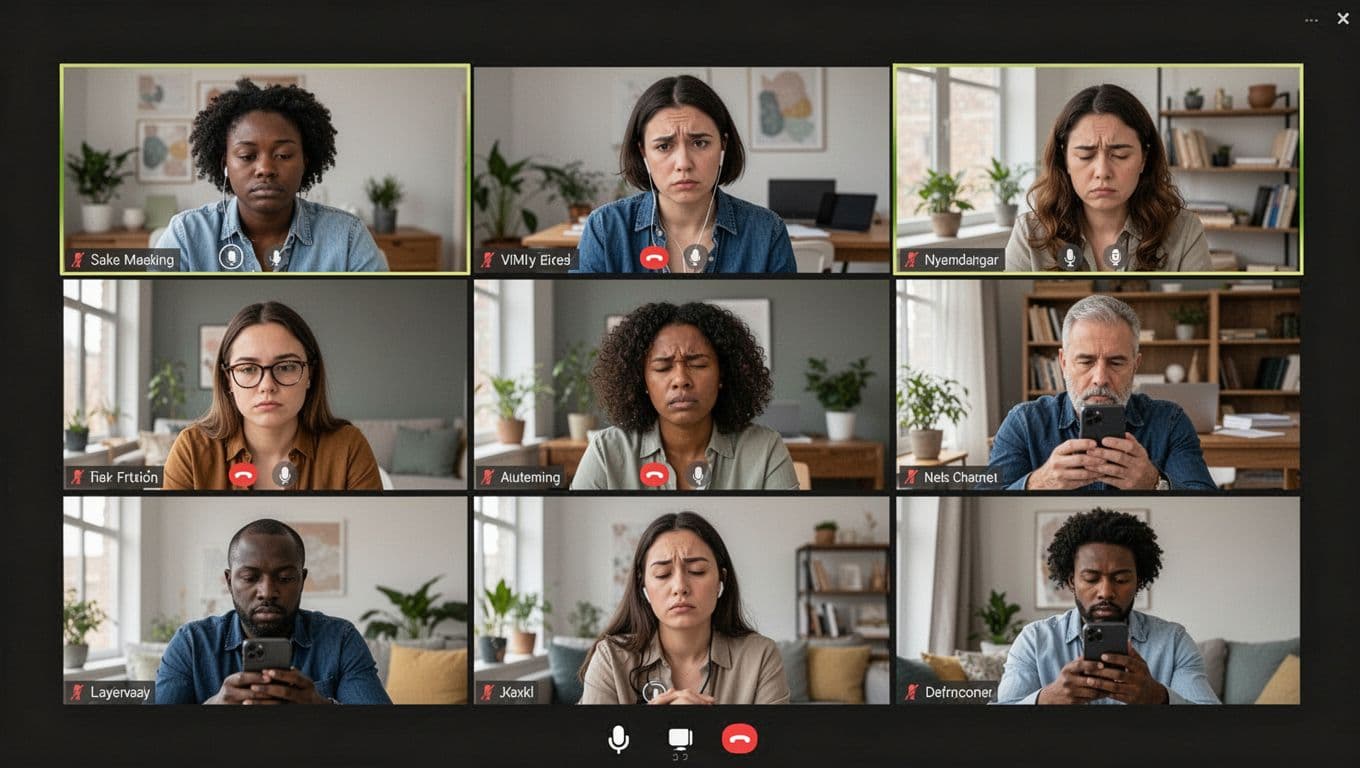
Watch for patterns like these:
- Quiet meetings: the same two people talk, everyone else stays flat.
- Slow replies: not just delay, but low-energy, one-line answers.
- Lower participation: fewer comments, fewer questions, fewer ideas.
- Missed context: people seem informed late, or not at all.
- Withdrawal from optional chats: hobby channels, coffee chats, or team rituals go cold.
- Burnout signals: cameras off all week, short tempers, skipped breaks, low curiosity.
One sign alone means little. A cluster means something. As Harvard Business Review's look at loneliness on remote teams makes clear, isolation often hides in plain sight because output can stay decent for a while. The work gets done. The team still frays.
Who feels isolation the most, and why one size does not fit all
Some people carry more risk than others.
New hires miss the small learning that happens by accident in an office. Fully remote workers can feel unseen if the power center sits elsewhere. People in minority time zones often live on delay; they wake up to decisions already made. Younger workers, especially Gen Z, often lose the informal coaching that helps them learn the job and read the room.
So don't roll out one generic "belonging" program and call it a fix. Support has to fit the friction. A new hire may need paired check-ins and tighter documentation. A senior engineer in another time zone may need decision logs and equal airtime in meetings. Same problem class, different repair.
Build connection into the workday, instead of treating it like an extra
The best fix is not more meetings. It's better defaults.
Connection should live inside normal work, not hang off the side like a party banner. When teams feel close, it's usually because the work itself carries small moments of visibility, rhythm, and trust.
Connection is not an event. It's an operating system.
Set clear communication rules so nobody feels left out
If every channel means everything, people miss things. Then they stop trying to keep up.
Give each tool a job. Chat is for quick questions and fast coordination. Video is for discussion, conflict, and messy topics. Email is for formal external communication or longer updates that need a record. Async updates are for status, progress, blockers, and decisions people can read on their own time.
Then do the part teams skip: document decisions in a shared place. Not in someone's head. Not buried in a private thread. Remote workers feel left out when context travels by accident. Shared notes, decision logs, and written summaries cut that social distance fast. A practical remote work best-practice framework makes the same point: the more visible the work, the less energy people waste decoding it.
Keep the rules short. For example: decisions go in the team doc, meeting notes land within 24 hours, and nobody is expected to answer chat instantly outside overlap hours. Simple rules lower confusion. Lower confusion lowers isolation.
Use short face-to-face moments that feel human, not forced
A weekly 20-minute check-in beats a quarterly online carnival.
Short live moments work because they restore tone, timing, and facial cues. That's the stuff text strips out. Use them lightly. A quick team check-in. A paired catch-up every other week. A five-minute opener in meetings with one low-stakes personal question. Enough to create texture, not enough to waste the day.
The key is cadence, not spectacle. Small, regular contact beats rare big events because people trust what repeats. They don't trust what shows up once a quarter with balloons and a budget line.
That also means no pressure. Don't force cameras on. Don't demand oversharing. The point is to create space for human signal, not perform closeness.
Create casual spaces for low-pressure conversation
Office bonding used to happen in the gaps. Hallways, coffee lines, the two minutes before a meeting. Remote teams lose those gaps unless they build a place for them.
A hobby channel can help. So can a simple space for pets, wins, cooking, books, or weekend photos. The format matters less than the pressure level. Low-pressure spaces work because they let people show up sideways. Not every bond starts with "team culture." Sometimes it starts with a dog photo and a decent joke.
Still, keep it optional. Required fun is just another task wearing a silly hat.
For teams that need more structure, paired coffee chats can work well. Rotate lightly. Keep them short. Give people an easy opt-out. When casual contact feels invited rather than assigned, participation stays real.
Help managers lead with trust, recognition, and emotional awareness
Managers set the emotional weather. Tools matter, but manager behavior lands harder.
People feel less isolated when they know three things: their work matters, someone notices, and honesty won't be punished. None of that requires perks. It requires attention.
Make recognition frequent, specific, and visible
Generic praise doesn't stick. "Great job, team" is wallpaper.
Better recognition names the effort or the impact. Thank someone in a team channel for spotting a risk early. Call out a clean handoff across time zones. Mention the extra clarity in a project update that saved others time. When praise is public and concrete, it does two jobs at once: it rewards the person and teaches the team what good work looks like.
That visibility matters because remote work can hide contribution. A short thank-you message can reconnect someone to the group faster than a formal award ever will.
Train managers to check in on energy, not just deadlines
A one-on-one should not read like a status meeting with better manners.
Managers need to ask about load, focus, and stress, not just tasks. Simple questions work best: "What feels heavy right now?" "Where are you blocked?" "What are you dropping because it's too much?" Those questions open a real door. Deadline talk alone doesn't.
That matters because job stress still hits mental health hard, and emotional support is often missing at work. Practical guidance on combating remote work isolation and well-being strain points to the same truth: contact helps most when it is consistent, direct, and grounded in real workload.
Managers also need boundaries. Don't praise late-night replies. Don't model permanent availability. If the boss treats exhaustion like commitment, the team goes quiet and guarded. Trust dies there.
Use the right tools and routines to keep distributed teams connected over time
Tools don't create connection by themselves. They either reduce friction or add noise.
Choose tools that make collaboration feel shared and visible
Use live tools for live work. Zoom and Teams still make sense for face time, conflict, and team rhythm. Slack works when channels stay clear and purposeful. Loom helps when an async video can replace a meeting and add tone that text misses. Google Workspace and Microsoft 365 help because people can work in the same document, at the same time, without chasing versions. AI meeting assistants can help too, as long as summaries go into shared spaces people actually use.
The point is not the stack. The point is shared visibility. If people can see the decision, the draft, the update, and the next step, they feel part of the same system. A broader 2026 remote team challenges overview reinforces that pattern across distributed teams.
Measure connection the same way you measure output
What gets tracked gets discussed. What gets discussed gets improved.
So measure connection with a few simple signals: meeting participation, response patterns, pulse survey scores, turnover risk, and participation in optional rituals. Keep it light. Run small tests. Maybe one team tries written decision logs for a month. Another adds rotating paired catch-ups. Then compare what changed.
This is not a one-shot fix. It's maintenance. Like any team system.
Reducing isolation in distributed teams comes down to repeatable habits. Clear rules. Small human touchpoints. Managers who notice people, not just output. Tools that make work visible instead of louder. Start there. Start this week. A connected team doesn't need a perfect culture plan; it needs a few good defaults that people can trust.