

One in five U.S. adults faces mental illness each year. That's 61 million people in 2024 data that holds steady into 2026. Almost six in ten get no care at all. Poor tracking of program outcomes plays a big part. It leaves 28% of cases without follow-up treatment because progress stays invisible.
Mental health program outcomes reporting fixes that. It tracks symptoms, engagement, and recovery with hard numbers. Programs prove they work. Patients recover faster; one study shows 56% quicker results in tracked clinics. Funding flows better. Insurers pay up when data backs claims.
You get motivated patients who see their own wins. Therapists adjust plans on facts, not guesses. This post covers benefits, key metrics, challenges with fixes, 2026 trends, and real examples. You'll walk away with steps to start reporting right now.
Unlock the True Benefits of Strong Outcomes Reporting
Patients need proof their effort pays off. Outcomes reporting delivers charts of dropping symptoms. They stick with care longer. Motivation rises because they see the path ahead.
Therapists gain sharp eyes on issues. Early spots on stalled progress mean quick tweaks. Decisions base on data, not memory. Communication strengthens between patient and provider.
Programs thrive on these numbers. Funders demand evidence. Strong reporting secures grants and contracts. Insurers cut readmissions by 20% in tracked systems. Efficiency climbs; resources hit real needs.
Want patients to stay engaged? Track response rates. Tools like symptom surveys hit 50% completion when simple. Better data builds trust. Everyone wins.
Integrated care lowers costs overall. Mental health ties to physical; reporting spots those links. Reduced absenteeism follows. Workplace programs report 25% less lost time.
Reporting isn't paperwork. It's the signal in the noise. Programs ignore it at their peril.
Essential Metrics to Track for Program Success
Numbers tell if your program helps. Pick the right ones. Measure often. Use apps or surveys every two to four weeks. Dashboards pull it together.
Focus on clinical, engagement, operational, and financial KPIs. These show healing, reach, speed, and value. Start small. Build from there.
Clinical Outcomes That Show Real Healing
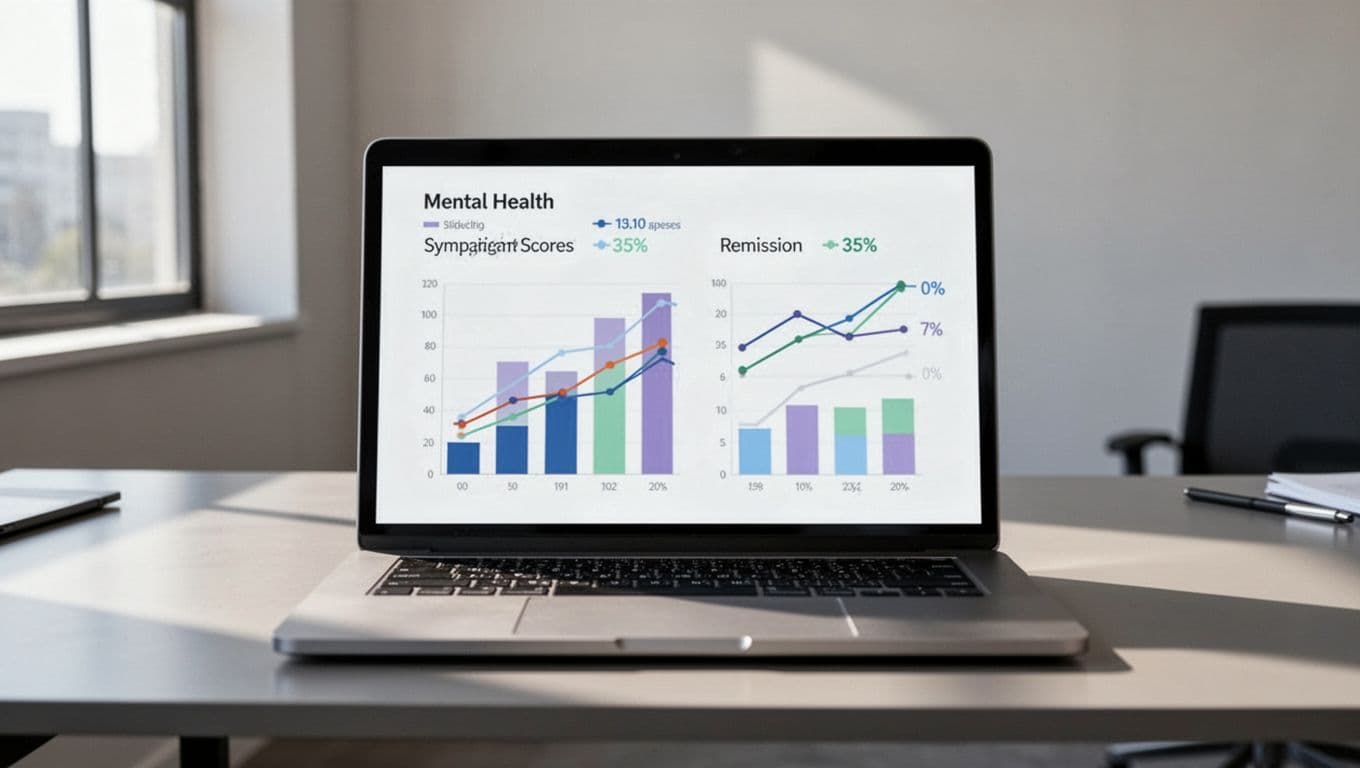
Symptom reduction leads the pack. PHQ-9 for depression, GAD-7 for anxiety. Expect 20-25% drops in scores after treatment. Remission rates hit 50-60% for anxiety in good programs.
Response means 50% symptom cut. Recovery goes further: full function back. WHO-5 wellbeing scores climb. Fewer readmissions follow; hospitals drop 15-20%.
Measure weekly via apps. Patients log from phones. Therapists review trends. These metrics prove healing happens. For more on top clinical measures, check top 10 metrics at mental health centers.
Engagement and Access Measures for Wider Reach
Utilization runs 40-50% in strong programs. Track no-shows; aim under 15%. Adherence to sessions boosts retention. Satisfaction surveys hit 80% positive.
Telehealth use sits at 62%. It widens reach for rural or busy folks. Completion rates for programs rise with reminders. Why track? Retention doubles with good access.
Survey patients post-session. Net promoter scores guide fixes. High engagement means wider impact.
Operational and Cost-Saving KPIs
Caseloads max at 25-30 patients per clinician. Wait times shrink to two weeks. Revenue per patient stabilizes funding.
Absenteeism drops 25-30% post-treatment. Presenteeism improves too; workers focus better. Link to workplace data for proof.
Dashboards flag overloads. Adjust staff or slots fast. These KPIs save money and scale care.
Overcoming Key Challenges in Outcomes Reporting
Data lags kill momentum. Suicide stats take one to two years. Outdated EHRs block flow. Clinicians drown in entry time. Stigma slows patient buy-in.
Fix it with modern tools. Interoperability standards speed sharing. Training cuts burden. Privacy holds for AI use.
You face friction. Beat it head-on.
Fixing Data Collection and Tech Gaps
EHRs need updates now. 2026 rules force interoperability. Only 17% of hospitals share with behavioral health otherwise. Real-time monitoring apps fill gaps.
Standards like FHIR link systems. Patients own their data. Track symptoms live. For details on EHR changes in behavioral health, see recent updates.
Results flow faster. Decisions sharpen.
Winning Over Staff and Boosting Buy-In
Clinicians spend a third on admin. AI drafts notes; frees hours. Train teams on quick entry. Collaborative models share load.
Reduce no-shows with auto-reminders. Show staff how data helps patients. Buy-in grows when they see wins. Workflows integrate reporting. Burden drops 30%.
2026 Trends and Best Practices to Boost Your Reporting
Continuous care rules now. Digital check-ins between sessions. Apps nudge and coach. Crises drop because issues catch early.
AI spots risks with human check. Privacy first; secure platforms only. Integrated health blends mental and physical. Sleep data flags depression.
Telehealth is standard. 62% of visits go virtual. Real-time tracking via apps. Weekly symptom checks start simple.
Workplace programs add return-to-work metrics. Best practice: dashboards with engagement rates.

Follow Grow Therapy's clinical outcomes report for digital benchmarks.
Success Stories from Top Mental Health Programs
Integrated care cuts hospitalizations. CCBHCs offer 24/7 crisis help. Costs fall; adherence rises.
Telehealth reaches 62%. AI tools like chatbots match therapy gains. Body image worries drop 19%.
Charlie Health's 2025 report shows strong retention in virtual IOP. See their annual outcomes.
Co-response teams pair pros with police. ER visits shrink.

Lessons stick: data proves impact. Your program matches this.
Key Takeaways for Your Mental Health Program
Strong outcomes reporting brings proof, speed, and funds. Track clinical drops, engagement lifts, operational tweaks. Fix tech gaps and staff load.
2026 brings AI, telehealth, check-ins. Examples like CCBHCs show it works.
Pick three metrics today. Audit your challenges. Test weekly apps. Better reporting changes lives. Funding follows facts.