

By mid-morning, the signs show up. Dry eyes. Tight shoulders. A neck that feels bolted in place. Focus gets fuzzy, yet the screen keeps asking for more.
That's where micro-breaks earn their keep. They're short pauses, usually 30 seconds to 5 minutes, taken during the workday to reset your body and brain. Not a full break. Not a productivity ritual with too much branding. Just a small stop that lowers stress, sharpens focus, cuts eye strain, and helps undo desk posture before it turns into pain.
The key is frequency, not drama. Micro-breaks work best when they happen often and at natural stopping points, not in the middle of deep work. Small resets, done on time, beat heroic recovery every time.
What makes a micro-break actually work
A micro-break isn't magic. It follows basic timing. Most desk workers do well with a short pause every 30 to 60 minutes. If you like structure, use 25 minutes of work and 5 minutes of break. If posture is the main problem, the 20-8-2 pattern is simple: sit for 20 minutes, stand for 8, move for 2.
Research backs the plain version of this idea. A systematic review on micro-breaks found that short breaks help reduce fatigue and improve vigor, with little downside for performance. That matters because desk fatigue usually builds slowly. By the time it feels obvious, it's already been stealing output.
Timing matters, but so does placement. End a small task first. Send the email. Finish the paragraph. Save the file. Then get up. Breaks taken at clean stopping points create less mental drag, so it's easier to resume.
Pick the right length for the kind of fatigue you feel
Not every break needs five minutes. Match the break to the signal.
Here's the quick map:
| What you feel | Best micro-break | Length |
|---|---|---|
| Dry, tired eyes | Look 20 feet away, blink slowly | 20 seconds |
| Rising stress | Box breathing or 4-4-4 breathing | 1 minute |
| Stiff neck and shoulders | Stand, roll shoulders, open chest | 1 to 2 minutes |
| Mental overload | Walk to the hall or window | 3 to 5 minutes |
Short is fine. Exact is better. An eye problem needs an eye reset. A stress spike needs slower breathing. A body locked in sitting needs the opposite motion. Simple.
Use natural stopping points so breaks do not kill your flow
People often skip breaks because they think stopping will wreck momentum. Usually, bad timing is the real problem. Don't stand up in the middle of a thought if you can help it. Stop after a call ends, after an inbox sweep, after a draft section, or after a focus block.
If you already work in cycles, this gets easier. A Pomodoro technique guide lays out the familiar 25-and-5 pattern, and it fits micro-breaks well. The point isn't worshiping the timer. The point is reducing friction when it's time to restart.
Breaks should protect flow, not puncture it. Finish a chunk. Step away. Come back cleaner.
Simple micro-break ideas for desk jobs that help right away
Most people don't need special gear. They need less nonsense and more moves they'll actually do. Good micro-breaks are easy, quiet, and low-effort. No outfit change. No empty motivation speech.
Quick movement breaks to undo sitting and wake up your body
Sitting all day pushes the body in one direction: hips folded, chest closed, head drifting forward. So the fastest fix is the opposite shape.
Stand up and reach your arms wide for 20 seconds. Roll your shoulders back ten times. Tuck your chin gently and lengthen the back of your neck. Push the chair back, place hands on your lower back, and open the chest. Do ten calf raises while waiting for a file to load. Walk the hallway for one minute, even if it feels too small to matter.
It matters because desk posture is repetitive. Repetition wins unless you interrupt it.
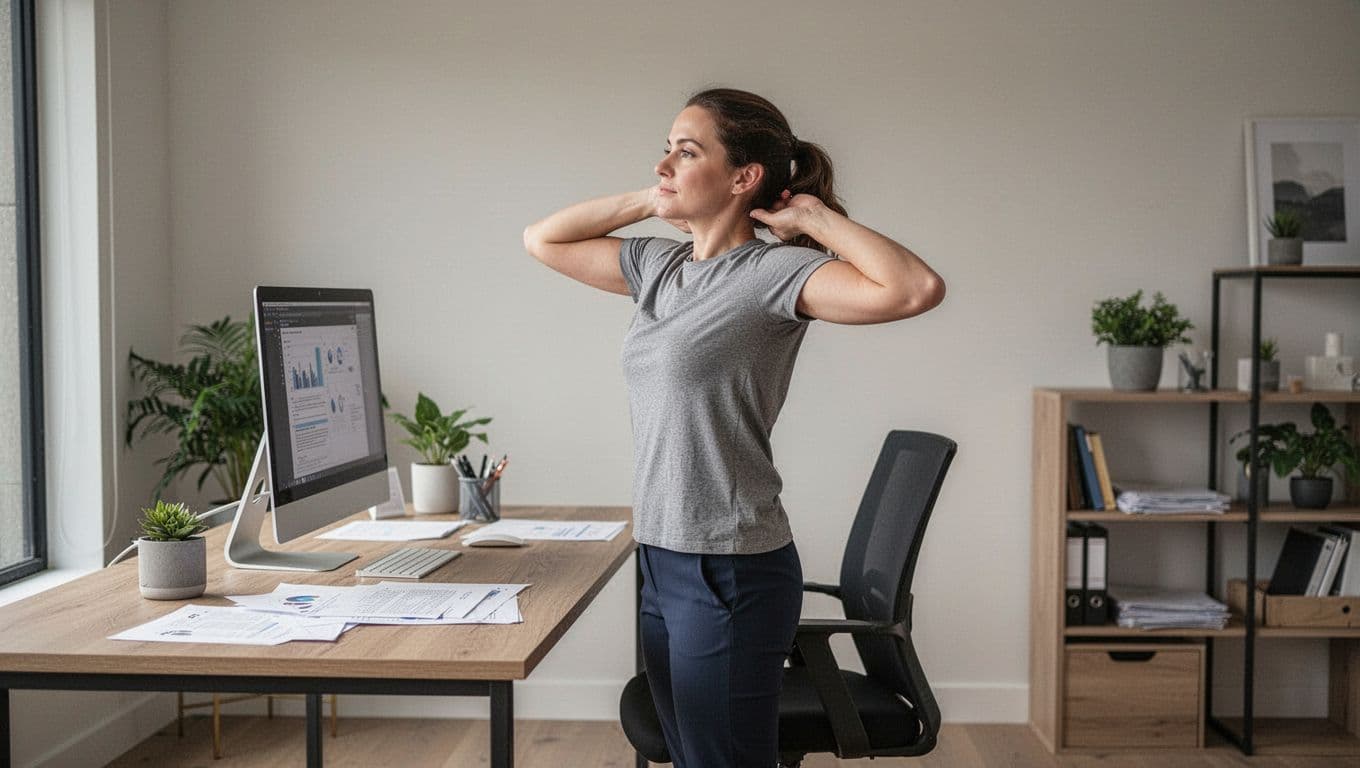
In 2026, even the research is catching up to what bodies have been saying for years. A 2026 study on hourly micro-exercise breaks found that short movement breaks in sedentary office workers were feasible and helpful for health. No surprise there. The body was never built for statue mode.
Eye and screen breaks that lower strain fast
Eye strain is sneaky. It feels mental, but it's also mechanical. Too much near focus. Too little blinking. Too much glare. The fix doesn't need to be complicated.
Use the 20-20-20 rule. Every 20 minutes, look at something about 20 feet away for 20 seconds. It's one of the easiest habits for heavy screen work, and this guide to the 20-20-20 rule for screen workers explains why it helps. On top of that, blink on purpose a few times when your eyes feel dry. Screens reduce blink rate. Your eyes pay for it.
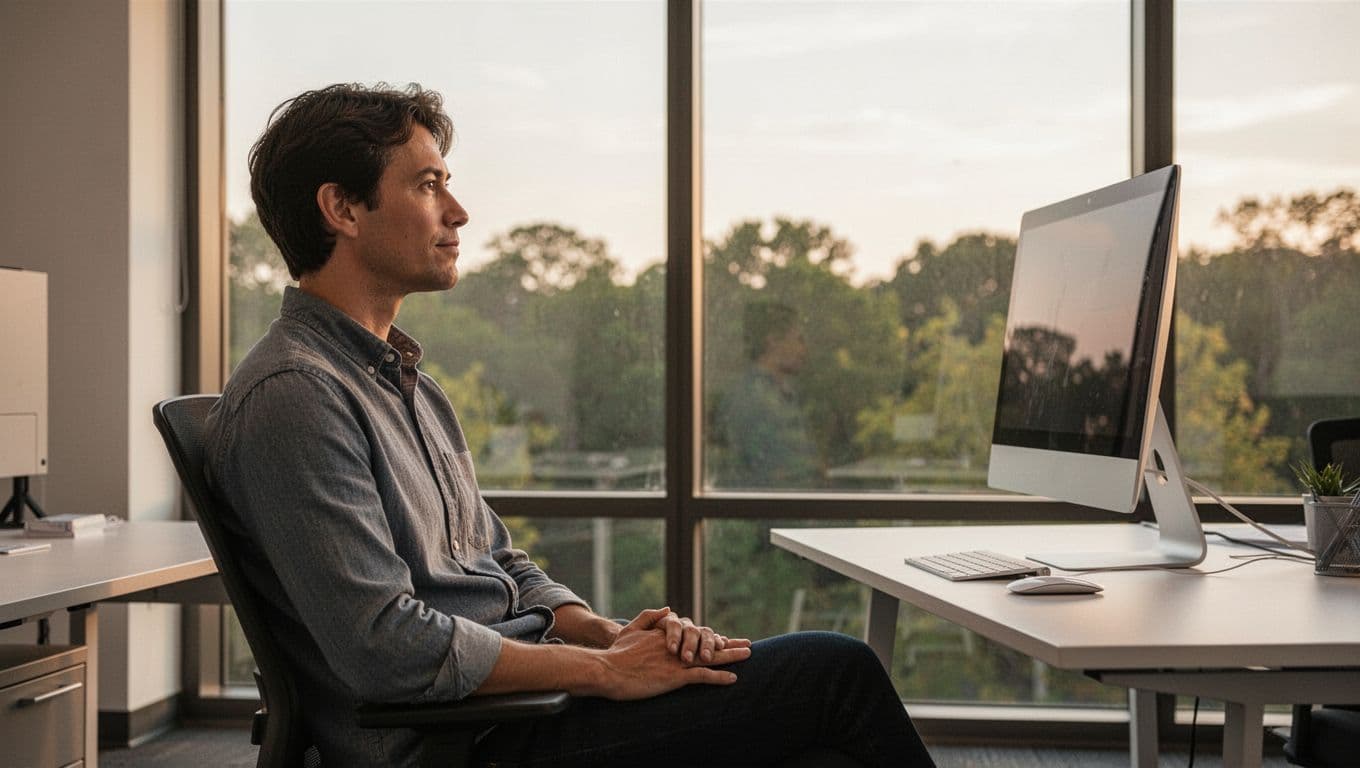
Looking out a window works well because distance matters. So does closing your eyes for ten seconds. If they feel hot or gritty, try palming: cover closed eyes lightly with your palms and breathe for a few slow counts. No pressure, just darkness.
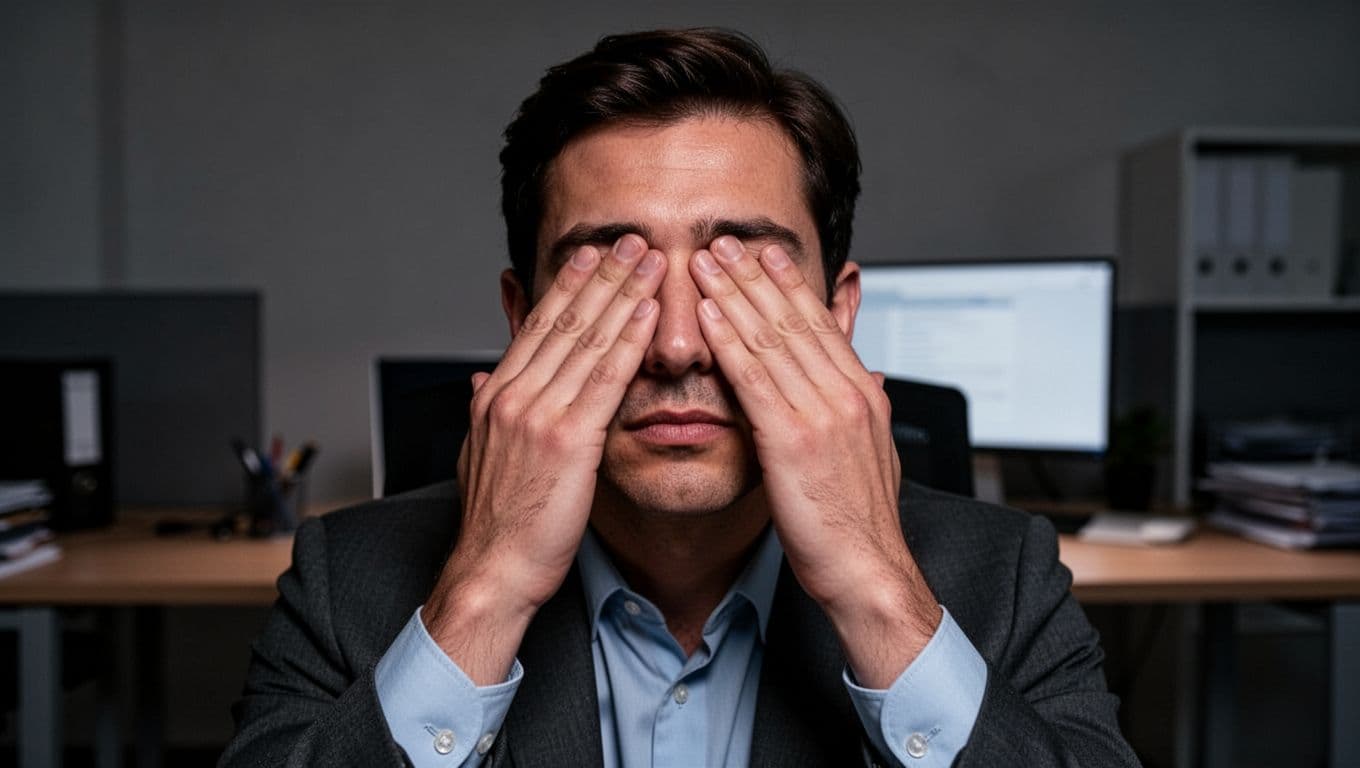
This is not soft advice. It's maintenance. Like wiping a fogged windshield so you can see again.
Mental reset breaks for stress, focus, and better mood
Some fatigue isn't physical first. It's cognitive load. Too many tabs open, too many meetings stacked, too much low-grade tension.
That's when a one-minute reset can do real work. Try box breathing, four seconds in, four hold, four out, four hold. Or use a simple 4-4-4 breath: inhale four, hold four, exhale four. If breathing drills annoy you, keep it smaller. Sit still, feel both feet on the floor, and name three things you can see. That's enough to break the spiral.
A quick gratitude note can help after a rough meeting, not because gratitude is magic, but because attention follows direction. Writing one useful line shifts the frame. Standing in sunlight for two minutes helps, too. So does listening to one song clip without checking anything else.

Use these before a hard meeting, after a tense email, or during the 3 p.m. slump. The goal is regulation, not escape.
How to build micro-breaks into a busy workday without falling behind
The usual excuse is time. It sounds rational. It isn't. Skipping every break often leads to slower work, worse posture, and a bigger crash later. That's not efficiency. That's deferred damage.
Start with a rhythm that does most of the work for you. Set a quiet timer. Add short calendar holds between meetings. Use posture reminder apps or AI nudges if you tend to lose track of time. Put sticky notes on the monitor if that's what gets the job done. Fancy systems are optional. Cues are not.
Create a break rhythm you can stick with
A workable day might look like this: every 20 minutes, do a quick eye reset. Every hour, stand up, stretch, or walk for one to two minutes. After three focus blocks, take a full five-minute reset away from the screen.
That's enough for most people. Remote workers can tie breaks to coffee refills, load screens, or home tasks. Office workers can use printer trips, meeting gaps, or bathroom walks. Hybrid workers should stop pretending each day needs a new strategy. Pick one rhythm and reuse it.
Consistency beats ambition. Always.
Make your workspace remind you to move
Good workspaces create useful friction. Put the water bottle across the room so refills force movement. Leave a small note near the monitor that says "drop shoulders" or "look far." Build a sit-stand desk schedule into the day if you have one. If not, use your chair as a check-in point: feet flat, hips back, screen at eye level, then move again in an hour.
Current office design trends in 2026 lean into this logic. Sit-stand desks, posture prompts, better lumbar support, and human-centered lighting all push the same message: comfort should invite movement, not trap you in one position.
Even a tiny clear patch of floor beside the desk helps. Space is a cue. Use it.
Common micro-break mistakes to avoid
The worst mistake is waiting until pain gets loud. Pain is a late signal. By then, strain has already settled in.
Micro-breaks work best before the alarm goes off.
Another mistake is treating every break the same. Some breaks should be active. Some should be visual. Some should calm your nervous system. Variety helps because desk fatigue has more than one source.
Why doomscrolling is not the same as resting your brain
Scrolling doesn't count as recovery just because work stopped. Social feeds often keep the eyes locked at the same distance, keep the hand in the same grip, and keep the brain overstimulated. That's not a reset. It's the same load in different clothes.
Better swaps are boring on paper and better in practice: breathe for one minute, stretch your chest, walk to the window, close your eyes, or stare at a distant tree. Real rest lowers demand. It doesn't just change apps.
Start small so the habit lasts
Don't build a perfect plan. Build a repeatable one. Start with one break per hour. Or pick one eye break in the morning and one movement break in the afternoon. Then keep going tomorrow.
If a break gets skipped, fine. Resume at the next stop. The habit matters more than the streak.
Not every micro-break needs movement. Still, a mix of movement, eye rest, and mental reset tends to work best because desk work hits all three systems at once.
Micro-breaks are small, but they punch above their size. They help with focus, comfort, posture, and stress because they interrupt strain before it turns into a full-day tax. Try two today: one movement break, one eye break. That's enough to start. Then repeat it until your workday feels less like a grind and more like something your body can actually handle.