

You wake up, reach for the phone, and the day starts before your feet hit the floor. A few messages. A news alert. One quick scroll that becomes twenty minutes. By breakfast, your brain is already crowded.
That loop is phone overuse in plain terms: checking so often that the device starts steering your mood, focus, and rest. Recent US figures put phone checking at roughly 96 to 150 times a day. About 57% of Americans say they feel addicted to their phones. About 75% feel uneasy without them, and 47% panic when the battery gets low.
This isn't about blaming phones. They're useful. But constant access can keep your nervous system in a low-grade state of alarm. The fix is practical, not dramatic. You don't need a perfect detox. You need better defaults, less friction in the wrong places, and a few replacements that calm your system instead of agitating it.
How phone overuse fuels anxiety in daily life
Phone overuse and anxiety feed each other. One creates the conditions for the other. Then the cycle tightens.
The nonstop checking habit keeps your brain on alert
Every ping, swipe, and red dot acts like a cue. Your brain learns that something new might be waiting. Sometimes it's useful. Often it's nothing. But the loop still lands.
Part of that loop involves dopamine, a brain chemical tied to reward and craving. Not magic. Not a buzzword. Just a basic system that says, "Check again, maybe this time." Over time, calm starts to feel strange, because your attention has been trained to expect a hit every few minutes.
That matters because anxious brains already scan for signals. Add a device built around interruption, and your mental operating system starts running hot. A recent 2026 screen time and anxiety analysis linked heavier screen use with worse sleep and higher behavioral risk patterns. The point isn't panic. The point is pattern recognition.
Sleep loss, FOMO, and social comparison raise stress
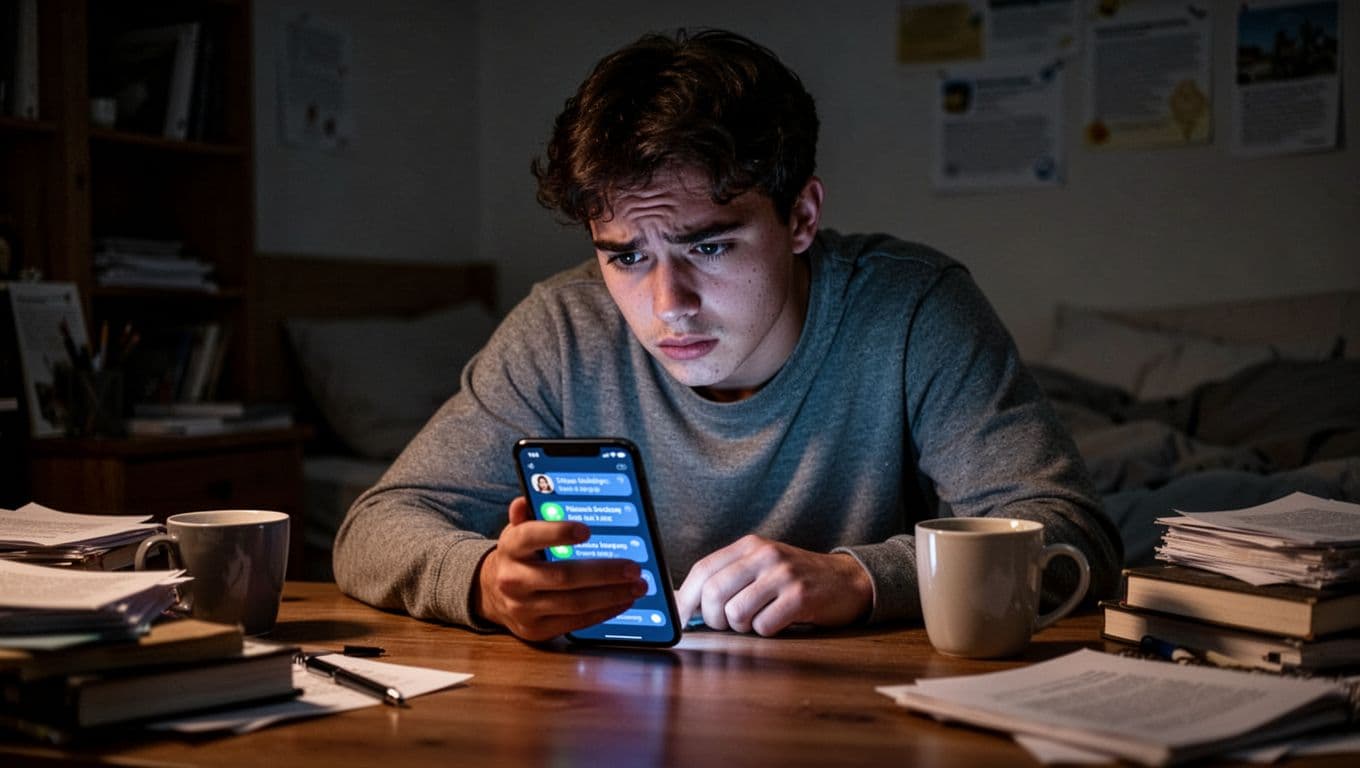
Late-night scrolling steals from sleep in two ways. First, it delays bedtime. Second, it keeps the mind activated when it should be slowing down. That trade is brutal. Poor sleep makes anxiety louder the next day.
Then comes FOMO, the fear of missing out. If you feel pressure to stay available, your phone stops being a tool and becomes a tether. Low battery starts to feel like a threat. Silence feels suspicious. Rest feels undeserved.
Social media adds one more layer: comparison. You see polished highlights and measure them against your messy Tuesday. That isn't fair math. Still, people do it all the time. Recent findings show heavy social media use tracks with higher anxiety, depression, and sleep problems, especially in younger users. Put simply, the phone can become a pocket-sized stress amplifier.
Signs your phone use may be affecting your mental health
You don't need a diagnosis to notice a bad pattern. You need honesty. That's the start.
Common clues, from low focus to feeling uneasy without your phone
The signs are often ordinary at first. You unlock the phone without meaning to. You reach for it during every pause, even in the grocery line or at a stoplight. Quiet moments start to feel itchy.
Focus also drops. Reading a page feels harder. A movie scene loses you. Work stretches longer because every small task gets interrupted by a glance that turns into a detour. If the battery drops to 10% and your body reacts like there's smoke in the room, pay attention.
Emotional signs matter too. Restlessness. Irritability. A weird sense of emptiness when the phone isn't nearby. If you want a broader checklist, HelpGuide has a solid summary of warning signs of smartphone addiction.
When phone habits start to affect sleep, work, or relationships
The bigger clue is spillover. When phone use starts changing your day, not just filling it, the cost is real.
Bedtime gets pushed back. Conversations get chopped into fragments. You half-listen to your partner, your kids, or your friend because part of your attention stays parked on the screen. At work, simple tasks take longer. At home, hobbies fade because the phone eats the gaps that used to hold boredom, recovery, or play.
Physical signs can show up as well. Eye strain. Neck tension. Headaches. A review on smartphone dependence and its influence on health pulls together those mental and physical effects in one place. Not every heavy phone user has serious problems. Still, if the pattern keeps costing sleep, peace, or connection, it deserves attention.
Simple solutions that actually help you use your phone less
Willpower is overrated. Environment beats intention most days. If the phone is designed to pull, your job is to design some pull back.
Start with small changes that lower stress right away
Start boring. Boring works.
Turn off non-essential notifications first. News alerts, shopping alerts, random app nudges, all of it. Leave only what truly matters, like calls from family or work tools you actually need. Studies have found that cutting alerts can reduce problematic phone use, lower screen time, and improve mood and sleep.
Next, move your most addictive apps off the home screen. Make them one step harder to reach. That extra second matters because it breaks automatic behavior. In the same spirit, switch the phone to grayscale for part of the day. Color is bait. Remove some of the bait.
Charge the phone outside the bedroom if you can. If not, keep it across the room. The goal is simple: stop turning bedtime and wake-up into screen time. Small wins matter because they create proof. Proof beats motivation.
Your phone is not just a tool. It's a cue machine. Lower the cues, and anxiety often drops with them.
Use tools and routines that make overuse harder
This is where structure helps. Built-in screen time limits are fine, but harder barriers often work better. App blockers, scheduled lockouts, and temporary internet blocking create friction when your future self is weakest.
Research on blockers is promising. Trials have shown they can reduce compulsive checking, improve focus, and lift well-being, especially when the setup is strict enough to resist a quick override. A two-week internet block, even when only partly followed, was linked with better mental health, more exercise, more time outdoors, and more face-to-face contact. If you want to see how a stricter setup works in practice, AppBlock's digital detox app is one example of scheduled blocking tools.
No-phone zones help too. Make the bedroom, dinner table, and bathroom phone-free. Then add fixed check-in times for texts, email, and social apps. For example, reply at noon, 4 p.m., and 8 p.m., instead of all day. People adapt fast when you stop training them to expect instant access.
Replace scrolling with habits that calm your nervous system
Cutting phone time leaves a gap. If you don't fill it, the phone slides back in.
Pick replacements that regulate your body, not just occupy your hands. A short walk. Ten minutes of stretching. A paperback on the couch. Journaling for five minutes. A workout. A puzzle. A call with a real friend. These are not glamorous fixes. Good. Glamour is usually where bad advice hides.
Nature helps because it lowers noise, inside and outside. Movement helps because anxious energy needs somewhere to go. Face-to-face contact helps because a real conversation does more for the nervous system than a stream of reactions ever will.

I don't buy the idea that you must quit screens to feel normal again. But you do need something better to return to. Offline life has to become rewarding enough that the phone stops winning every idle minute.
When to get extra support, and how to make changes stick
Short-term effort is easy. Sticking with it is the real test. So keep the plan smaller than your ego wants.
Create a realistic phone plan for the next 7 days
For one week, pick only one or two changes. Not ten. Ten is fantasy.
Try this:
- Turn off non-essential notifications.
- Keep the phone out of the bedroom.
- Check social apps only at set times.
Track progress in the simplest way possible. A note on paper works. So does a quick screen time screenshot each night. Also, tell friends or family about your new response-time boundary. If people know you won't answer right away, the pressure drops fast.
Know when anxiety needs more than a digital detox
Sometimes the phone is the spark. Sometimes it's also the escape hatch for anxiety that was already there. If panic, poor sleep, low mood, or constant worry keep running the show, self-help may not be enough.
That's not failure. It's information. Counseling can help with both sides of the problem: the anxiety itself and the habits that keep feeding it. Behavior-focused support, peer groups, or coaching can also help if your phone use keeps hurting work, school, or relationships. And if you need immediate help finding care, SAMHSA's National Helpline is a strong place to start.
The goal is not a saintly relationship with technology. The goal is control. Your phone should support your life, not hijack your nervous system. Start with one move today, maybe turning off alerts or charging the phone outside the bedroom. Small changes look modest at first; then they stack, and the stack changes everything.