

Remote work can feel like living at the office. The laptop sits five feet from the bed. Slack is one buzz away. And even when you finally lie down, your mind keeps drafting tomorrow's reply.
That's why sleep hygiene tips for remote workers matter, especially for leaders. Poor sleep doesn't stay personal. It shows up as slower thinking, more mistakes, shorter patience, and higher stress the next day.
The good news is you don't need a perfect night routine. Small, repeatable habits work. A five-minute pause, a few calmer breaths, and a clear sign-off can help your body switch from alert to safe.
Draw a clear line between work mode and sleep mode
When home is also "HQ," your brain stops knowing when the workday ends. That blurred edge creates a low hum of stress. Then bedtime arrives, and the nervous system is still on call.
Leaders care about output and retention. Boundaries help both. Fewer late-night pings lead to steadier energy, cleaner decisions, and less burnout over time.

Keep work out of the bedroom, even if you live in a small space
Your bed is supposed to cue sleep. If you answer emails under the covers, the bed starts cueing tension instead. That association is hard to undo.
If you have a separate room, great. If not, create a "work zone" that packs away. A corner desk, a folding screen, even a laptop that lives in a drawer after 6 p.m. works. The goal is simple: make the bedroom feel like recovery, not responsibility.
Many sleep clinicians recommend keeping the bedroom for sleep (and intimacy) when possible. The Sleep Foundation's guide on remote work and sleep explains why this separation can make it easier to fall asleep and stay asleep.
Try a quick end-of-day reset ritual:
- Close tabs, then close the laptop.
- Write tomorrow's top three tasks on paper.
- Put the charger away, so work looks "finished."
Build a real sign-off routine that stops work creep
Remote work often ends with a soft fade, not a stop. You check "one more thing," then it's 9:47 p.m. The brain stays in problem-solving mode, and your body follows.
Use a 10-minute shutdown routine that's boring on purpose:
- Send the last message you truly need to send.
- Close the inbox and work apps.
- Silence notifications (or use Focus modes).
- Clear the desk surface.
- Stand up, stretch once, and leave the work area.
If people feel they must respond after hours, their stress response stays active. Sleep doesn't like being rushed.
Leaders can make this easier by setting norms: no after-hours replies expected, "delayed send" as the default, and fewer late meetings across time zones.
Use light, screens, and timing to protect your body clock
Your body has a sleep clock (your internal timing system). It learns from light and routine. If the cues are messy, sleep gets messy too.
In 2026, sleep guidance keeps circling the same basics: consistent wake time beats "catching up," morning light helps set your schedule, and bright screens at night can push sleep later. Those levers matter even more when your commute is ten steps.

Start your day with sunlight to set your sleep clock
Morning light is like a starter pistol for the day. It tells your brain, "Now we're awake," which helps it know when to feel sleepy later.
Aim for 5 to 15 minutes near a bright window or outside within the first hour of waking. A short walk helps even more, because movement clears some of that groggy fog. If mornings are packed, take calls standing near a window.
This habit looks almost too small to matter. Still, it's one of the highest return changes for remote workers who live under laptop glow.
Create a screen curfew that your team can actually follow
A "no screens after 8" rule fails fast for most teams. Instead, pick a curfew you can keep most nights. For many people, stopping work screens 60 minutes before bed is a realistic target.
Replace the last hour with something that doesn't rev the brain:
- A paper book or magazine
- A warm shower
- Light stretching
- Setting out clothes for tomorrow
Also dim the room lights. Bright light late at night tells your brain it's still daytime.
If doomscrolling in bed is the trap, change the environment. Let the phone charge outside the bedroom. Tom's Guide shares practical reasons remote workers struggle with sleep and a few simple fixes in this piece on why remote workers can't sleep.
A calm wind-down routine that works on stressful days
Remote work can end with an adrenaline aftertaste. You shut the laptop, but the day keeps replaying. That's why wind-down has to be repeatable, even when you're tired and annoyed.
Think of it like easing a car into the garage. You don't slam from 60 to zero. You downshift.
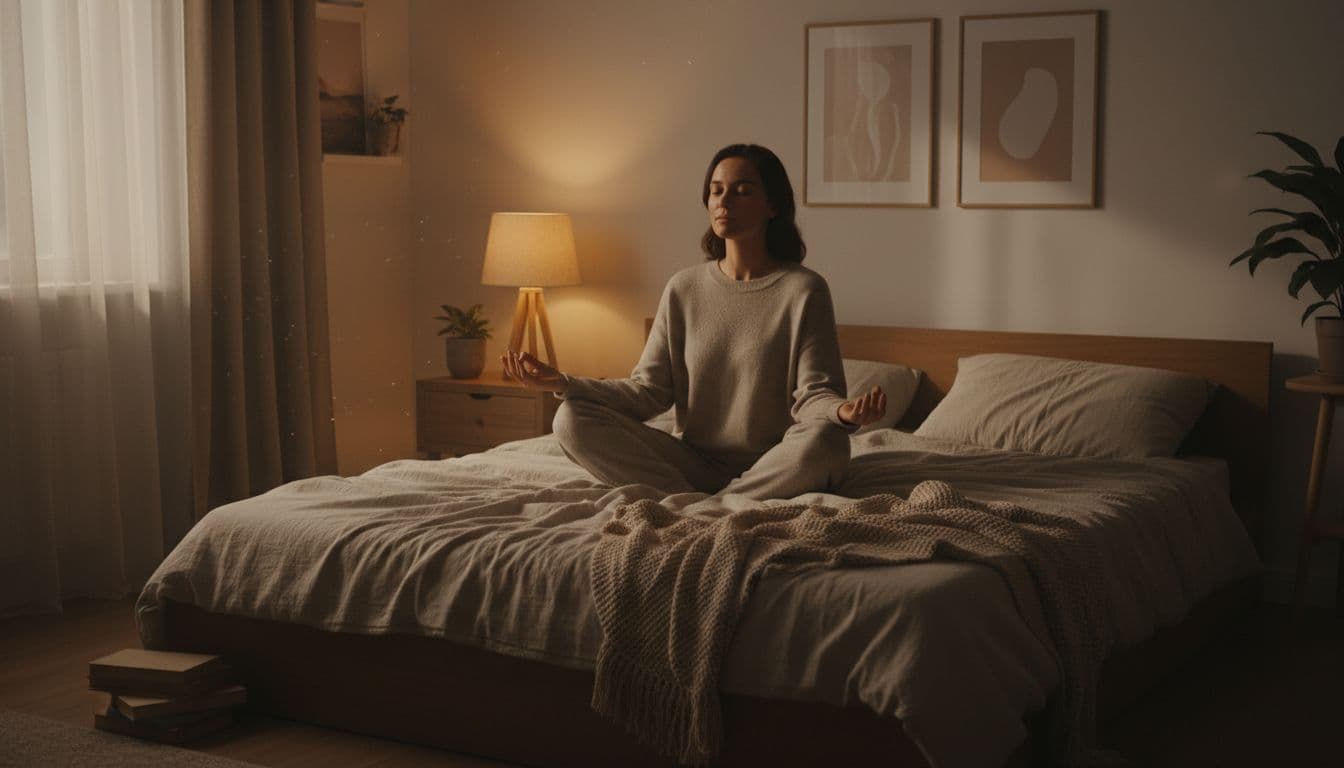
Swap late-night scrolling for a 5-minute downshift
Five minutes can change how your body feels. A few conscious breaths can change how your mind responds. Over time, those small pauses add up, less anxiety, more clarity, better sleep.
Pick one simple downshift when you'd normally scroll:
- Guided breathing for five minutes
- One page of journaling (messy is fine)
- Gentle stretching with slow nasal breaths
- Calming music while you prep the room for sleep
Pausa fits well here because it's built for real moments, not perfect routines. Sessions are short, guided by audio, and designed to help your body move out of stress and back into balance. It's also "meditation for people who don't meditate," because it removes the ceremony and keeps the action.
Pausa also supports healthier phone habits by encouraging intentional pauses instead of endless attention. When stress spikes, it offers a steadier kind of companionship, something to follow when your brain feels noisy.
Try one breathing pattern for nights when your mind will not shut off
When thoughts race, your goal isn't to "win" against them. Your goal is to send a safety signal to the body. Slow breathing helps because it reduces physical tension and lowers the sense of urgency.
Try box breathing in bed or seated nearby:
- Inhale through your nose for 4 seconds.
- Hold for 4 seconds.
- Exhale slowly for 4 seconds.
- Hold for 4 seconds. Repeat for 3 to 5 rounds.
Keep it gentle. If holding feels uncomfortable, skip the holds and breathe slowly in and out instead. Guided breathing can help consistency here, because you don't have to count when you're exhausted.
What leaders can do to improve sleep for remote teams
If your culture rewards always-on behavior, sleep hygiene becomes a private battle employees keep losing. On the other hand, when leaders protect boundaries, sleep improves without another initiative that gets ignored.
Stress isn't abstract. It drives churn, errors, and short tempers. The fix often starts with norms, not posters.
Make sleep-friendly norms part of how your company operates
A few moves can change the feel of the week:
- Reduce late meetings across time zones, rotate the burden when you can.
- Add "no expectation to reply after hours" language to team docs.
- Stop Slack pings after hours unless it's truly urgent.
- Create meeting-free focus blocks so work doesn't spill into night.
- Encourage real breaks, because burned-out brains don't sleep well.
If you want language that sounds human (not robotic) when you talk about stress at work, this post offers a useful structure: structured ways to handle workplace pressure.
When you measure progress, stay respectful. Look at engagement and anonymous trends, not personal sleep data.
Offer a simple tool people will use when stress spikes
Many wellness platforms fail because they ask too much: long sessions, complex set-up, or a vibe that doesn't fit busy days. Short, guided breathing tends to get better adoption because it works from day one and fits between meetings.
Pausa Business is designed for that B2B2C reality. Companies can set it up quickly, employees use it on iOS or Android, and sessions stay short and practical. Features like gentle screen-time locks can interrupt mindless scrolling and nudge intentional breaks. Habit tools (like streaks and a 10-day breathing journey) add structure without pressure. Leaders also get anonymized reporting, so they can support teams without prying.
Pair the rollout with a simple challenge: ten days, five minutes a day, same time each afternoon. You're not chasing perfection. You're building a shared pause that lowers the nightly stress carryover.
Conclusion
Remote work makes sleep harder because work has no walls. Still, the fix is surprisingly plain: stronger boundaries, smarter light and screen timing, a short wind-down routine, and calm breathing when the mind won't quit. Those small pauses create real change over time.
This week, pick one norm to change, then make it visible. Give people a clear sign-off culture and an easy way to reset stress before bed. Better sleep is a performance strategy, and it starts with permission to power down.