

If your people aren't sleeping, your business is paying for it. Not in vibes. In mistakes, rework, slow decisions, sick days, and churn.
In the US, roughly 35 to 38% of adults don't get enough sleep, even though most adults need at least seven hours. That gap shows up at work. Research has pegged the economic cost of insufficient sleep at hundreds of billions of dollars per year in lost productivity and missed work. Stress and anxiety are a prime culprit, with a large share of Americans naming them as the reason they can't sleep.
A sleep improvement program for employees doesn't need to be big. It needs to be used. That means fewer lectures, fewer "wellness portals," and more friction removed from the day. It also means giving people fast ways to downshift, especially after stressful moments and before bed. Short, guided breathing is one of the simplest ways to help the body shift out of high alert.
What a real employee sleep improvement program looks like (and what usually fails)
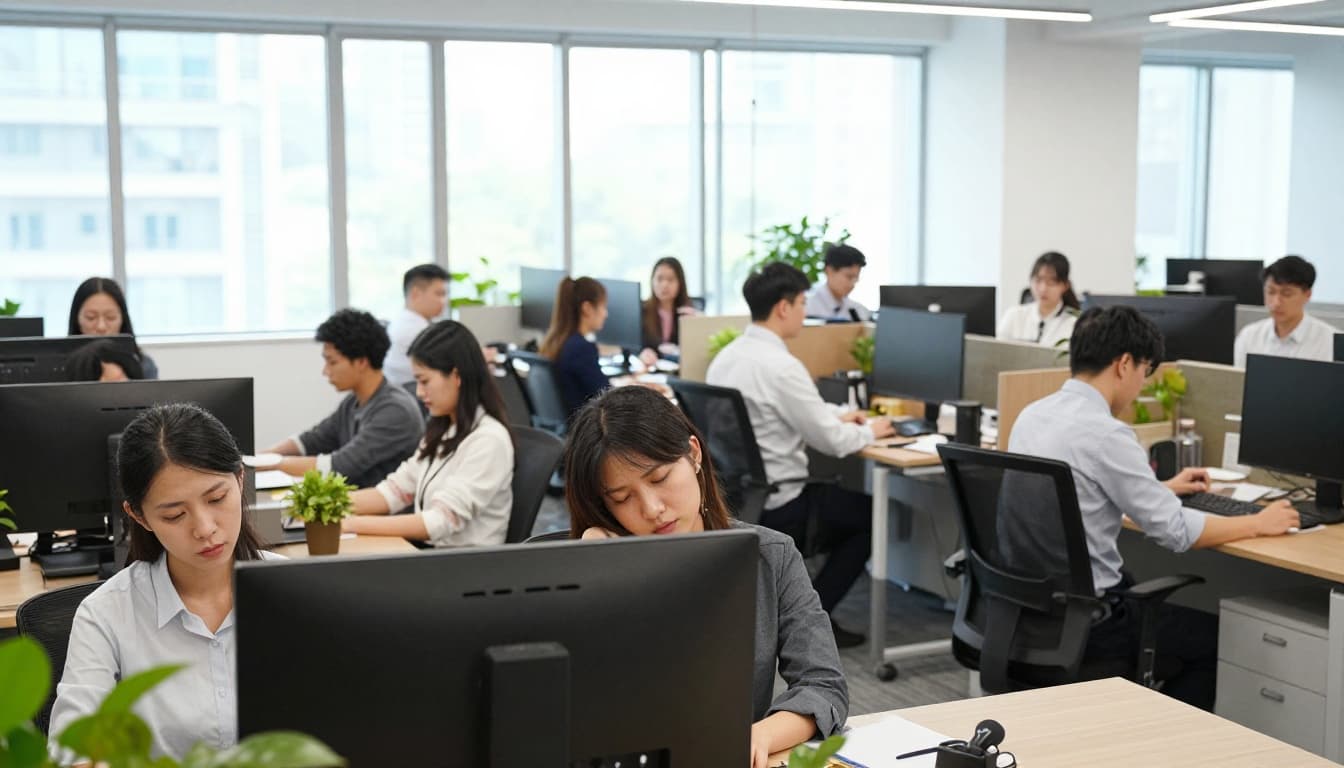 An everyday snapshot of what fatigue looks like at work, created with AI.
A real program is an operating system, not a poster. Policies that protect time. Skills that reduce night-time spirals. Support that catches real sleep problems. Culture that stops rewarding burnout theater.
Most programs fail for boring reasons:
- They ask for too much time.
- They hide behind vague education.
- They don't change the work that caused the problem.
- They collect data in ways employees don't trust.
Leaders often want "engagement." Employees want relief. If the program doesn't create relief in week one, adoption collapses.
So keep the bar simple: reduce friction, improve recovery, measure outcomes. If you need a deeper view of what employers are trying right now, CoreHealth's rundown on employer sleep programs that improve rest captures the common shapes, education, tracking, and practical supports.
The goal isn't perfect sleep. It's fewer depleted mornings.
The 4 building blocks: schedule, skills, support, and culture
Schedule is the foundation. If work keeps bleeding into night, no tip will save you. Add guardrails like meeting curfews, fewer late-day deadlines, and predictable start times where possible.
Skills are the basics people forget under stress. Wind-down routines. Caffeine cutoffs. How to stop "one more scroll" from becoming midnight.
Support is the safety net. EAP access that's actually visible. Clear referrals for insomnia, anxiety, and suspected sleep apnea. Manager training so fatigue is handled early, not after an incident.
Culture is the multiplier. No bragging about all-nighters. No quiet praise for the person answering emails at 11:30 pm. Leaders set the norm with their calendars and response habits.
Shift workers need a slightly different version. They don't need guilt. They need smarter rotations, protected time off between shifts, and light-based routines that respect circadian timing. Office teams usually need boundaries, not more content.
Start with the biggest drivers: stress loops, screen time, and inconsistent hours
Stress is the main leak. It turns the brain into a projector at bedtime. The day replays. The next day loads early. The body stays "on."
Screens amplify it. Bright light, fast content, and late-night work messages all push sleep later. Even if someone gets into bed, their nervous system may still be stuck in work mode.
In practice, three levers move the needle fastest:
- Consistency: stable wake times and predictable schedules.
- Separation: fewer after-hours pings and fewer late meetings.
- Downshift skills: a short routine that signals "safe now."
Public health guidance is blunt about the target: adults generally need at least seven hours. Ohio University's benefits program gives a concrete example of how employers package this into a cohort model, see their Sleep and Rest employee program. Different employer, same truth: recovery needs structure.
A step-by-step plan to launch in 30 days (without making it feel like homework)
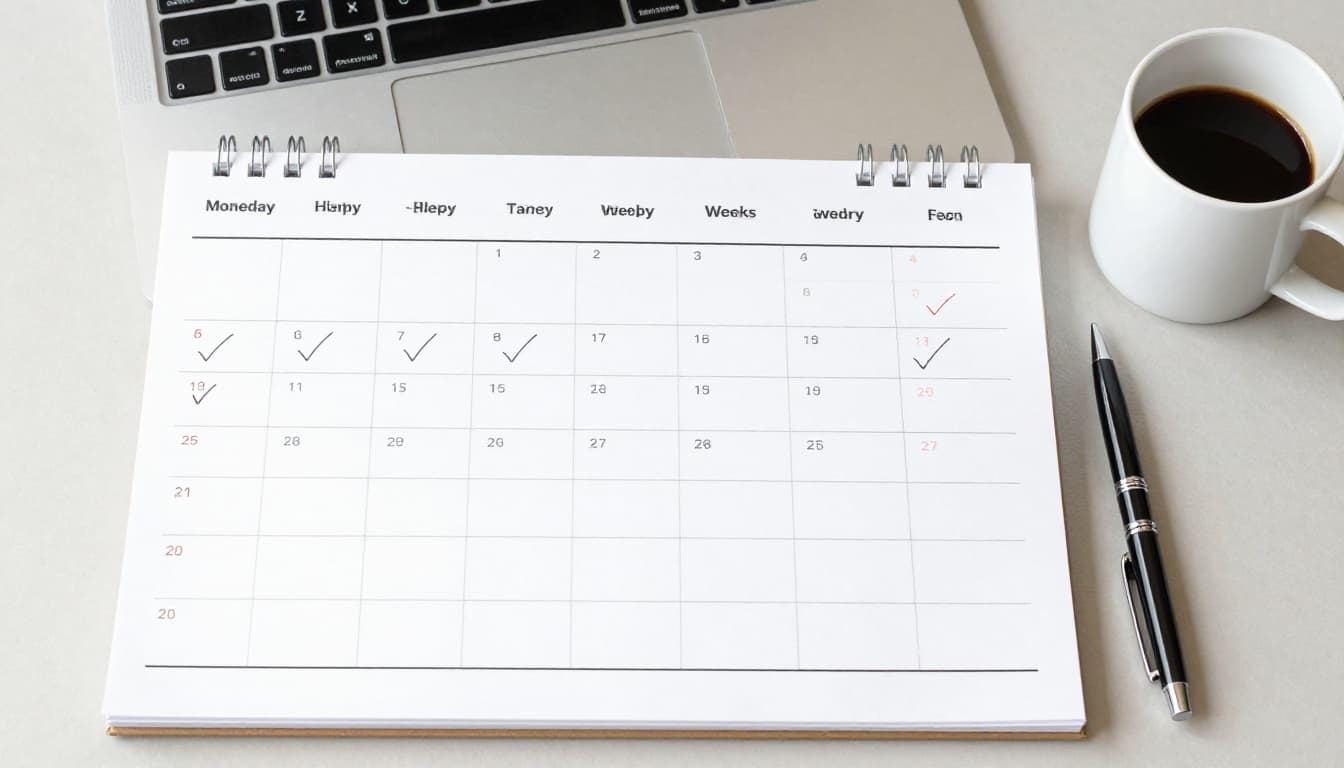 A simple four-week rollout cadence, created with AI.
You don't need a six-month committee. Run a 30-day pilot. Make two or three changes. See what happens. Keep what works.
Here's a cadence that leadership can approve fast.
A quick view first:
| Week | What you do | What employees feel |
|---|---|---|
| 1 | Baseline + pick 2 to 3 changes | "They're not guessing, they're listening." |
| 2 | 20-minute training + manager scripts | "This is practical, not preachy." |
| 3 | Add a 5-minute daily downshift habit | "I can actually use this." |
| 4 | Review results + adjust | "This is getting better, not louder." |
Takeaway: Speed beats perfection, as long as you measure and iterate.
Week 1: measure the baseline, then pick 2 to 3 changes to test
Start with a short anonymous survey. Keep it tight. Five minutes max.
Ask about:
- Sleep quality (not just hours).
- Daytime sleepiness.
- Stress level at end of day.
- After-hours work frequency.
Then add business signals you already track: sick days, incident reports, avoidable errors, and engagement pulses. For safety-sensitive roles, include fatigue near misses. Don't get fancy.
Privacy isn't a footnote. It's the whole game. Use aggregated reporting only, and say that clearly.
If employees think you're building a "sleep list," you'll get fake answers and zero adoption.
Now pick two to three levers. Not ten.
Good pilot levers:
- A 6:00 pm meeting cutoff (or earlier).
- A delayed start option once or twice a week.
- No non-urgent internal messages after a set hour.
- A standard wind-down routine that takes five minutes.
If you're rolling this out in a small company, keep the approach lightweight. Pausa Business has a practical guide on implementing wellness programs for small teams, including how to get adoption without turning it into a second job.
Week 2: teach the basics in 20 minutes (and make it manager-friendly)
The training should feel like a field guide. Not a lifestyle seminar.
Cover only what people can use tonight:
- Keep the room cool, dark, and quiet.
- Aim for a consistent wake time, even after a rough night.
- Set a caffeine cutoff that fits your team (often early afternoon).
- Reduce alcohol close to bedtime, it can fragment sleep.
- Watch for red flags: loud snoring, choking sounds, persistent insomnia, or severe daytime sleepiness.
Then give managers scripts. Real words they can say.
Examples:
- "I'm scheduling emails for tomorrow. You don't need to reply tonight."
- "Let's move this meeting earlier so people can shut down on time."
- "If you're consistently exhausted, tell me. We'll adjust workload and get support."
For safety-sensitive work, add a fatigue check. Short. Non-punitive. The University of Rochester's behavioral health team frames the performance angle well in their piece on restorative rest and productivity. The point isn't diagnosis. It's recognizing that tired brains don't do careful work.
Week 3: add a daily "downshift" habit employees can do anywhere
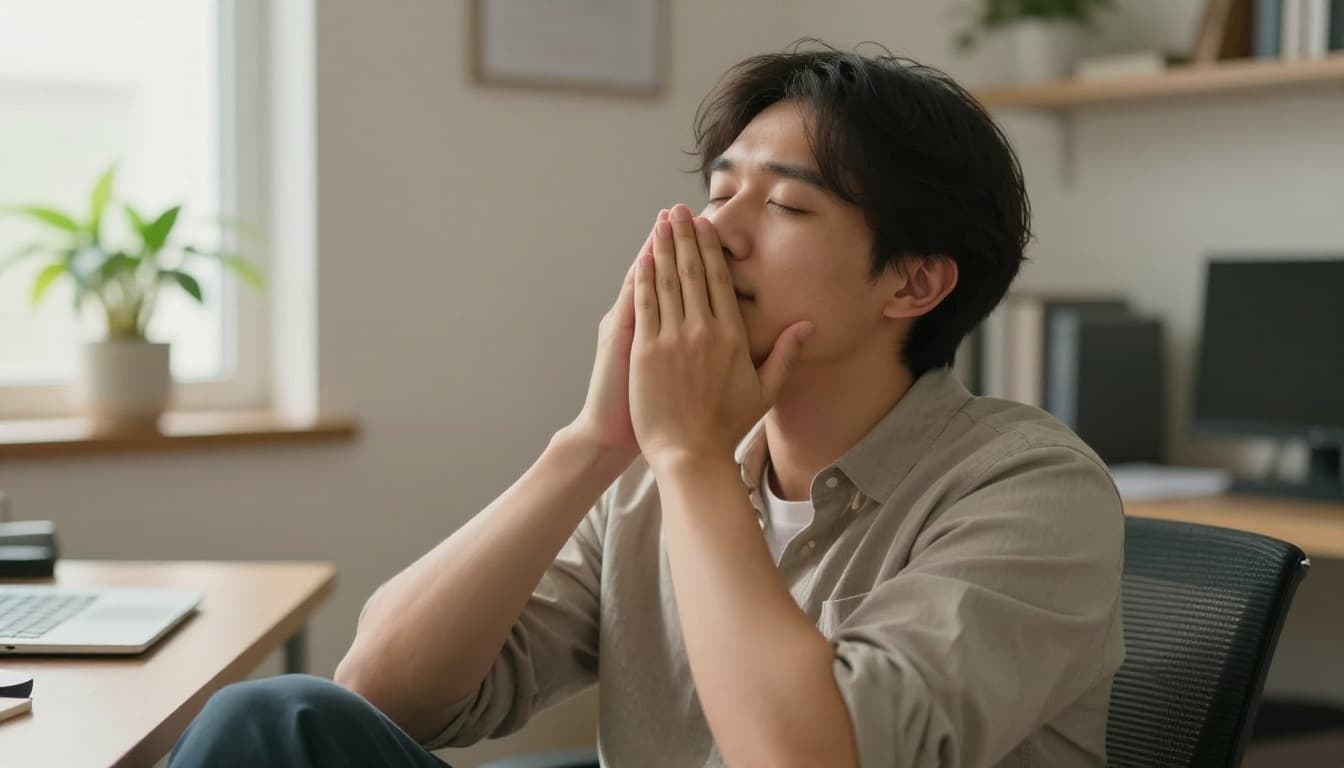 A five-minute downshift break that can happen at any desk, created with AI.
This is the hinge point. Policies help, but people still carry stress home. That stress often becomes racing thoughts at bedtime.
Guided breathing helps because it nudges the nervous system toward "rest and recover." It slows the loop. It gives the body a different signal. Do it regularly and it becomes easier to fall asleep, not just easier to cope.
Keep it small:
- Five minutes after a stressful meeting
- Five minutes before bed
Daily beats occasional. Most people won't meditate for 30 minutes. They will breathe for five.
That's where Pausa fits as a practical companion. It's built for people who don't meditate, but still need relief in real time. The sessions are short, guided, and designed for stress, anxiety, focus, and calm. Share the download link once, then get out of the way: Pausa guided breathing app.
Pausa also grew out of panic attacks, which matters. It wasn't built to look serene. It was built to work when someone feels tight-chested and overstimulated.
You can keep the breathing menu simple for employees:
- Box breathing for steadying and focus.
- Resonant breathing for calming and smooth pacing.
- Wim Hof-style breathing for energy (better earlier in the day for most people).
No one needs to become an expert. They need a switch they can reach.
Tools and benefits that drive adoption, privacy, and results
 Leaders reviewing simple metrics and adjusting the plan, created with AI.
Decision makers don't need another dashboard. They need behavior change without babysitting.
So choose tools that hit four requirements:
- Low lift for employees
- Low admin burden for HR
- Trustworthy privacy
- Fast felt benefits, within days
A lot of corporate sleep content focuses on education and tracking. That's fine, but it can drift into "homework." If you want a broader picture of how employers bundle these services, The Sleep Reset outlines common components in their guide to a comprehensive sleep program for employers. Use it as a menu, not a mandate.
The fastest adoption usually comes from routines that feel immediately useful, especially stress reduction that improves evenings.
What to offer employees: fast routines, not long programs
Employees don't need another 12-step journey with weekly worksheets. They need quick wins that reduce night-time friction.
Focus on what people feel quickly:
- Calmer recovery after tense calls.
- Fewer late-night mental replays.
- An easier transition from "work brain" to "home brain."
- Less doomscrolling, more intentional shutdown.
Breathing routines work well here because they're simple and portable. They also fit both office and frontline settings.
If you want onboarding without overwhelm, a short structured ramp helps. A 10-day breathing journey is long enough to build confidence, but short enough to finish. Streaks can help too, as long as they don't become guilt.
How Pausa Business fits a company sleep program
Pausa Business is a B2B2C setup that's intentionally plain:
- The company buys access.
- Employees download the app on iOS or Android.
- They start using guided breathing from day one.
That's it.
This matters because most wellness tools get ignored. Not because employees don't care, but because the tools ask for too much. Pausa aims for the opposite: short sessions, clear purpose, immediate effect.
For a sleep improvement program, the most relevant features are simple:
- AI-powered mood tracking that suggests breathing techniques based on how someone feels (stress, energy, focus, calm).
- A 10-day journey that takes beginners from zero to comfortable.
- Streaks that encourage consistency across a team, without forcing it.
- Gentle screen-time interruption mechanics that help break the scroll loop.
- Fully anonymized data, so leaders see engagement trends, not personal details.
- Zero training required, which is rare and worth protecting.
When you're ready to operationalize it, start here: Pausa Business. Then manage licenses and view high-level engagement through the Pausa admin panel. Keep reporting aggregated, and keep the focus on outcomes employees can feel.
Pricing also stays simple, which helps procurement: it starts around a few dollars per employee per month, or a lower annual option. The bigger win is time saved and stress reduced.
Conclusion
A sleep improvement program for employees doesn't need theatrics. It needs traction. Pick two to three policy shifts that protect time, teach the basics in 20 minutes, and add a tiny daily downshift habit people can repeat anywhere. Then measure, adjust, and scale.
Sleep improvement is a leadership choice, not a perk. It's also a productivity strategy hiding in plain sight. Run a 30-day pilot, track stress, focus, and sick days, and keep data private and aggregated. The goal is simple: more recovered humans, doing better work.