

Teams can talk all day and still feel oddly far apart. Slack pings. Meetings stack up. Cameras turn on. Yet people still leave work feeling unseen.
That gap is real, especially now. In March 2026, hybrid work has settled into normal life across the US, and about 22.8% of employees work remotely at least part-time. At the same time, 46% of workers say they worry about missing coworker relationships. So the problem isn't contact. It's connection.
Team rituals help because they're small, repeatable habits with meaning. Not fluff. Not forced fun. Just simple moments that tell people, "You belong here, and your presence matters." The good ones are light, practical, and easy to keep. This guide covers the kinds that actually work.
What team rituals actually do for connection
A routine keeps work moving. A ritual gives the work a human shape.
That's the difference. A routine says, "We meet every Monday at 9." A ritual says, "We start by hearing one real thing from each person." Same calendar slot. Very different signal.
Good team rituals create a shared rhythm. They lower friction. They make people easier to read, which makes teamwork easier to trust. That's not soft. It's operating system stuff.
They also do something most teams badly need: they make space for being seen without turning work into therapy. A two-minute check-in can tell you who's stretched thin, who's energized, and who's quietly drifting. That matters because people don't usually announce disconnection. They just get flatter. Quieter. Less generous.
Consistency matters more than size. Expensive offsites don't fix a team that feels cold the other 49 weeks of the year. A tiny ritual, repeated on purpose, often does more. That's why so many leaders keep coming back to simple practices like shared openings, gratitude rounds, and team meals. If you want a broader take, rituals to increase connection in the workplace make the same point from a culture angle.
Rituals are not perks. They're maintenance for trust.
Small moments build trust faster than big events
Most teams overrate the big gesture. They underrate the weekly habit.
A quarterly offsite can be great. It can also be mostly photos, logistics, and vague promises. Meanwhile, a five-minute Friday ritual can change the tone of a team in a month.
Why? Because trust grows through repetition. People believe what happens often. Not what happens once with a budget.
Take a few plain examples. A weekly "one win" round helps people notice progress. A gratitude share makes good work visible. An end-of-week recap creates closure, which reduces the low hum of unfinished stress. None of this is fancy. That's the point.
Small rituals also age better. They're easier to repeat, easier to fix, and harder to fake. A team doesn't need more spectacle. It needs a few dependable moments that feel real.
Connection rituals help remote, hybrid, and in-office teams in different ways
Remote teams miss the hallway moments. That's obvious. What gets missed less often is the cost: fewer casual cues, weaker context, and more room for people to feel alone while looking "fine" online.
Hybrid teams have a different problem. They can split into two cultures fast, one in the room, one on the screen. Rituals help because they create shared entry points. Everyone starts the same way. Everyone gets the same turn. That reduces the silent status gap.
In-office teams still need rituals too. Proximity isn't the same as closeness. People can sit ten feet apart and still work like separate planets.
That's why recent advice on hybrid team rituals that actually work keeps coming back to the same theme: make connection intentional, or it gets crowded out by speed.
Simple team rituals that bring people closer
The best team connection rituals are small enough to survive real life. They don't need budget, perfect attendance, or a culture committee. They need a clear purpose and a short time box.
Here's a quick way to compare a few options:
| Ritual | Time needed | Best for | What it improves |
|---|---|---|---|
| Human check-in | 3 to 5 minutes | Meetings of any size | Trust, tone, awareness |
| Weekly shoutouts | 5 minutes | Busy teams | Recognition, morale |
| Coffee chat pairs | 15 to 20 minutes | Remote or hybrid teams | Cross-team familiarity |
| Monthly lunch or break | 30 to 60 minutes | Smaller teams | Ease, belonging |
The pattern is simple: low effort, clear signal, repeat often.
Start meetings with a quick human check-in
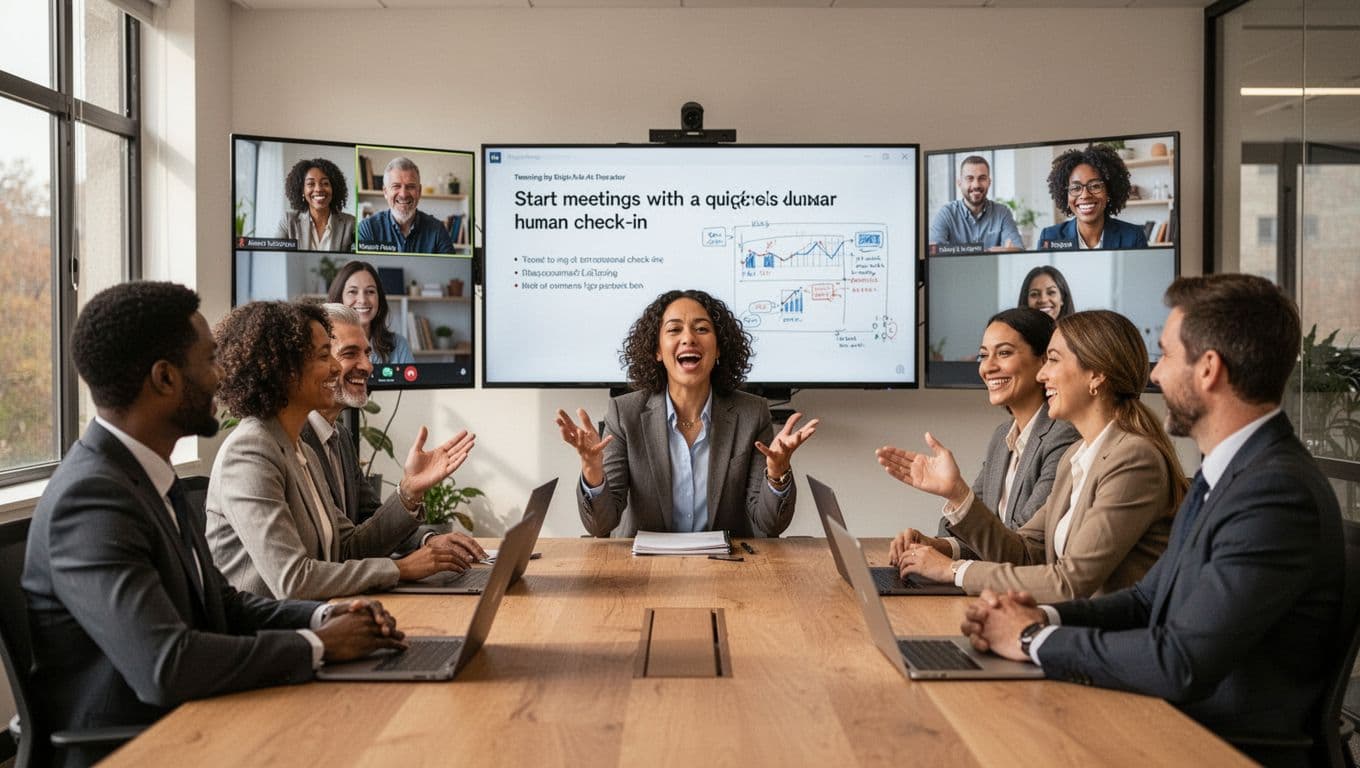
This is the easiest ritual to start, and usually the easiest to mess up.
Keep it short. Keep it light. Keep it optional. No one wants a forced emotional monologue before a status update.
A one-word check-in works well because it's fast. "Focused." "Scattered." "Good." "Tired." That alone can shift how people hear each other. Another solid format is rose, thorn, and bud: one good thing, one hard thing, one thing ahead. If that feels too personal for your team, ask for one small win from the last week. Same function, less pressure.
The point isn't disclosure. It's calibration. Teams work better when people can read the room without guessing. And because this takes only a few minutes, it doesn't trigger the usual complaint that culture work steals time from real work.
For remote and hybrid groups, this matters even more. You lose body language, side chatter, and all the tiny cues that help people sync. Pieces like creative ways to connect remote and hybrid workers keep stressing this because the gap is real.
Use weekly gratitude or shoutout rituals to make people feel seen

Recognition works best when it feels normal, not ceremonial.
A weekly shoutout ritual does that. It can happen live in a meeting, in a Slack thread, or in a short Friday recap. The format barely matters. What matters is that people name real contributions, not vague praise.
"Thanks to Maya for catching the client issue before launch" lands. "Shoutout to the team for crushing it" doesn't. One is specific. The other is wallpaper.
This kind of ritual builds morale because it sharpens attention. People start noticing each other's effort. They see the hidden labor, the quiet fixes, the stuff that keeps work from falling apart. That's huge for connection because being valued is not an abstract feeling. It's a pattern of being acknowledged in public, in plain language.
There's also a second effect. Peer recognition often lowers the manager bottleneck. Appreciation doesn't have to flow only from the top. The healthiest teams spread it around.
Create casual social moments without forcing fun
Most "fun" at work dies from over-design. Too long. Too awkward. Too mandatory.
Casual social rituals work when they stay loose. Think 15-minute team breaks, monthly lunches, coffee-chat pairs, or a simple virtual coffee roulette for remote teams. Short time limits help. So does making attendance opt-in.
That last part matters. People can smell performative bonding from a mile away. If the ritual feels like one more obligation, it stops being a ritual and becomes a tax.
The fix is simple. Make the bar low. A coffee pair can be two people chatting for 15 minutes with no agenda. A team lunch can happen once a month, with remote people joining through a meal stipend or a parallel break. A daily break can be optional and quiet, not a mini variety show.
Recent takes on digital team rituals for hybrid work make the same point: connection rises when rituals feel easy enough to repeat.
How to choose the right ritual for your team
Don't copy another team's ritual just because it sounds smart. Culture isn't plug-and-play.
The right ritual fits your team size, work pace, setup, and emotional bandwidth. A ritual that helps a six-person design team may annoy a 40-person operations group. That's not failure. That's fit.
Start with one goal. Better meeting tone. More peer recognition. Less isolation across locations. Pick the problem first, then pick the ritual.
Match the ritual to your team's work style and energy
Fast-moving teams usually need five-minute rituals. Anything longer feels like drag. In that case, use a one-word opener, a quick win round, or a rotating Friday shoutout.
Smaller teams can often hold more depth. A weekly check-in with rose, thorn, and bud might work because people know each other well enough to use it honestly.
Remote teams usually benefit from rituals that replace lost casual contact. Coffee pairs and short personal check-ins help there. Hybrid teams need rituals that don't privilege the room. So if half the team is on-screen, don't make the side chatter the main event. In-office teams can use the same tools, especially when the mood has gone flat or work has become purely transactional.
In short, match the ritual to the actual friction.
Keep rituals inclusive, simple, and easy to repeat
If a ritual depends on perfect timing, one charismatic host, or extra emotional labor, it won't last.
Keep participation optional when possible. Rotate who leads, so the same person doesn't carry the social load. Avoid launching new rituals during peak stress periods, because even good ideas feel bad when people are buried.
Also, build for hybrid fairness. If one group is remote, design the ritual for them first. That usually improves it for everyone. Shared prompts, equal speaking order, and clear time limits go a long way.
Simple scales. Fancy breaks.
How to make team rituals stick over time
A good ritual is lightweight and regular. That's the formula.
Teams usually kill rituals in one of three ways: they make them too long, too personal, or too random. Then people start dreading them. You can see it in the silence, the late joins, the dead-eyed "I'm good" check-ins.
Use a basic framework instead. Pick one goal. Test one ritual. Run it for a month. Then review. Keep, change, or drop.
Watch for signs a ritual is helping, or needs to change
You don't need a survey deck to tell if a ritual works.
Look for small signals. Meetings feel warmer at the start. More people speak without being dragged in. Peer praise shows up faster. Tension drops a notch. Newer employees seem less peripheral.
Watch the negative signals too. People stop showing up. Responses get flat. The same two people carry every round. Someone rolls their eyes and everyone notices. That's not resistance to connection. That's feedback on the design.
When that happens, shrink the ritual before you scrap it. Make it shorter. Make it clearer. Make it less personal. Most ritual fatigue is a format problem, not a people problem.
Strong teams are built in the small stuff
Connection doesn't come from a fuller calendar. It comes from shared moments that repeat until they feel like part of how the team works. Small check-ins, real recognition, and easy social time do more than most grand culture plans.
So start small this week. Pick one ritual. Keep it light. Run it long enough to learn from it.
The best team rituals don't look impressive from the outside. They just make people want to keep showing up for each other. That's the whole thing.