

A wellbeing champions program is simple: trusted employees help make wellbeing visible, local, and steady. They keep it from becoming another dusty HR campaign that shows up once a quarter, then disappears.
That matters more in 2026 than it did a few years ago. Hybrid teams still fight isolation. Mental health support now sits near the center of most workplace wellbeing plans. Inclusion isn't optional. And leaders want proof that any program does more than produce a nice poster and a weak turnout.
So the answer isn't more noise. It's a playbook. Clear roles, light structure, usable tools, and enough support to make the program stick.
Start with a simple program design people can understand
Most wellbeing programs fail for a boring reason: nobody can explain them in one minute.
Fix that first. Your program needs a plain purpose, a short set of goals, and a role people can picture. Not a slogan. Not a wellness universe. A working model.
Set goals around behavior you can see. More participation. Better awareness of support. Better feedback. Stronger team connection. That's enough for year one. Don't try to solve sleep, stress, diet, loneliness, financial strain, and burnout in one motion. That's not ambition. That's drift.
Champions also need a realistic workload. In most workplaces, 2 to 4 hours a month is sane. More than that, and the role starts to compete with the person's actual job. Less than that, and the program turns symbolic.

If you need a benchmark for how peer influence helps adoption, this guide to building a wellness champion network lays out why trusted coworkers often drive more engagement than top-down messaging.
Decide what success looks like in the first 6 to 12 months
Early success should look ordinary. That's the point.
You want higher event turnout. More people who know where support lives. Better quality feedback. More signs that teams feel connected, not managed. Small wins matter because they prove the system works.
Pick three to five measures and stop there. For example, track event attendance, click-throughs to wellbeing resources, pulse survey feedback, and the number of teams touched by champion activity. If you can explain the scorecard on one slide, you're in the right zone.
Write role boundaries so champions can help without burning out
Role clarity protects everyone.
Champions should listen, share resources, encourage participation, and pass feedback upstream. They should not diagnose, counsel, promise privacy they can't keep, or handle a crisis alone. They are peer advocates, not therapists and not HR investigators.
Champions are connectors, not clinicians.
Write down the escalation path. Include HR, benefits, employee assistance, and emergency contacts. When boundaries stay fuzzy, good people overreach. Then they burn out. Then the program loses trust.
Choose the right wellbeing champions, then give them useful training
The best champions are rarely the loudest people in the room. They are the people others trust.
Look for employees who are steady, organized, kind, and comfortable speaking to peers. Some will be natural communicators. Others will be quiet but deeply credible. Both can work. What you don't need is a lineup of fitness fanatics who only appeal to one slice of the company.
By April 2026, workplace pressure remains high. Early reporting shows half of US workers feel high daily stress, one-third often feel burned out, and mental health support now appears in most employer wellbeing programs. That changes the bar. Champions need more than enthusiasm. They need basic skill.
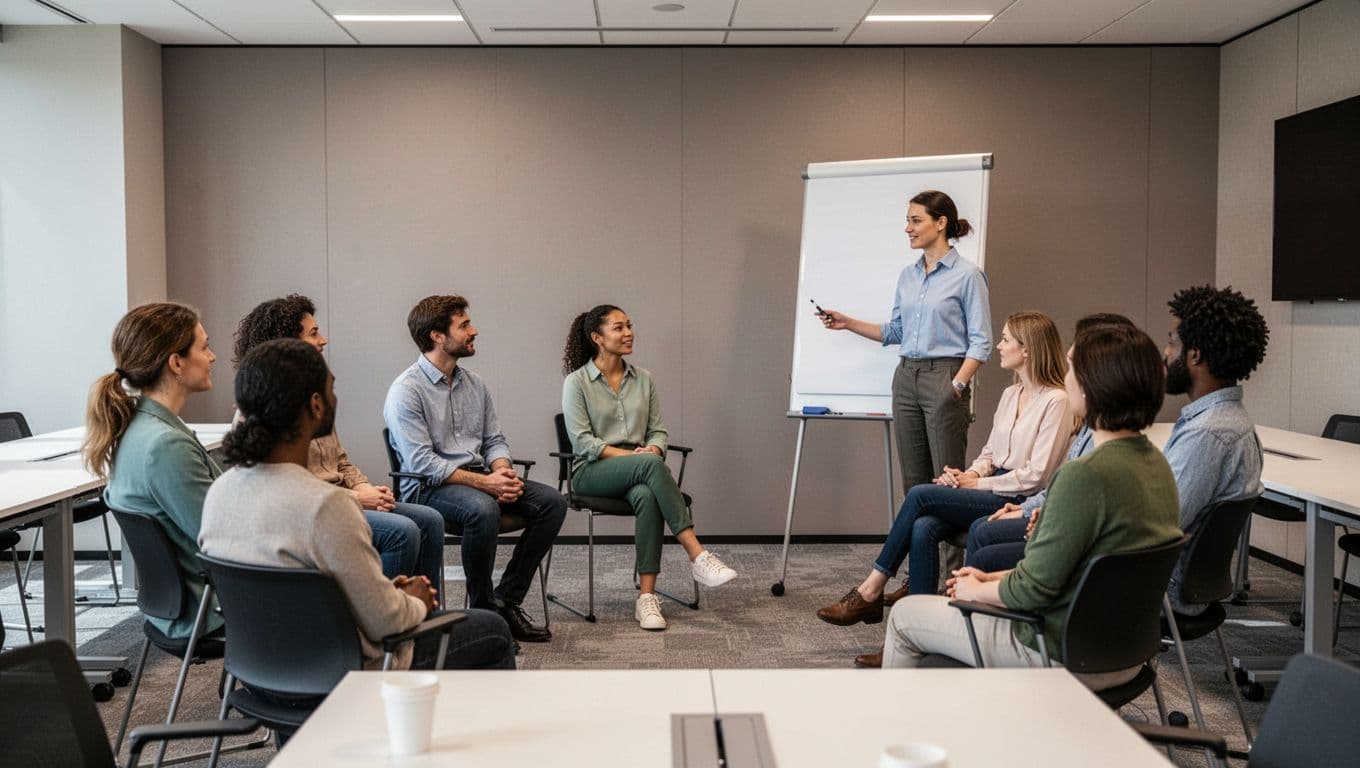
A solid practical guide to peer-led wellbeing programs reinforces the same point: peer programs work best when the role is clear and support is ongoing.
Recruit volunteers who reflect the real mix of your workplace
Representation matters because trust is local.
Recruit across departments, levels, shifts, and locations. Include remote staff, frontline workers, office teams, new hires, and long-tenured employees. Also think about age, race, disability, caregiving status, and language needs. If the champion group looks like one function or one social circle, the program will feel narrow fast.
That doesn't mean building a perfect committee. It means matching the real shape of the workforce. People are more likely to engage when they can see themselves in the people carrying the message.
Train champions in communication, mental health awareness, and resource sharing
One slide deck isn't training. It's a handoff.
Start with the basics: how to open a conversation, how to listen without trying to fix everything, how to spot signs of stress, and how to point coworkers to formal help. Add practical guidance on inclusive event design, simple promotion, and what to do when someone shares something serious.
Short refresher sessions matter because real situations don't arrive on a neat schedule. A useful wellbeing champions guide for organizations also stresses structure and support, not vague encouragement. That matches what works in practice.
Mental health first aid style training is also gaining ground. It won't turn champions into experts, and it shouldn't. What it can do is improve confidence, reduce panic, and create better handoffs.
Build a playbook champions can actually use every month
A good playbook is less like a manifesto and more like an operating manual. People need tools they can grab on a Tuesday, not ideals they admire on a kickoff call.
The core set is simple: a monthly calendar, message templates, event ideas, escalation guidance, feedback forms, and a clean contact list for HR, benefits, and employee support resources. Add owner names. Add due dates. Keep it current.
That structure saves time because nobody has to reinvent the role every month. It also creates consistency across departments while leaving room for local ideas. That's the balance you want. Tight enough to work, loose enough to breathe.
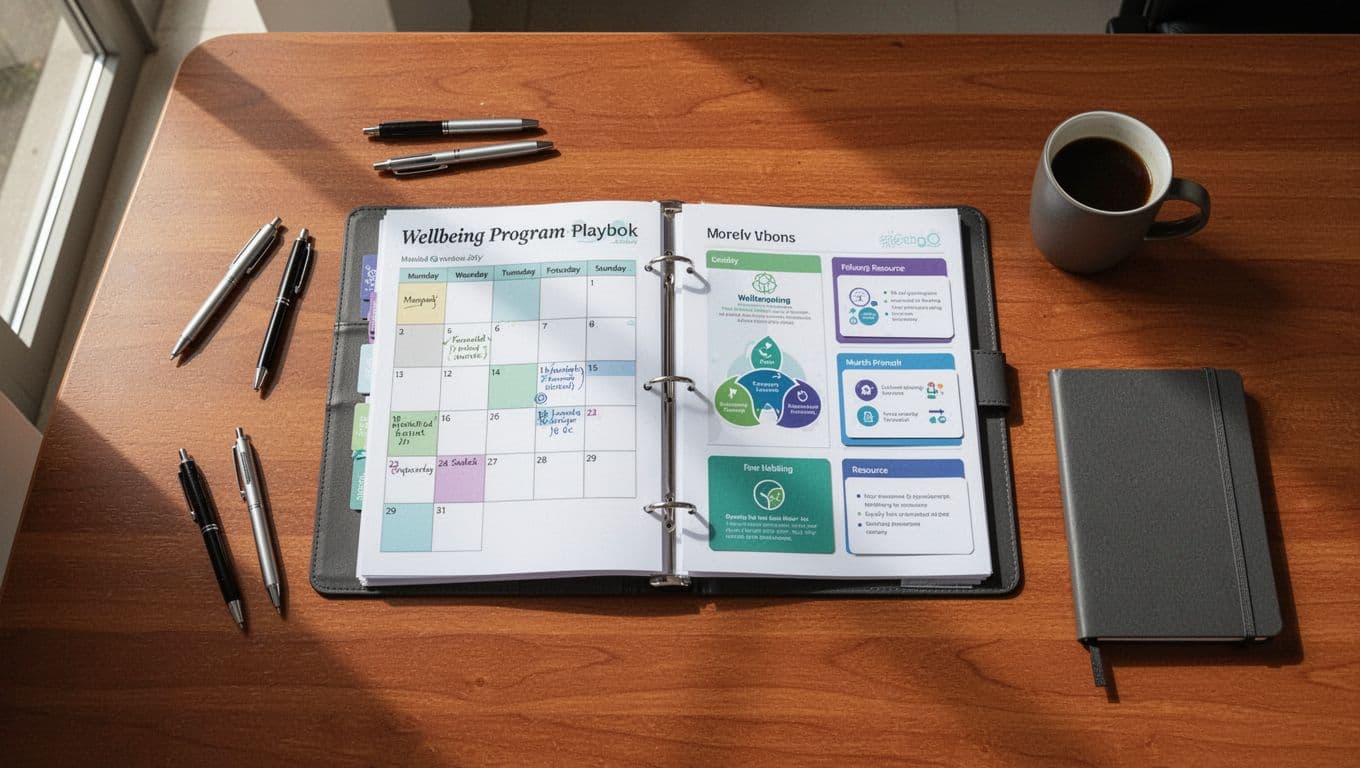
Hybrid teams raise the bar here. Your playbook should assume people work in different places and on different rhythms. Every activity needs an on-site option, a remote option, or a simple reason why it is location-specific.
Give champions ready-made tools, not just high-level advice
Champions need plug-and-play assets.
That means launch emails, Slack or Teams posts, sign-up forms, event checklists, short manager talking points, and meeting agendas. It also means a simple monthly rhythm: week one promotion, week two activity, week three feedback, week four recap.
This isn't hand-holding. It's friction control. When the work is easier to start, more champions follow through. A recent set of workplace wellbeing champions program ideas makes the same case in plain terms: peer programs grow when they feel natural, not forced.
Plan activities that are inclusive, low-pressure, and easy to join
Skip anything that feels like a contest for the already-well.
Use flexible movement challenges, short mindfulness breaks, lunch-and-learns, wellbeing spotlights in team meetings, virtual check-ins, and resource awareness campaigns. Keep options short, low-cost, and easy to enter halfway through. Some employees want community. Others want quiet access to support. Your playbook should allow both.
Inclusion shows up in the details. Offer seated and standing movement options. Record sessions when you can. Avoid assuming everyone can attend at noon. Avoid guilt-based messaging. Nothing kills engagement faster than making support feel like another task.
Keep momentum going with leadership support, recognition, and smart tracking
Programs stall when champions get praised in theory and ignored in practice.
Leaders need to back the program in visible ways. A short mention in all-hands meetings helps. A small activity budget helps more. Clear permission for champions to spend time on the role helps most. Executive support gives the program status, but local manager support gives it oxygen.
Recognition also matters, although it doesn't need to be grand. Mention champions in team meetings. Thank them in internal updates. Tie the role to growth and contribution, not office cheerleading.
Use a short dashboard to track progress:
| Metric | What it shows | Simple source |
|---|---|---|
| Participation rate | Whether activities attract people | Sign-ups or attendance |
| Resource awareness | Whether employees know where help is | Pulse survey |
| Champion activity | Whether the network stays active | Monthly champion log |
| Feedback themes | What people want more or less of | Short survey comments |
The takeaway is simple: track a few things well.
If the dashboard needs an analyst to maintain it, it's too big.
Quarterly reviews are enough for most programs. Look at participation, feedback, and awareness trends. Then adjust the playbook. Keep what works. Cut what doesn't. If you also have clean data on absenteeism or retention trends, use it carefully. Those numbers matter, but they move for many reasons. Don't turn weak correlation into fake certainty.
A wellbeing champions program playbook works when it stays simple, repeatable, inclusive, and backed by real support. Not performative support. Real time, real permission, real follow-through.
Start small. Test one rhythm, one set of tools, one clear scorecard. Then improve it as people show you what they use.
In 2026, trust and peer connection carry more weight than one more company-wide email. Build for that, and the program has a chance to last.