Stress grips 28% of US workers with anxiety. Another 34% live in constant tension. These numbers from TELUS Health in 2026 paint a clear picture. Teams pay the price through burnout and lost output. Remote setups worsen isolation; AI fears add pressure. You see it in skipped meetings or quiet quits.
Companies lose $300 billion yearly to this drag. Medical claims rise. Turnover spikes at 48% tied to mental strain. Yet fixes exist. Measure stress drops first. Then watch productivity climb. Programs return four dollars per invested buck.
This post cuts through the noise. It shows why tracking matters. You get key metrics. Top tools follow. Proven steps close it out. Start small. Build teams that last.
Why Measuring Stress Reduction Builds Stronger Teams
Unchecked stress erodes teams. Absenteeism jumps. Presenteeism hides the damage; workers show up but deliver less. Turnover follows. Depression risk climbs without action.
Interventions change that. One study notes 31% lower depression odds. Medical costs drop too. Firms save $462 per worker yearly on claims. Productivity rises 13% in spots. ROI hits four-to-one.
Baselines matter. Gauge stress before change. Then track shifts. Teams gain focus. Motivation sticks. Resilience builds. Exercise programs succeed in most cases; active workers miss 14 fewer days.
Take GoJoe's example. Their team challenges cut stress signals fast. Engagement rose. Output held steady despite remote friction.

Spotting Stress Before It Hurts Performance
Signs appear early. Isolation grows. Motivation fades. Sleep breaks down. Remote teams feel it sharp; 55% struggle with connections.
Calm Health data flags anxiety as top issue. Workers pull back. Deadlines slip. You spot it in short replies or missed calls. Act fast. Patterns signal team-wide trouble.
Connecting Lower Stress to Real Business Wins
Lower stress links direct to gains. Sick days fall 25%. Output holds firm. Check the DMEC webinar on stress leave costs. Absences average 22 days for stress cases.
Firms see it. Engagement scores lift 6%. Retention improves. You tie metrics to dollars saved.
Key Metrics That Show Stress Dropping in Teams
Metrics prove progress. Self-reports catch feelings. Body signals add hard data. Behavior tracks habits. Productivity proxies seal it.
Run baselines. Measure pre-intervention. Retest in four to eight weeks. Trends matter over snapshots. Group data hides names; trust follows.
Self-reports lead. Use validated scales. Anxiety drops show first. Burnout eases next.
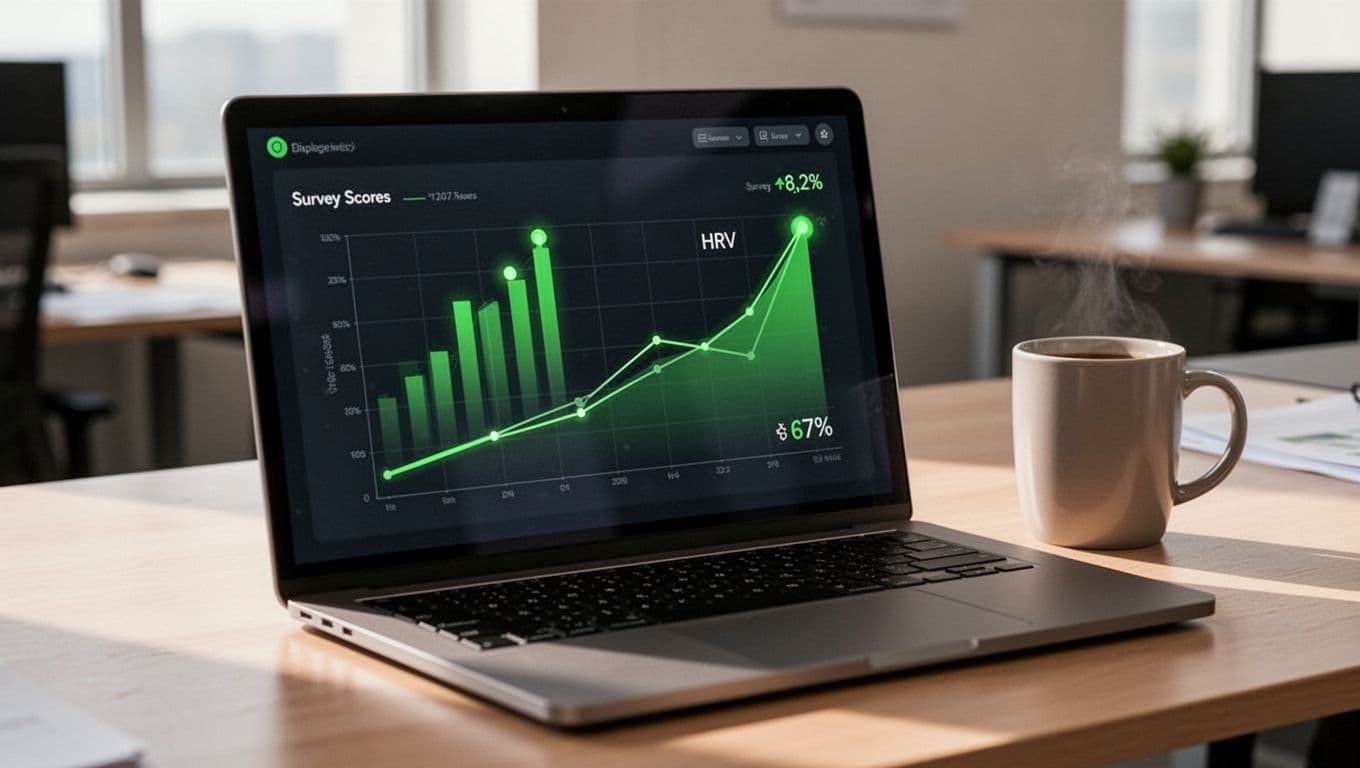
Physiological reads confirm. Heart rate variability rises with calm. Cortisol falls post-stressors.
| Metric Type | Example Measure | What It Tracks | Baseline to Post Change |
|---|---|---|---|
| Self-Reported | Anxiety scale (1-10) | Perceived tension | Drops 20-30% in 6 weeks |
| Physiological | HRV via wearable | Recovery capacity | Rises 15% with routines |
| Behavioral | Sleep hours logged | Rest quality | Gains 1 hour average |
| Productivity | Tasks completed | Output efficiency | Up 10-13% |
This table sums core tracks. Pick three. Watch combined shifts. Spring Health notes presenteeism hides early; metrics expose it. For deeper dives, see HR metrics every leader tracks.
Self-Reported Stress Levels via Quick Surveys
Surveys work fast. Tools like single-question checks. Anonymize for honesty. Retake weekly. Trends prove reduction. Meditopia stats show group drops signal wins.
Physiological Clues from Body Signals
Body tells truth. Wearables log HRV. Saliva tests cortisol; levels halve with fixes. Easy now. Teams adopt quick.
Best Tools to Track Your Team's Stress Journey
Tools fit categories. Surveys for feelings. Wearables for bodies. Dashboards tie it. Remote tweaks help; async check-ins suit hybrids.
Combine two or three. Engagement lags otherwise. Pros: real-time views. Cons: opt-in rates vary. AI tools rise in 2026; they flag anxiety early.
Start simple. Apps log meditation. Trackers count steps. Group contests build buy-in.

Wearables and Apps for Everyday Monitoring
Fitness bands log activity. Sleep data flows. Meditation apps like Calm Health tally sessions. Run team walks. Contests spark support. Privacy holds; data stays personal.
Try Gauge for mood trends. Quick daily pulses. Anonymous insights.
Advanced Analytics for HR Leaders
Dashboards aggregate. Symptom shifts show clear. Engagement lifts track. Intervene fast. Spring Health's 2026 report details risks. Tools like these spot silent burnout.
Proven Steps to Measure and Reduce Team Stress
Set baselines first. Survey all. Log wearables. Pick rituals. Remote shutdown walks work. Challenges unite.
Track ROI. Days saved multiply. Pitfalls lurk. Privacy first; explain opt-outs. Ignore it, trust dies.
Combine methods. Weekly pulses. Monthly deep dives. 2026 tips: AI anxiety chats. Small wins build.
Start today. Run one survey. Watch the shift.
Teams thrive when measured. Metrics expose drops. Tools make it real. Steps deliver lasting calm.
Stress costs billions. You counter with data. Baselines guide. Surveys and trackers prove it. ROI follows at four-to-one.
Remote AI fears fade with action. Isolation eases. Output rises.
Pick one metric. Test a tool. Run a walk. Teams strengthen fast. What's your first move?

