

Wellbeing apps hit big numbers now. The U.S. mental health apps market reaches about $3.73 billion this year. Broader wellness tools top $27 billion globally, with North America at $8.79 billion. Calm boasts 180 million lifetime downloads and 4 million subscribers. Headspace follows with 70 million downloads and 2.8 million paying users.
Yet most users quit fast. Day 30 retention sits at 3.7% to 10% for these apps. About 60% uninstall health tools in the first month. Creators chase downloads. Users want real fixes for stress, sleep, or fitness. Adoption metrics cut through the noise. They show if your tool sticks or flops.
Downloads grab attention. Active users reveal daily habits. Retention tracks loyalty. These numbers matter because low scores mean wasted effort. They prove if meditations ease anxiety or trackers build routines. This post breaks down core metrics. It shares 2026 stats. You get trends and fixes too.
Ready to measure what counts?
Essential Metrics to Track User Adoption in Wellbeing Tools
Track the right signals. Downloads start the race. Daily active users (DAU) and monthly active users (MAU) show real pull. Retention rates at day 1, 7, and 30 gauge hold. Engagement covers session time and features tapped. Churn flags drop-offs. Subscription conversion turns trials into cash.
Each metric fits wellbeing tools tight. High downloads but low DAU? Your anxiety fixer misses the mark. Poor day 30 retention? Sleep stories fail to hook. Use Google Analytics or App Annie. They pull clean data fast.
Calm pulls 4 million subscribers from 180 million downloads. Headspace holds 2.8 million payers. These apps win on engagement. Long sessions mean users return for calm.
Here's a quick view of benchmarks:
| Metric | Average for Wellbeing Apps | Top Performers (e.g., Calm/Headspace) | Why It Matters |
|---|---|---|---|
| DAU/MAU Ratio | 10-20% | 25-30% | Measures stickiness daily |
| Day 1 Retention | 25-35% | 35% | First impression test |
| Day 30 Retention | 3.7-10% | 8-12% | Habit formation key |
| Monthly Churn | 5-7% | Under 5% | Loss rate kills revenue |
| Sub Conversion | 2-7% | 7% (Calm shift) | Free to paid path |
This table spots weak spots. Low day 30? Fix onboarding. High churn? Check value.
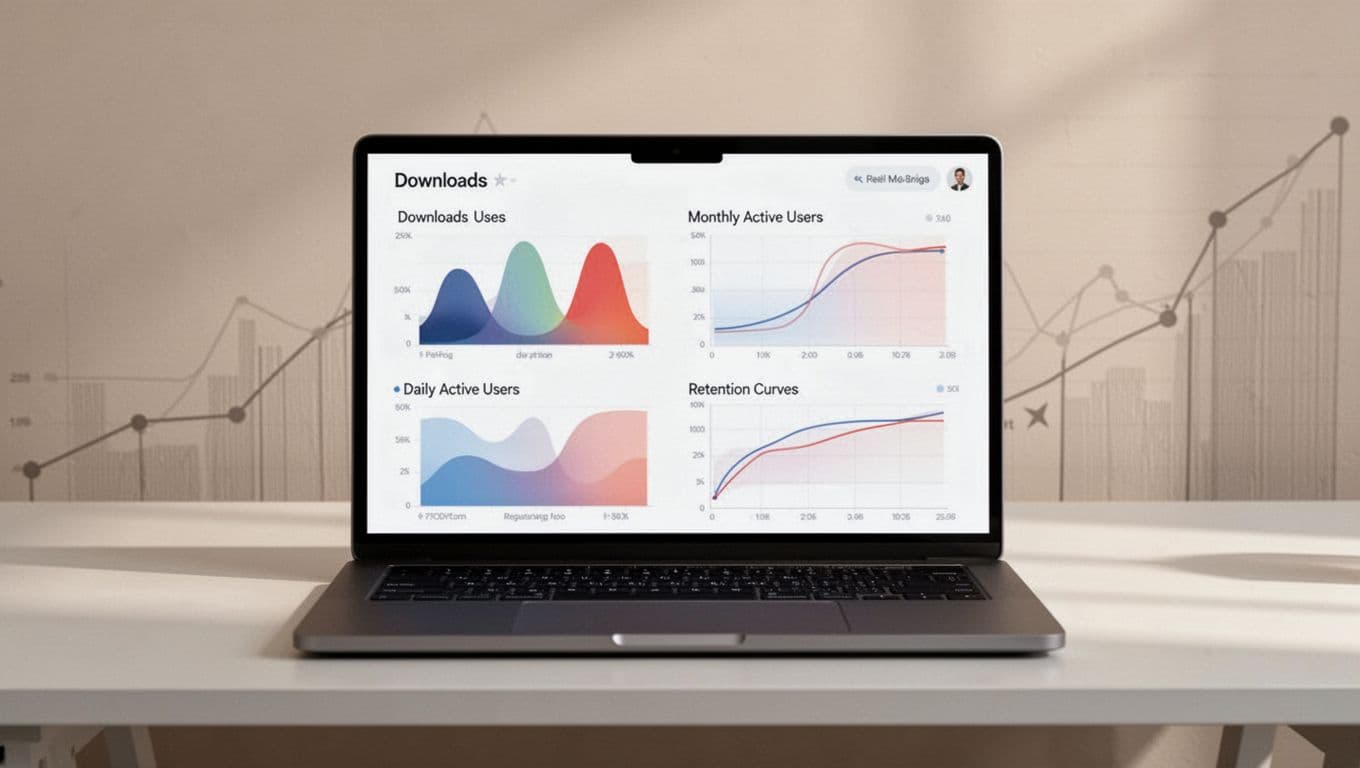
Downloads and Active Users: The Starting Line
Downloads count installs. They spike with ads. DAU tracks opens each day. MAU sums monthly logins. Compute stickiness as DAU divided by MAU. Aim above 20%.
Calm saw softer monthly downloads at 100,000 lately. High installs but low DAU signal mismatch. Users need quick anxiety relief. No fit, no return. Therefore, chase active users over raw numbers.
Retention and Churn: Keeping Users Coming Back
Retention measures returns. Day 1 hits 25-35%. Day 7 drops to 13-18%. Day 30? Often under 10%. Churn reverses that. Monthly rates run 5-7%.
Health apps lose 70-80% by month one. Headspace fights this with 168 million sessions in 2025. Track cohorts. Group by signup week. Good ones hold 40% at day 30 for meditation tools. For more on adherence challenges, see this AJMC article on mental health app uptake.
2026 Adoption Trends and Stats for Top Wellbeing Apps
Markets grow fast. Mental health apps hit $9.44 billion globally this year, up 18% yearly. Wellness apps range $4-28 billion, with 12-18% CAGR. U.S. leads at $3.73 billion for mental health alone.
Meditation apps dominate. Calm leads downloads. Headspace adds AI like Ebb therapy. Mental health sees Talkspace at 500,000+ Android installs. BetterHelp tops 1 million. Fitness and sleep trackers boom to 462 million users worldwide. Wearables drive it.
Challenges persist. Saturation hits consumer side. Usability kills retention. Employer programs rise. Calm covers 39 million lives via business. Insurance ties in too. For market breakdowns, check Fortune Business Insights on mental health apps.
| Category | 2026 Market Size (Global) | Key Growth Driver | Top Apps/Users |
|---|---|---|---|
| Mental Health | $8.64-9.76B | AI chatbots | Talkspace (1M+ users) |
| Meditation | Part of above | Employer plans | Calm (180M dl), Headspace |
| Wellness/Fitness | $4-28B | Wearables | Fitbit, Apple Health |
| Sleep Trackers | $5-43B | Personal insights | 462M users projected |
Numbers vary by scope. Still, corporate use fills MAU gaps.

Meditation and Mental Health Apps Leading the Charge
Calm shifted to paid content. Conversion jumped to 7%. Revenue holds at millions monthly. Headspace serves 2,100 businesses. Talkspace grows via insurance for 76 million lives. BetterHelp scales bigger. Subscriptions fuel it.
Fitness Trackers and Sleep Tools Gaining Ground
Fitbit and Apple Health integrate seamless. Sleep apps hit $5.2 billion. Users track stages and HRV. AI tips boost use 45%. Wearables tie data to phones. Result? Habits stick longer.
How to Boost Adoption and Retention for Your Wellbeing Tool
Fix the basics first. Simple UX cuts friction. Personalize with AI. Gamify streaks for meditation. Link wearables. Free trials lead to subs.
Headspace partners employers. Calm uses re-engagement emails. A/B test features. Measure against benchmarks. Post-COVID, private growth showed focus wins.
For strategies that work, review these app retention tactics.

Design Hacks That Stick with Users
Keep interfaces calm. Short sessions fit busy days. Onboarding shows value in 60 seconds. No overload. Users stay.
Marketing Moves to Drive Downloads and Loyalty
Optimize app store SEO. Team with influencers. Tie to insurance. Loyalty builds on real wins, not hype.
Track DAU now. Test one change. Watch retention climb.
Key metrics like DAU and day 30 retention expose flaws. 2026 trends favor AI and employers. Act on them. Simple designs and partnerships boost adoption.
Start measuring today. Share your app's churn rate below. With solid metrics, wellbeing tools deliver real change. AI growth ahead makes it urgent.
(Word count: 1492)