Poor employee wellbeing drains billions from companies each year. Turnover spikes. Sick days multiply. Productivity stalls. Recent data shows low engagement at just 20% globally in 2025, costing $10 trillion in lost output. Without solid programs, absenteeism jumps up to 11 times higher.
Wellbeing KPIs fix that. These are simple numbers you track to gauge employee health, happiness, and work patterns. HR spots team issues fast. CEOs see the profit link. Programs from Spring Health cut burnout by 20 points and lift satisfaction 30 points.
You get better retention, too. Supported teams stay longer. This post breaks it down. First, why track now. Then, top KPI examples grouped by health, habits, and outcomes. Finally, action steps plus 2026 trends like AI dashboards. Stick around for a free KPI checklist at the end.
The Real Reasons to Track Wellbeing KPIs Today
Businesses ignore wellbeing at their peril. Sick days cost UK firms £51 billion yearly from mental health alone. Stressed workers show up but deliver less. That's presenteeism. Engagement dips hurt output.
HR needs daily signals on team health. CEOs demand ROI proof. Strong programs slash turnover 11%. They boost retention over 20% better than weak ones. Wellhub data backs it. Mental support triples engagement odds.
In 2026, focus shifts to mental health amid AI fears. 40% of workers worry about job loss. Track KPIs to cut chaos. Here's a quick view of benefits.
| KPI Benefit | HR Impact | CEO Impact |
|---|---|---|
| Lower absenteeism | Fewer unplanned leaves | Steady productivity |
| Higher engagement | Better daily mood | $6 ROI per $1 spent |
| Reduced attrition | Stable teams | Lower hiring costs |
Start small. Pick metrics that tie to your goals. These numbers turn vague "wellbeing" into action.
For deeper 2026 trends, check the Global Wellness Institute's workplace initiatives.
How Wellbeing Ties Directly to Your Bottom Line
Retention rates top the list. Aim for 85-90%. Low scores mean high costs. Regrettable attrition of top talent? Keep it under 5-10%. Companies tracking this see 11% less turnover.
Absenteeism stays below 3%. Presenteeism hides the real drag. 50% of unsupported workers report output drops. Engagement scores hit 70-80%. These prove programs pay off.
Spotting Burnout Before It Hits Your Team
Burnout affects 66% last year. Use Maslach surveys quarterly. Track psychological safety above 4/5. Sense of belonging follows suit.
Manager support ratings matter most. Rate at 4+/5. Weak links here drive quits. Pulse surveys catch it early. Act on feedback. Teams recover fast.
Top Wellbeing KPI Examples to Start Tracking
Pick these 10 KPIs. Group them smart. Core health first. Then behaviors. Outcomes last. Measure with surveys, HR tools, calendars. Benchmarks from 2026 data guide you.
Start with Employee Well-being Index. Composite score from surveys. Aim 75%+. HR uses it for team checks. CEOs link to profits.
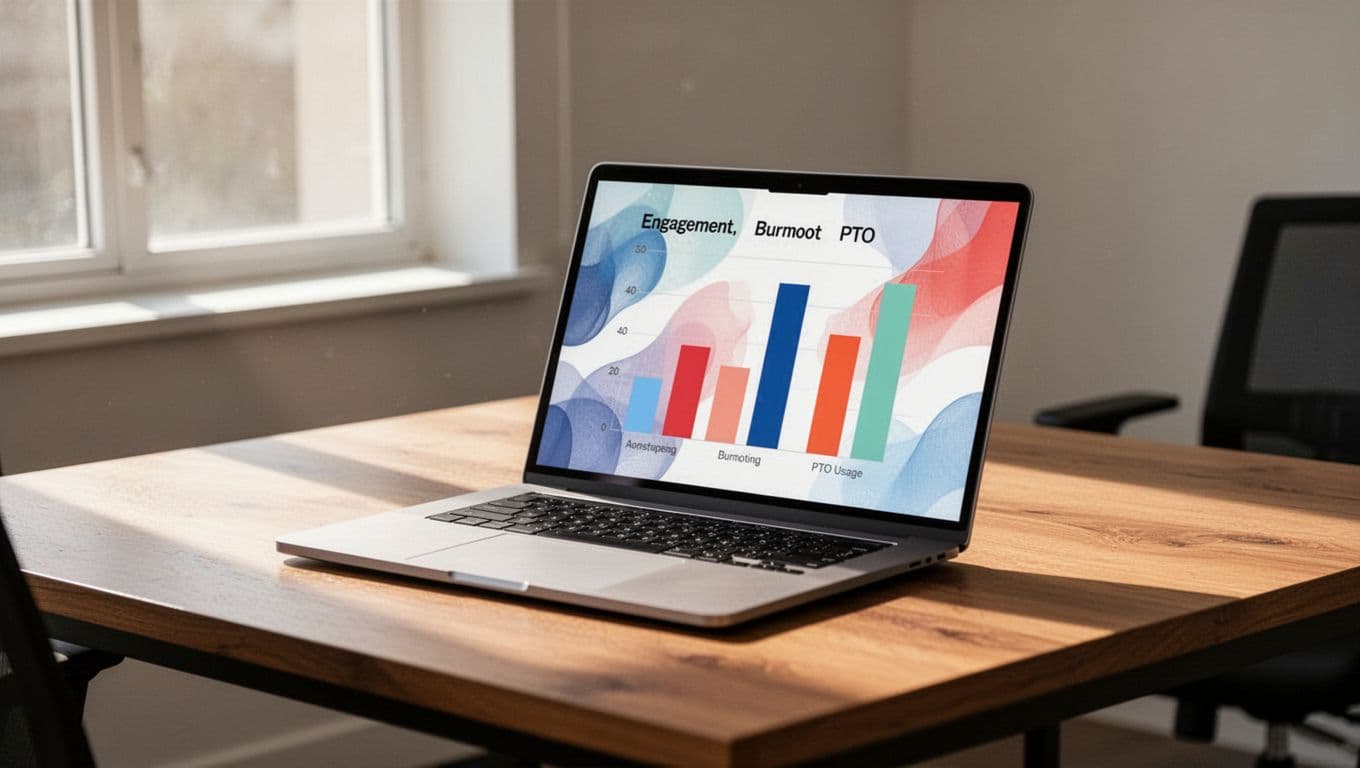
Scenario: Slash meeting overload 30%. Workers focus better.
Core Metrics for Employee Health Checks
Burnout levels lead. Keep under 20%. Quarterly pulses ask about exhaustion. Benchmark from Gallup.
Workload balance next. Survey "manageable load?" Target 80% yes. Manager support at 4+/5. Train them first.
Psychological safety scores 4+/5. Ask "safe to speak?" Sense of belonging ties close. Low here flags culture risks. Use tools like Google surveys. Review every quarter.
Behavioral Signs of Strong Work-Life Balance
Break frequency matters. Track calendar gaps. Aim one hour daily. PTO usage hits 85-95%. Low signals fear. Policy tweaks fix it.
Meeting load stays under 25 hours weekly. After-hours messages? Zero tolerance. Program participation above 70%. Red flags: Spikes in late emails mean imbalance.
Tools like Microsoft Viva log this. HR spots patterns. CEOs cut costs from overwork.
Outcome Metrics That Prove Your Programs Work
Retention at 85-90%. Absenteeism under 3%. Presenteeism via self-reports. Engagement 70-80%. Satisfaction scores climb.
Regrettable attrition below 5%. Link to ROI. Wellness yields $6 per $1. See Keedia's wellness ROI numbers.
How HR and CEOs Can Put These KPIs into Action
Set SMART goals. Specific. Measurable. Use AI dashboards for indexes. Run pulses weekly. Tie to DEI risks.
Best practices: Train managers. Offer easy resources. Review quarterly. 2026 adds mental health tracking. Tweak workloads.
Start with five KPIs. Avoid data overload. CEOs justify budgets. HR shifts policies.

Common pitfall: Ignore trends. Act fast.
Building Dashboards and Setting Benchmarks
Tools from MiHCM build them. Composite indexes blend scores. Engagement benchmark: 75%+. See their employee wellness metrics guide.
Burnout under 20%. PTO 90%. AI predicts drops.
Turning Data into Real Team Improvements
Low PTO? Change policy. No penalties. Train managers on support. Measure progress in six months.
Fix safety scores. Workshops work. Track over time. Results follow.
Pick these KPIs now
Prioritize burnout rate, PTO usage, engagement score, retention, psychological safety. Track three this quarter.
Download our KPI checklist. Comment your top metric below. Subscribe for 2026 AI trends.
Healthier teams drive profits. Predictive tools give the edge. Act today.

